For each child that’s born,
a morning star rises and
sings to the universe
who we are.We are our grandmothers’ prayers
and we are our grandfathers’ dreamings,
we are the breath of our ancestors,
we are the spirit of God.
That’s a song we Unitarian Universalists sing, and it reminds us about who we are fundamentally, down deep, at the core: a product of devoted prayers, inspired dreamings, breath of the ancestors, spirit of God.
It is medicine, to hear this, in a world that so often and in so many ways breaks us down individually and divides us from each other collectively. It can get so bad that to hear that song I just sang–to receive it into our hearts and allow the medicine to work–can be hard to do, can be something we resist since it feels so different from our actual situation.
What’s your story, of that first time when the judgment and hate broke your door down, and you were absolutely astonished and dismayed to realize that the goodness of who you are was, to others, sickness and depravity?
Sometimes, first times like this happen so early in life that your brain is not developed enough to store memories. You can’t remember that first time, although the pain is stored in your body.
Sometimes, there is a memory of it. Wasn’t Judy’s story from earlier powerful? And then there’s Brian Murphy’s story. In both, the Bible played a big role. What the Bible had to say about homosexuality. In Brian’s story, it was a lesson box in his teen study Bible that summarized the basics of homophobia: homosexuality is a choice; it’s a sinful choice; gay people are choosing to live in sin. Brian Murphy remembers that exact moment, remembers thinking, “I don’t know what to do. There it is written on the page. Crystal clear. […] Who I like is sinful, who I love is sinful. Who I am is sinful. Where could I possibly go from here?”
In response to such heartbreaking hurt, Christian conservatives and fundamentalists often like to say, “Hate the sin and love the sinner.” They say that, to try to ease up on the judgmentalism. But it’s just a different kind of judgmentalism. And, it makes no sense at all, especially when you’re talking about sexual orientation. Sexual orientation and person are always merged. Listen to how theologian Daniel Halminiak articulates this. “Sexuality,” he says, “means much more than physical arousal and orgasm. Attached to a person’s sexuality is the capacity to feel affection, to delight in someone else, to get emotionally close to another person, to be passionately committed…. Sexuality is at the core… [So, to] have to be afraid to feel sexual … is to short-circuit human spontaneity in a whole array of expressions—creativity, motivation, passion, commitment, heroic achievement. It is to be afraid of part of one’s own deepest self.”
That’s what happened to Brian Murphy, at the hands of the Bible. He learned how to be afraid of his own deepest self. He learned
That he is not his grandmothers’ prayers
That he is not his grandfathers’ dreamings
That he is not the breath of his ancestors
That he is most decidedly not of the spirit of God.
How many here know this as well: what it’s like to be afraid of your own deepest self? How many of you have said to yourself, in despair, “Where could I possibly go from here?” Whatever your identity, you can be taught to say that to yourself. Hate and harm happen across the board. But today, on this Pride Sunday, I want to focus on the restoration of a sense of belovedness in our LGBTQ+ brothers and sisters and siblings by addressing a primary cause of the culture of hatred and violence that they/we face every day which is most definitely NOT softened or solved by statements like “hate the sin and love the sinner.”
Let’s talk about the Bible. The Bible has incredible authority in our culture, and that authority persists even if, in our own small circles of friendship and community, the Bible is ignored.
Lesson boxes that contemporary editors like to insert in the Bible–apart from any and all of that added-on stuff: what does the Bible itself really say about homosexuality? What do the scriptures themselves say–really?
Well, go to 1 Samuel 18. These Bible passages tell a story about two military men of the ancient world. One of them happens to be the famous David who slayed Goliath and who went on to become King David of the Israelites. But that was far into the future. The events of 1 Samuel 18 happen when another king sits on Israel’s throne. And this king happens to have a son named Jonathan. David meets Jonathan, and hoo boy, the sparks fly. As the Bible says, “The soul of Jonathan was bound to the soul of David.” The Bible says, “Jonathan made a covenant with David, because he loved him as his own soul. Jonathan stripped himself of the robe he was wearing, and gave it to David, and his armor, and even his sword and his bow and his belt.”
It’s important to read this with a sense of the historical and cultural context. In the ancient society out of which the Hebrew Bible emerged, it was common for military men to establish deep and faithful friendships with each other—friendships which were so deep that, in truth, the men were lovers.
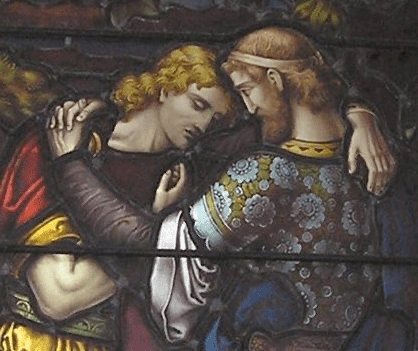
Clearly, Jonathan and David were military men, and the relationship between them was intense. But was it sexual? Well, just listen to what David says in 2 Samuel 1:26 upon the death of Jonathan. He says, “I am distressed for you, my brother Jonathan; very pleasant have you been to me; your love to me was wonderful, passing the love of women.”
There’s more going on here than simple friendship, folks…
The Bible says!
Now, listen to another story: the story of Ruth and Naomi, as theologian Daniel Helminiak describes it: “The Book of Ruth relates the very unusual commitment between the Jewish woman Naomi and her Moabite daughter-in-law Ruth. After the death of Ruth’s husband, in contrast to the customs of the day and unlike her sister-in-law, widowed Ruth remains with Naomi. Ruth declares to Naomi, ‘Where you go I will go, and where you lodge I will lodge; your people shall be my people, and your God my God. Where you die, I will die—there I will be buried.’”
Again, remember historical and cultural context. It is indeed unusual that Ruth and Naomi stay connected when the entire reason for their connection (Ruth’s husband/Naomi’s son) dies. Which makes the idea that they were lovers even more likely. Definitely, in their place and time, women had their own world. It was shaped by male domination, but it was still a world separate from the male world. And in this female world, women often offered each other support and affection, including sexual intimacy.

What’s happening between Ruth and Naomi?
More than simple friendship.
The Bible says!
Listen to one more story. This one comes from the Christian scriptures. In both the gospels of Matthew and Luke, we read of a certain Roman military leader called a centurion. He goes to Jesus because at home lies an especially beloved servant of his, who is paralyzed and suffering greatly. Part of what the centurion says is that he is an important man, with great authority over his many servants. As he says this, he happens to use the ancient Greek word “doulos” which is the generic term for servant. But, very curiously, when he refers specifically to the paralyzed and suffering servant he is begging Jesus to heal, the ancient Greek words he uses are different. Very different. He uses the words “pais” in combination with “entimos”: translated, it means “my lover” who is “very valuable and dear.”
Again and again, remember historical context. In the ancient society out of which our Christian Bible emerged, Roman householders would regularly establish sexual relationships with their male slaves. It was commonplace. No one raised an eyebrow. It was what it was.
“The most likely explanation of the centurion’s behavior,” says scholar Daniel Helminiak, “is that the young slave was the centurion’s sexual partner. Undoubtedly,” he goes on, “Jesus was aware of such things. He was not dumb. He knew what was going on around him. So this seems to be a case where Jesus actually encountered a loving homosexual relationship.”
And how did that encounter turn out? He praised the Centurion’s faith and he healed his young lover. There was no condemnation. There was not one whiff of condemnation.
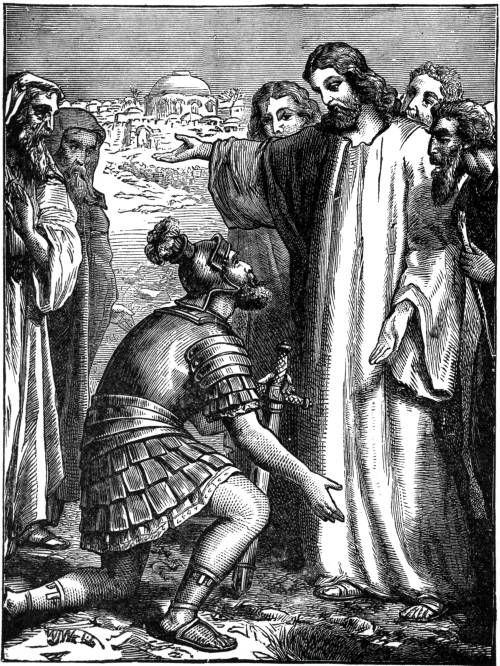
The Bible says!
And now look at where we are. We want to know what the Bible really says about homosexuality, and what we are encountering are three stories in which homosexuality is taking place and it’s all good! It’s actually even better than that. The characters in these stories are among the greatest Bible heroes of all time. Do you hear that? Gay people are among the greatest Bible heroes of all time!!!
But… but … but if this is so, how come millions of people are under the impression that the Bible condemns homosexuality as a sin?
What the ever loving Buddha is going on?
Here’s my take on why. Start with an illustration.
What if I were to describe a mutual friend—let’s call him Reggie—as a space cadet, and someone hearing that went on to conclude that Reggie must be a NASA astronaut?
But that’s not right—and so I try to clarify. I say, “Listen, what I’m trying to say is that Reggie is out there in left field!” But in reply, the person starts looking around for an actual baseball field and for Reggie, who they think can be found standing on the left hand side of it.
What’s happening here? Simply this: our thinking goes haywire—our actions go off point—when our interpretation of words is literalistic. Things go wrong when we forget about colloquialism and culture and context. Being a space cadet has nothing to do with working at NASA and everything to do with being loopy or out of touch with reality. Being out in left field has nothing to do with where you are standing and everything to do with flakiness.
Similarly, the reason why we have at least three Bible stories in which homosexuality is completely acceptable and yet millions of people think the Bible hates homosexuality is because people are generally bad Bible readers. Simple as that. Too many people still haven’t absorbed the message of one of our spiritual ancestors from more than 200 years ago, William Ellery Channing, who spoke of the importance of remembering colloquialism and culture and context when interpreting scripture.

In his sermon from May 5, 1819, entitled “Unitarian Christianity” (which you need to know single-handedly launched Unitarianism on American soil), he said something new about how to read the Bible: he said, take history and culture in consideration. Here’s how Channing put it: “We find,” he says, “that the different portions of this book, instead of being confined to general truths, refer perpetually to the times when they were written, to states of society, to modes of thinking, to controversies in the church, to feelings and usages which have passed away, and without the knowledge of which we are constantly in danger of extending to all times, and places, what was of temporary and local application.”
Maybe the Holy Spirit did breathe inspiration into the writers of scripture, but Channing insisted that “a knowledge of their feelings, and of the influences under which they were placed, is one of the preparations for understanding their writings.” Without this, you just can’t be faithful to the Bible. The result is disaster. We apply Bible insights to our day recklessly, ignoring the fact that what the Bible writers are talking about may be very different or even absolutely different from today’s concerns. Or, we read into the Bible our own contemporary agendas and interests and standards. We project all our stuff on top of what the Bible actually cares about.
And people get hurt.
Channing once said, “We profess not to know a book, which demands a more frequent exercise of reason than the Bible.” Because, otherwise, people get hurt!
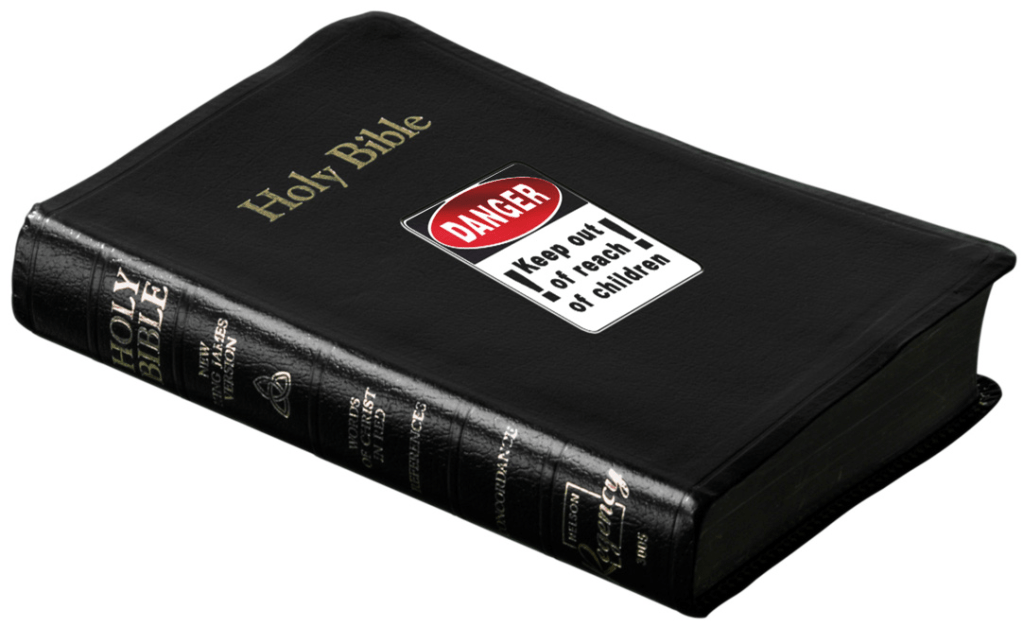
If you ask someone who believes the Bible condemns homosexuality to explain themselves, they will go to seven particular Bible passages in which “homosexuality” is equated with sin. I saw one of these guys yesterday, as I was leaving the PRIDE in the CLE march. He was handing out cards with a rainbow front but, on the back, was pure condemnation in which he cited several of these “clobber” passages. (That’s what Bible scholars have come to call them: “clobber” passages.) But he, like the millions who are so convinced that the Bible hates homosexuality, haven’t “exercised their reason” sufficiently. They haven’t done their homework. And that’s atrocious. Because when you are commanded to hate by a religion that’s supposed to be all about love, you have to ask yourself: am I reading this right? Is this religion of love actually commanding me to hate? Or am I getting something wrong?
If you read scripture and you do follow Channing’s counsel from 200+ years ago–if you do your homework–what happens is all these seven passages fall apart. You learn that the actual word “homosexual” appeared in the Bible for the first time in 1946 in the Revised Standard Version. And you learn that that word–”homosexual”–was used to stand in for stuff that has nothing to do with committed loving same-sex relationships. That word, “homosexual,” was used by Bible translators to stand in for such things as male temple prostitution instead; or the Israelite obsession against mixing the wrong kinds of things together; or violations of the ancient hospitality code; or abusive and exploitative relationships. Anything but what we today take for “homosexuality.”
Oh yes, there’s sin going on here, but it’s not homosexuality. It’s the sin of Bible interpreters whose mistranslation and smear campaign against homosexuality has led to worlds of hurt against the LGBTQ+ community, hurt that is so bad that we must march for Pride, we must stand up to the hate!
The tragedy is how human psychology can make it so hard for wrong points of view to change. Even if you tell me all the true facts about life in ancient Biblical times and how loving homosexual relationships were completely common and accepted, I still might not believe you. Even if you walk me through all seven of the so-called “clobber” passages that are supposed to condemn homosexuality and you show me without a shadow of a doubt that not even one talks about committed loving same-sex partnerships, I still might not believe you. It will depend on how threatened I feel by you. It will depend. If your approach doesn’t meet my psychological needs, there’s going to be a backfire effect and I’m going to cling to my false beliefs even more!
That guy at the PRIDE march, handing out cards spewing hate. No way was I going to argue him out of what he considered his righteousness. No way, then and there! There is no easy solution to all of this. Agreed. But don’t let this stop us from taking consolation in knowing that, rightly read, the Bible is no enemy to homosexuality. The Bible, rightly read, says nothing bad about same-sex loving relationships at all. In fact, it says some very good things about people who are gay.
Remember Jonathan and David in the scriptures. Read how “The soul of Jonathan was bound to the soul of David.”
Remember Ruth and Naomi, how Ruth said, “Where you go I will go, and where you lodge I will lodge; your people shall be my people, and your God my God. Where you die, I will die—there I will be buried.”
Remember the story of Jesus and the centurion in the scriptures, the centurion who was so worried about his sick lover. The centurion went to Jesus and Jesus did nothing to shame him. Jesus did not say, “My Father created them Adam and Eve, not Adam and Steve.” No. Jesus praised the centurion’s faith, and he healed his lover.
In the face of hatred, in the face of the fire-breathing Bible-thumpers who are 200 years behind the times on how to interpret scripture, just go straight to Jesus.
Jesus will say to you:
You are your grandmothers’ prayers
You are your grandfathers’ dreamings
You are the breath of your ancestors
You are of the spirit of God.
Yes you are.



 Spiritflow
Leave a comment