The story comes from psychologist Mary Pipher who is also a Unitarian Universalist. It’s from her book entitled Another Country, about a Mrs. Van Cleve. Mrs. Van Cleve was “a white-haired immigrant in her seventies. After school,“ says Mary Pipher, “I’d stop by her house [to learn pottery making]. I was a big-boned, gawky adolescent who lived in a state of continual amazement at the cruelty and stupidity of many of the kids at school. Each afternoon around three, I’d reach Mrs. Van Cleve’s house, shell-shocked and so rattled that I could barely speak. She’d greet me with hot tea in a china cup and thin lemon cookies on a hand-painted plate. We’d walk to the quiet back room that was her pottery workshop. Side-by-side, we’d knead clay, glaze pots, and paint figurines. We rarely spoke, but in her studio smelling of banana oil, clay, and turpentine, I could forgive. My body went slack with relief.”
Was there ever a Mrs. Van Cleve in your own life? Is there one right now? Life can be so cruel and stupid, and it can twist us up. If we are teenagers right now, so much can trigger that big-boned gawky adolescence feeling. And if adolescence happened to you two or five or more decades ago, still, things can happen, and we are instantly transported back to that awkward time. People like Mrs. Van Cleve are always in need–old and wise enough to know that all they need to offer is a light touch: the hospitality of fine tea and cookies, a space in which time slows down, an opportunity to build personal skills and allow creative expression. Nothing too heavy, no earnest therapy sessions. Just a place where our bodies can go slack with relief and we can feel again the grace of life.
Care across the generations flows the other way as well. Younger can be the mentor to older. “All I ever really needed to know,” says Unitarian Universalist minister and beloved author Robert Fulghum, “I learned in kindergarten.” Just by watching the children. “Wisdom was not at the top of the graduate mountain, but there in the sandbox at nursery school.”
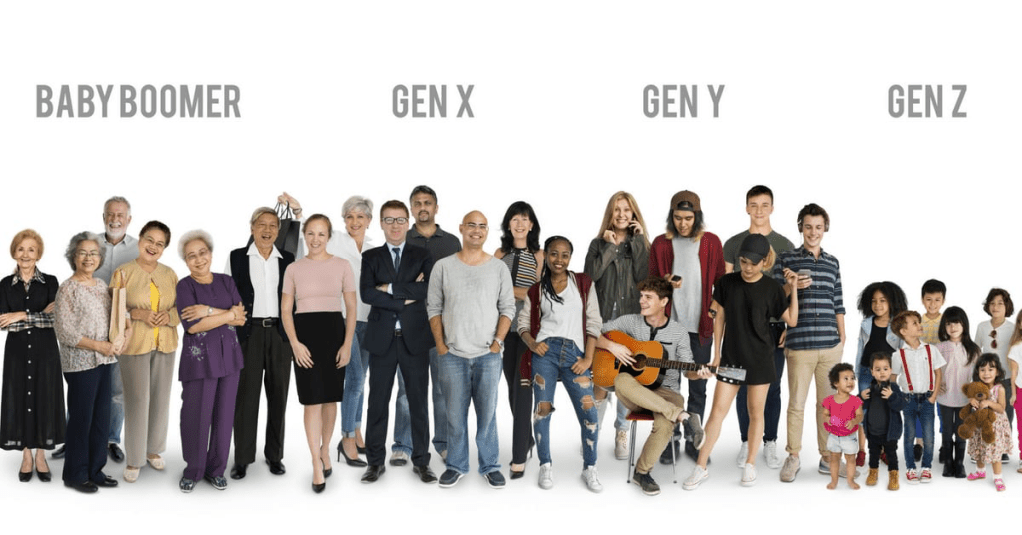
But now, take this issue of care across the generations and ground it in here and now realities. Suddenly, things get complicated, because so much conspires to keep the generations apart.
Part of this has to do with social forces and habits. For example, jobs that require people to move away from grandparents, parents, aunts and uncles and cousins, until the meaning of that word “family” gets stripped down to its “nuclear” sense of the single person, or just partners, or just parents with kids. Life happens. And yet, as Mary Pipher points out, it can lead to “Grandparents feeling lonely and useless while a thousand miles away their grandchildren are not getting the love and attention they desperately need.” I know this is not always true. But it was precisely true for me, and perhaps for you as well.
Jobs and geographical distances separate us, and so can the institutions in our lives. Children go off to school or, on weekends, to sports, to be with people their own age, and adults go off to be with other adults for all sorts of reasons all the time. We spend so much time with our peers, in fact, that we could legitimately describe ourselves as living in “age-peer ghettos.” Let that sink in: “age-peer ghettos”–connoting impoverishment, among other things. They become our comfort zones, places where we know how to be and how to act. Cross an age-peer ghetto line, though, and you enter a different culture, and things get instantly awkward. Does this ring any bells?
To complicate matters even further, the pace of life can get so crazy that at times, all you want is to be alone. Last thing you want is to connect with a different generation or even with your own. A story was told by CNN several years ago, about a 38 year old German named Maria Bruner whose job was to take care of a household with three kids. She had another job too: outside the home as a cleaner. One day she got a 90 dollar parking ticket, and the story is about the choice she made, between paying that ticket or going to jail for three months. She chose jail. She said, “As long as I get food and a hot shower every day, I don’t mind being sent to jail. It means I can finally get some rest and relaxation without having to cook and wash and clean for everyone!” The police officer who arrested her said she repeatedly thanked him and smiled and waved as she was driven off to begin her three months of jail time.
The generations stay apart, they don’t connect, for a variety of reasons. And so, says Mary Pipher, “All over America we have young children hungry for ‘lap time’ and older children who need skills, nurturing, and moral instruction from their elders.” There’s an awful gap here, which can go on to create perception gaps between the generations, which then can inspire some pretty hurtful comments. For example: the middle-aged adult who says that kids basically leave the human race at about age 11 and don’t return until they’re 18. That prejudice strikes home. Teens will be made to feel incompetent, unconfident, and not needed, and this painful sense of disconnection can even lead to violence done to themselves or to others.
I’m talking generation gap. “Elderly people in retirement communities or even in their own homes who have no contact with anyone but other old people and their caretakers” (Pipher). Middle-aged adults feeling isolated and alone in the immense act of parenting and making a living, paying the bills. You know that book, Tuesdays with Morrie? There are millions and millions of middle-aged Mitch Alboms racing around in their lives, with no contact whatsoever with much older mentors like Morrie Schwartz, who first-hand can give the gift of perspective, and peace, and wisdom in the face of inevitable entropy and death.
This question about a generation gap is a profoundly spiritual question I am asking, because we are our relationships. The quality of our relationships has everything to do with the quality of our lives and our spirits. Gaps in our outer world become inner gaps, gaps within.
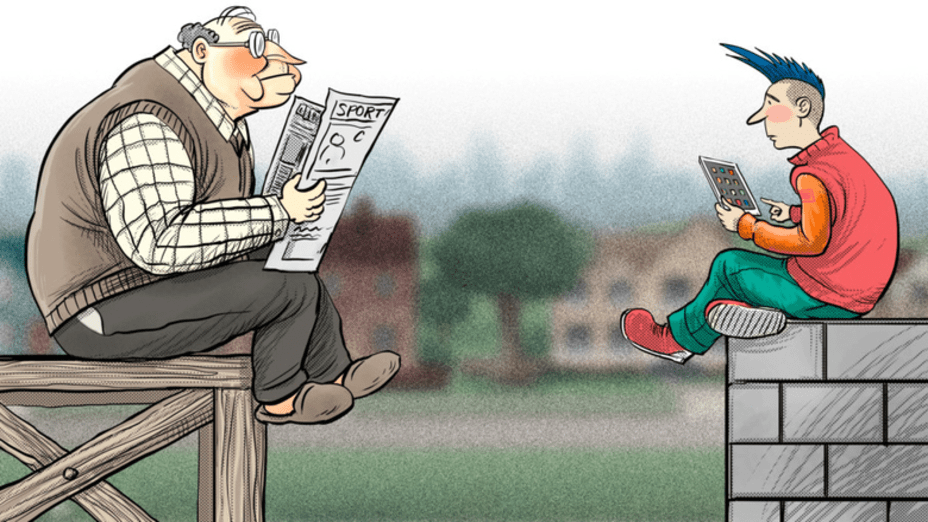
We need to find ways to give and receive gifts across the generations. Mary Pipher’s book is a good one if you want to look further into this topic. Again: Another Country: Navigating the Emotional Terrain of Our Elders. Another source of practical information about this is the website, www.legacyproject.org. Some of its ideas and suggestions include the following:
First: Regular family time: this is key to building and maintaining family bonds. And listen to this: research shows the kitchen—not the living room or dining room—is the most relaxed place to make lasting memories. It’s slow time. We smell, we taste, we talk, we learn things in the kitchen. Something as simple as baking cookies together can create a long-lasting, loving memory.
A second suggestion: If you’re a grandparent who lives far away from your grandchildren, mail them a book a month—you might even send along a video of yourself reading the story! This gives you something to share and to talk about in person or over the phone or via ZOOM.
Suggestion number three: Children or youth finding an elder who is not related to them and is interviewing them, asking them about their lives and stories.
This is just the tip of the iceberg—just some of the many ideas and possibilities that you can make happen as part of building a bridge across the generations, piece by piece. Spanning that gap, making that gap go away. Because: we are our relationships. Gaps in our outer world become inner gaps, gaps within.
Above all, I hope that at West Shore we will be intentional about intergenerational bridge-building. One of my ministry colleagues has described church community as one of the best places for breaking out of peer-age ghettos (Rev. Peter Morales), and I think that he’s right. If we’re building a spiritual community that changes lives, one of the ways it will surely do that is by healing the generation gap and being intelligent about finding or creating spaces that emphasize a “slow time” environment which is relaxed, engages all the senses, is creative and fun, and if the kids are making noise or they are antsy, no one cares. It would be more like a kitchen-table situation, rather than a dining-room table situation. Research literally shows that a more relaxed kind of space is exactly the kind which leads to genuinely deepened connections across differences.

On this Flower Celebration Sunday, in which each beautiful flower reminds us of the inherent worth and dignity of each beautiful person here, I am asking an open question: how can West Shore nurture the growth of a vital intergenerational culture? That’s an open question I would love this congregation to engage, from the Board on down. As I ask this question, I know that answers are popping up left, right, and center. In me too! For example, I have found that a most powerful kitchen table-like intergenerational space is that of the weekend congregational retreat in a natural setting. I love this sort of space because it’s going to have times when different generations do things just with themselves, but it will also have times that are perfect for all the ages to be in one space. As in a talent show. Or around the campfire with singing and smores.
It can also be a moment when the job-overwhelmed among us can unplug for a time, which means energy freed up to do something very different. We can see this in this story from Alice Gray, about a small girl woken up in the middle of the night by her parents. She was carried outside and underneath the night, where the sky overhead blazed with stars. “Watch!” her father said. And incredibly, as he spoke, one of the stars moved. A streak of golden fire, it flashed across the heavens. And then another, and another, plunging to earth.
“What is it?” the child whispered. “Shooting stars,” her mother replied. “They happen every year on certain nights in August. We thought you’d like to see the show.”
That was all: just an unexpected glimpse of something haunting and mysterious and beautiful. Back in bed, surrounded by the usual quota of dolls and playthings, the child stared for a long time into the dark, rapt with the knowledge that all around the quiet house, the night was full of the silent music of the falling stars.
That’s the story. Every generation has its gift to give. Every generation has something to show to the others. Can we here create effective spaces for that sharing?
I dream of a church where people are like Mrs. Van Cleve to each other. I dream of a church where the elderly can be reminded of spiritual truths by watching what children do. I dream of a church where children feel important and valued because some adult decided to unplug from the daily grind, to use that energy to do something different, to wake up in the middle of the night, to take their kid outside into the wide world, to point up to a sky full of wonder, to say “Watch!,” to change that kid’s life forever.


 Spiritflow
Leave a comment