
The day before I went in for the surgical procedure on my left hip, I wrote this in my personal journal: “It started back in 2017: once-and-a-while episodes of my hips locking up momentarily then unlocking, and each time the pain would be blinding. Who knew that, all these years later, it would culminate in full disability: my limping, stiff, anguished arthritic pain-body which is no longer able to run or practice yoga or do even the simplest skating moves which used to be easy as pie? Six years later, I’ve been reduced to someone who struggles even to put socks on and, with every movement, groans “oooph” and “ngngh.” All my shoes have become slip-ons. Back in 2017, I didn’t even know the word osteoarthritis, and now, it hangs like a storm cloud over every aspect of my life.”
The day after I wrote this, I went in for hip resurfacing surgery. In less than three hours, arthritic pain was replaced by post-surgery pain and the journey of healing and recovery, beyond pain. I’m not out of the woods yet, though. The right hip gets resurfaced in late February, and I get to experience post-surgery pain and the journey of healing and recovery all over again.
Thank God I only have two hips.
But I want to tell you about the Sunday I appeared before you using my rollator. It was December 17th, when I preached my personal letter to the Angels. My surgeon told me that, for six weeks after the surgery, I was not to put full body weight onto my left leg. I needed to give my body time enough to fully integrate the new hip hardware. So, for six weeks, my “marching orders” were to use a walker or a walker with wheels (that’s what a rollator is) anytime I was up and about.
December 17th was four weeks, post op. So, rollater it had to be.
And, one of the things I remember from that Sunday is that I could not navigate these chancel steps. I couldn’t go down them, or up. During the greeting time, when you got to enjoy the pleasures of connection, I was forced to watch. I couldn’t be a part of it. I felt awkward and weird and lonely. This is public space, supposedly navigable by all, but it didn’t work for the way my body happened to be at the time. My body didn’t belong.
From this, I was reminded again that the realization of having a certain social identity comes as an experience of loss. Before my surgery, and way back before that–before the time when my osteoarthritis dominated every waking moment–I had never really thought of myself as “abled.” I suppose my identity was an unconditional and simple “just me,” full of a sense of freedom and possibility. But when I lost physical abledness, with it came a double enlightenment. Suddenly I came to realize that, all along, the world had been judging me. Before being disabled, I must have been judged worthy because I had no problem getting around; architecture of all kinds seemed made for my body. But all that changed with my disability. Now the world looked upon me with a constant frown.
This double-enlightenment landed like a bomb when, on December 17, I was stranded up here during the greeting time, unable to go down those steps and join in on all the hand-shaking and hugging going on.
After worship, Rachel and I went to lunch at First Watch in Rocky River. We were put on the waitlist and, so, to kill time, we went next door to a certain boutique shop whose name I forget, but it’s full of tchotchkes and what-nots and Rachel was looking for some holiday gifts for her office staff. While I and my rollator were able to get through the door of the boutique, there were aisles which were too narrow. Every time I encountered a too-narrow aisle, my changed identity as disabled and unworthy was solidified, and so was my sense of being alienated from a world that used to love me and work for bodies like mine–the abled body I used to have.
When, next, we went to a favorite bookstore of ours, and I experienced the same thing–aisles too narrow for me, the space not made for my body–my changed identity solidified even further. The world in its unkindness was not letting up. When you have an identity that the world does not favor, it is amazing how relentlessly it lets you know that. So, it made sense to me, how social justice advocates can use troubling and perhaps even divisive words like “privileged” and “oppressed” and “supremacy.” In my abledness, I was privileged to be able to move around easily. In my disabledness, the world felt oppressive and taught me about the supremacy of abledness.
Social justice words like “privilege” and “oppression” and “supremacy” can indeed sound strident. But that doesn’t mean they’re exaggerations.

Do you know what I’m talking about? How, there always comes a time in everyone’s life when your sense of self changes? It starts out as a simple, “just me” sense of self–full of freedom, full of possibility; but then something happens and you come to learn that the world never saw you the way you saw yourself. You become very aware that you hold certain identities that used to be “just who you are” but now you know that some of them are a serious problem for lots of others.
It can happen in so many ways. Besides the loss of body functions (legs, eyes, ears, etc.) there can be a loss of health–as when you suffer from a chronic illness and suddenly the medical establishment doesn’t know what to do with you. There is of course the eventual loss of youth for everyone, resulting in a youth-fixated world that passes older people by. And then there can be–for some of us–the loss of fertility–discovering we are infertile. For others of us it’s the loss of a marriage or the loss of a child or the loss of a job or the loss of sobriety.
There are so many losses that can happen, besides these.
And then what about this loss: you are a young boy and you get upset about something, and you start to cry, and your mother slaps you hard across the face and tells you that boys don’t cry, be a man, men are strong. Or, you are a young girl and you don’t want to wear that pretty dress, you want to work with tools like your dad does, and your dad tells you to stop it, girls don’t work with tools, girls are supposed to be pretty and feminine while the boys work with tools.
How many people in this space can relate to this sort of loss?
Sometimes the loss can be completely invisible to others. Consider the case of the female movie star beauty queen who, when young, had terrible teeth that went every which way and so she lost the simple sense of being “just unconditionally herself” early on by learning, from bullies, that she had a social identity of being ugly. She went on to internalize that social identity of ugliness, and that identity of ugliness stayed with her even after dentistry fixed her teeth and maturity grew her up into a gorgeous adult woman that straight men dream of. Everyone saw the beauty queen, but nobody saw the ugly, buck-toothed girl she never stopped feeling she was.
And then consider this loss. You might have come to West Shore’s Service Auction back in November, and you heard the message that everyone could participate. You got excited about the live auction in particular. But then, when the live auction unfolded, you realized to your horror that things like seats at special themed-dinners were going for 300 or more dollars each–and that’s not only way beyond what you can afford, but it also offends your values. All you could do was watch while others around you had their middle- to upper-middle-class fun. And this loss led to a stronger sense of your blue collar class identity and your feeling that maybe this is not the place for you.
By now, this sermon may be feeling increasingly heavy. I know. Loss is a heavy subject. Facing the reality that the world doesn’t allow people to keep simple and unconditionally valued identities but actively divides people up into worthy and unworthy, privileged and oppressed is a heavy subject. Even heavier is realizing that people might have been suffering in your midst, and you didn’t see it. Maybe you inadvertently did something or said something to have caused that suffering.
It’s just so hard to hold. It’s so hard to bear.
One question our troubled minds might fly to is, Why? Why does the world polarize people like this? Why does it separate people into the privileged and the oppressed?
Historians show that each form of oppression comes from somewhere, comes out of the efforts of human beings and human institutions that are the original architects. Hell is right here, not in some supernatural underworld. And the usual culprit is greed. But greed can also be combined with a desire to remain pure. “Purity” is a consideration that plays a way larger role than people might think. Evolutionarily, groups want to remain “pure” because contamination by what seems “impure” can weaken the group and make it easier to destroy. Survival of the fit demands “purity.”
I think that the combination of greed and purity as an ultimate explanation for systems of oppression can go far.
Everyone should seek to learn the historical details about the origins of racism, sexism, homophobia, classism, and on and on. It’s all too much to cover in just one sermon.
All I can say here is that, for any system of oppression, you have the original architects of supremacy, then you have the legacy architects across time who take up the cause of the original architects and see the continued spread of that oppression as a matter of loyalty to family and loyalty to the Cause. Then you have the supremacy bureaucrats who are consciously aware of the system of oppression but they just keep their heads down, they do their jobs, they try not to attract the attention and the punishment of the higher-ups. And then, finally, you have the children of supremacy who, like children everywhere, grow up in a world that’s been made for them, and they just do as they’ve been taught to do without knowing why; the supremacy system operates through them unconsciously, they don’t know any better. There’s no conscious awareness at all.
Nobody in this room is an original architect of any oppressive system because those people lived a long time ago. Nobody in this room is a legacy architect or a supremacy bureaucrat because, otherwise, Unitarian Universalism would have repelled you. You just wouldn’t want to be here. But I can say that everyone here, myself included, is a child of supremacy. It means that we are all filled with unconscious biases that come simply by virtue of growing up and absorbing already existing patterns of oppression.
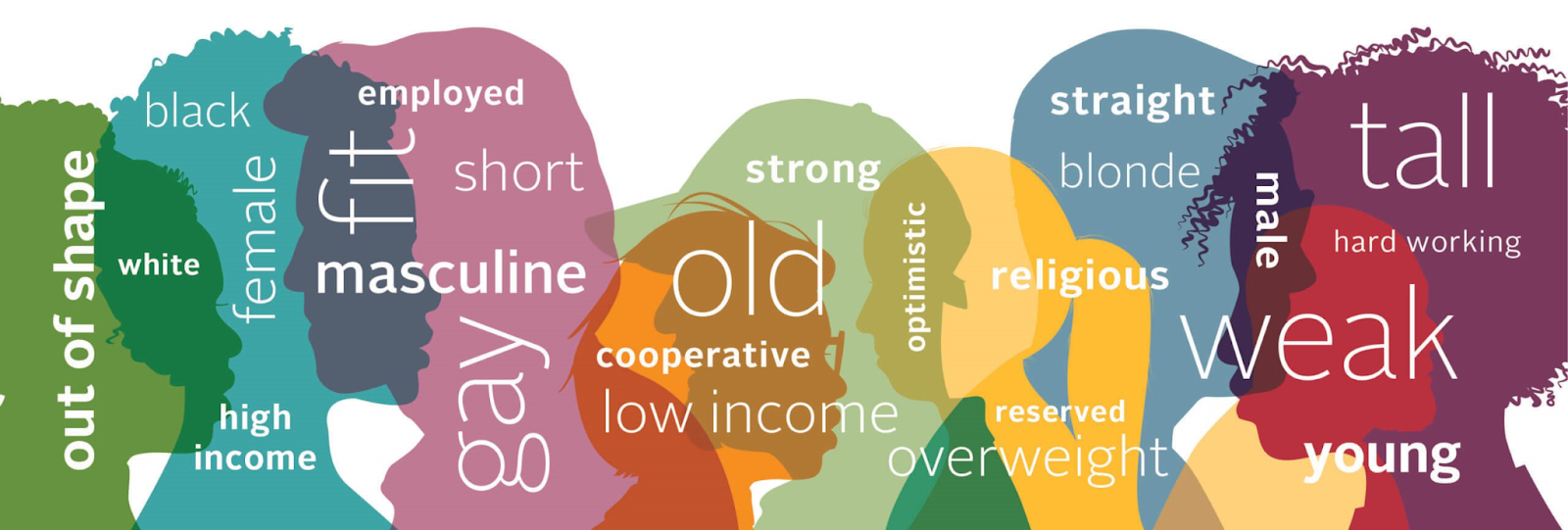
Do you know about unconscious biases? If you’ve ever been responsible for hiring someone, for example, and you had a positive “gut instinct” about an applicant who was younger than the others, or the applicant who was more physically attractive, or the male applicant who was tall, well, it’s highly likely that your “gut instinct” was influenced by unconscious bias and it caused you to favor some social identities rather than others. Unconscious bias is a fact. It is a scientific fact that Americans are unconsciously biased in favor of youth, physical attractiveness, maleness, and tallness in males. It is a scientific fact that Americans are unconsciously biased against the opposites.
The science of this goes on and on.
Which takes us to the next urgent question, as we hold the heaviness of this whole subject of loss and complexity and the social division of the privileged vs. oppressed–as we hold all this together with the Love that stirs in our hearts and minds and calls us to create a better and more just world. The next question being: What do I do about it? What do we do about it?
The first thing is to listen, and then listen some more. bell hooks in All About Love speaks of a love ethic that emphasizes cultivating awareness. “Being aware,” she says, “enables us to critically examine our actions to see what is needed so that we can give care, be responsible, show respect, and indicate a willingness to learn.” Exactly.
A good start is to listen to the unconscious bias within. How does it operate within you? What are those “gut instinct” moments when you feel spontaneously attracted to or repelled by someone with certain identities? What do your resulting behaviors look like, and what do your justifications later on sound like? When Hilary was up for election back in 2016, lots of folks were saying that they were fine with a woman being in the White House. But they didn’t vote for her (enough people said) because she wasn’t feminine enough. Or she wasn’t perfect enough (compared to Trump??) Or she wasn’t something else enough. Blah blah blah. I’ll risk saying out loud that these were just rationalizations making sense of an unconscious bias against a woman being President.
That’s just my sense of it. My suspicion. What do you think?
Unconscious bias is tricky. It’s unconscious! And influences so much of what we do.
We must listen more closely to ourselves, and then we need to listen to others. I guarantee, everyone is going to have their own story to tell of privilege mixed up with oppression. Everyone has been granted social passes and everyone has a target on their head, simultaneously. Maybe you are white and straight but you are ADHD and that neurodivergent social identity targets you. Maybe you are wealthy but you are also gay. Maybe you have a Ph.D. but you are transgender. Maybe you are black but your skin color is a lighter shade of black, giving you a distinct advantage over others whose skin is darker and therefore suffer from a prejudice called “colorism.” Maybe you are that famous female movie queen, but no one sees the ugly, buck tooth person that you never stop seeing yourself as, no matter how changed your circumstances.
As Plato once said, Be kind, because everyone is fighting a hard battle, of which you may be completely unaware.
Allow your awareness to be raised. Listen. Listen, for example, to the story of the young white boy who had a best friend from school who was black. The day came when the white friend invited his black friend to his house. What happened was the white boy’s father ordered the black boy to get out (using the “N” word) and then he proceeded to beat his white son to within an inch of his life. Listen to the loss that’s going to be there for both those boys, which they will never forget for as long as both shall live. The black boy learning, once again, that he can’t just be himself, that the world will always label him as black and bad. The white boy learning that he can’t just be himself either, that he’s got to hate black people as a matter of self-preservation, as a matter of not being abandoned by the people whom he relies on for everything.
This is real life. This is reality. And, what a hard story to share. Sometimes what is most needed is a safe space, and others listening you into speech. Their listening helps you remember hard things. Their listening enables you to share a bit of your truth that’s full of loss. But it’s a part of you. It’s a part of you that had been lost and is now found. You are more yourself now, than you once had been, and that is a good thing. Hard but good.
Allow your awareness to be raised. See movies, listen to podcasts, read books. The book we have been reading together all year long–bell hook’s book All About Love–can be one of these books. And what about the Service Auction questionnaire I invited you all to fill out this past December 3? That’s a way this church allowed its collective awareness to be raised. Of the 100 or so folks who responded, there were at least 10 who shared their consternation that an event that they thought was to be accessible to everyone wasn’t really.
Which leads to the next thing to do, when folks with oppressed identities tell their stories to people who have the corresponding privileged identity. By that I mean: a person of color tells of a terrible experience of prejudice, and people who are white hear it with ears attached to white bodies. Or, consider the Service Auction questionnaire again: blue collar folks saying what they said in our Service Auction questionnaire, and people who are middle class hearing it with ears attached to middle class bodies. Or this also: Rev. Makar speaking of his experience back from Dec. 17, when he was tied to his rollator and couldn’t use the chancel steps, and many of you here and now listening with ears attached to abled bodies.
Typically, what follows is something that the social scientist Brene Brown calls “privilege shame.” People with privileged identities learn what life is like for those whose corresponding identities are oppressed, and they feel terrible about it. White people feel terrible about the terrors and tribulations black people face. Middle-class folks or abled folks feel horrified that blue-collar folks and disabled folks were suffering in their midst and didn’t know it. Big picture: all the ways that being white or middle class or abled (or straight or cis-gender or tall or handsome) enable a person to avoid trouble are unearned. Are undeserved. Why do I get to be white and thereby get to avoid so much trouble, but Tamir Rice who was an innocent black boy got shot?
And so on.
The strange thing is, once you learn you have one or more identities that the world privileges, all of a sudden it doesn’t feel like privilege anymore. The blessing feels like a curse. Being white doesn’t stop protecting you from police violence, for example, but you don’t want it anymore.
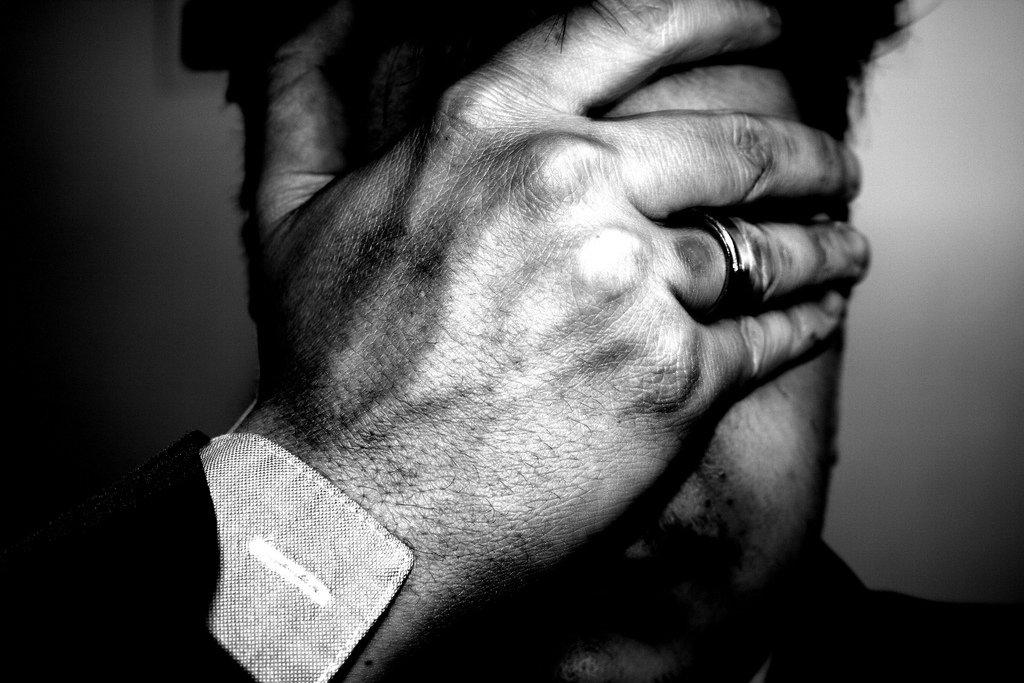
But you can’t shed your white skin. You can’t stop benefiting from the privilege.
I’ve seen some people with privileged identities reach for this solution: trying to recover a sense of self worth through pride. Let’s have a pride match for straight people. Let’s have a pride event for the abled. The problem is that social identities like being straight or being abled are still socially advantageous. They still work for the people who have them, by ensuring that they avoid the sort of trouble that regularly comes to people with opposite identities…..
People with privileged identities don’t need pride. What they need is empowerment. What can I do with the gifts I have been given, to make life better for all?
There’s something else I’ve seen. I’ve seen too many times when folks early on in their awareness-raising about privilege get slammed by anti-oppression educators and trainers. “Sledgehammer” tactics are used on them. Some folks with privilege might even accept it, because they feel they have to atone for something. They feel like they need to be punished to pay for the lives they’ve had up to that point. But, you know what? All a sledgehammer does is crush a person’s sense of basic humanity and grind them even more deeply into their sense of shame. No one deserves that. And, if you seek to atone for your privilege “sins,” well, there’s far better ways of doing that, which actually result in real change that helps real people who really need it.
No more sledgehammer tactics. If you have a social identity that you are learning is privileged, the next step is not self-flagellation. The next step is to learn how you can use your power in a non-paternalistic, truly helpful way to empower others.
As for folks with identities that the world judges unworthy. What I want to say to you is this: you are a human individual. It means that you are composed of, at least, 16 different kinds of social identities, if not more.

Beyond and beneath all that, you are a Child of God, and that identity is your birthright and society has no say in it. And so, don’t allow the world to collapse all of who you are into a single identity. If you are black, for example, don’t allow well meaning folks (probably white) to assume that, when you come to church, all you care about is antiracism and surely you want to head up our antiracism initiative. Because, maybe what you really want is to sing, or to join the pastoral caregiving team. You have many identities and not just one. You are many things and not just one.
More than this, if you hold a social identity that the world hates, you know with all painfulness how that hatred can get inside you. It’s like Virgilio Elizondo says, who is speaking to a Latino audience in particular but it applies to anyone with an oppressed identity: “If you hear again and again that you are inferior, good for nothing, incompetent, and lazy, you may eventually begin to believe it yourself.” So I say, may you find countervailing forces that trouble that belief, that resist that belief, that help you reclaim all of who you are as worthy. Love all of who you are. Love your Latino self, love your gay self, love your transgender self, love your blue-collar self, love your wrinkly old self. Find the blessing in who you are, where you are. Defy the world! The world is full of agendas that don’t care about you. So you must care about you. Don’t let the world and its systems of oppression get in your head, become an internalized voice of self-hate, and spoil the one, wild and precious life that is yours and is, too soon, done. Over.

When I was walking-disabled, tied to my rollator, relatively immobile, I found that I had more opportunity to be mobile internally, spiritually. And, I found sweet solidarity with all the other folks here who are disabled. And, on that December morning, when I preached about Angels, and I was stuck to my rollator, and to get out of here I had to take the chancel door and, painfully, go the long way around the building where, finally, I could get to the greeting line, I was met by a man who is a father of a young girl who is disabled. That young girl had been in the service, he said, and he mentioned that at one point she had whispered to him, “Dad, the minister, he’s just like me!” She had wonderment in her eyes. She couldn’t believe it.
My disability, temporary as it was, gave me a gift of love and joy that I never would have had otherwise. It was like a gift from the Angels I had just preached about. Solidarity with that young girl with a full life in front of her, facing a world that will make it hard for her (and unfairly so); but maybe I helped her a little to know that she is not alone, that she will never be alone, that who cares what the world says, that she is a Child of God and she is worthy, worthy, worthy!
And so are you all.
It’s like we sing every Sunday:
We come to this good morning
remembering the journey of freedom.
The land we are on was once another’s.
We mourn the legacies of oppression.
Healing is our way forward.
Joy is the birthright of all.
 Spiritflow
Leave a comment