
When I was eight years old, I saw a movie called Escape to Witch Mountain.
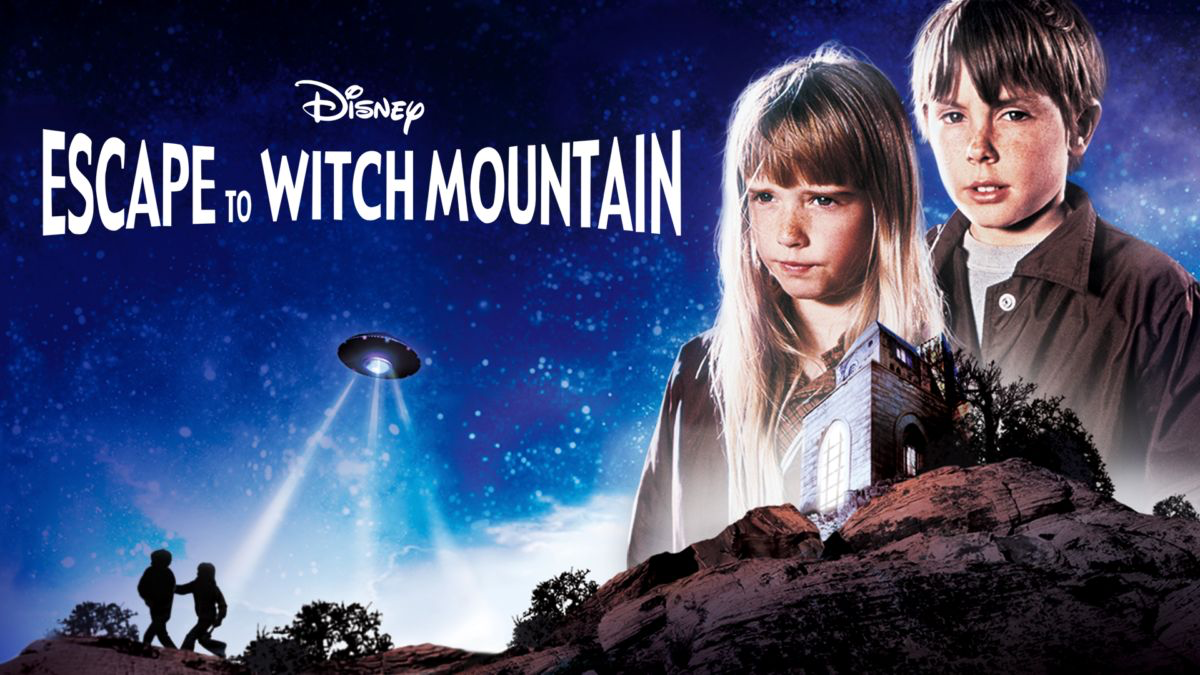
People called me Tony back then, and it just so happened that one of the movie’s main characters was a boy also named Tony, about my age, together with his sister, named Tia. Tony and Tia were brother and sister orphans whose memories about their past were blocked, but they suspected that they must have come from somewhere special because they had psychic powers. Tony could move things with his mind, and Tia could unlock any door by touch and communicate with animals.
I sat in the theater, eyes wide open, drinking the movie in: their narrow escape from the horrible juvenile detention home, and their breathless journey towards a place called Witch Mountain where they believed they would discover their true identity. The suspense of all this was cranked up to 11 because every step they made was shadowed by the evil Lucas Deranian, who was chasing them. He wanted to enslave them, capitalize on their paranormal gifts. Every close call they had with the guy made me squirm in my narrow theater seat and bump my brother beside me, or my father. I lost a lot of popcorn from my bucket that day, which was sent flying with every twitch and squirm.
To this day I continue to be an entertaining movie date.
That night, it was hard falling asleep. I had seen something and heard something in that movie that made me want to drop whatever I was doing in my life and go find my real family. Didn’t matter that I was sleeping in a bed in Peace River, Alberta, Canada and had no idea where my personal Witch Mountain was. I just wanted to go. I just wanted to leave. I lay there in my bed and I felt inside myself, as deeply as I knew how. I was looking for the same kind of power that Tony in the movie had. I gathered up my will, I told myself to believe and that if I believed, my body would rise up off the bed like a feather, like a miracle. Finally, I would have hard evidence and indisputable reason for why I had always felt like an orphan in my life, why I had always felt like a stranger in my family and world, why I had always felt like I was meant for something else.
I awoke the next morning, sorely disappointed. But I would not let the memory of Tony and Tia go, their escape to Witch Mountain, the feeling that they were my true family and not the people I just happened to live with.
This was me at eight years old: already busy with the important work of discerning my vocation, but I would not have called it that at the time. It is a very grown-up word that, much later on, I would learn from theologians, which names the journey of shedding false selves and growing into one’s true self and purpose in the world.
As little Tony, I called it “going to Witch Mountain,” and maybe the name you have given it is just as unique.
That’s what we’re talking about today, as an old year passes and a new year begins, and with it, new opportunities and new possibilities for finding our vocation in the world–our true self and true purpose.
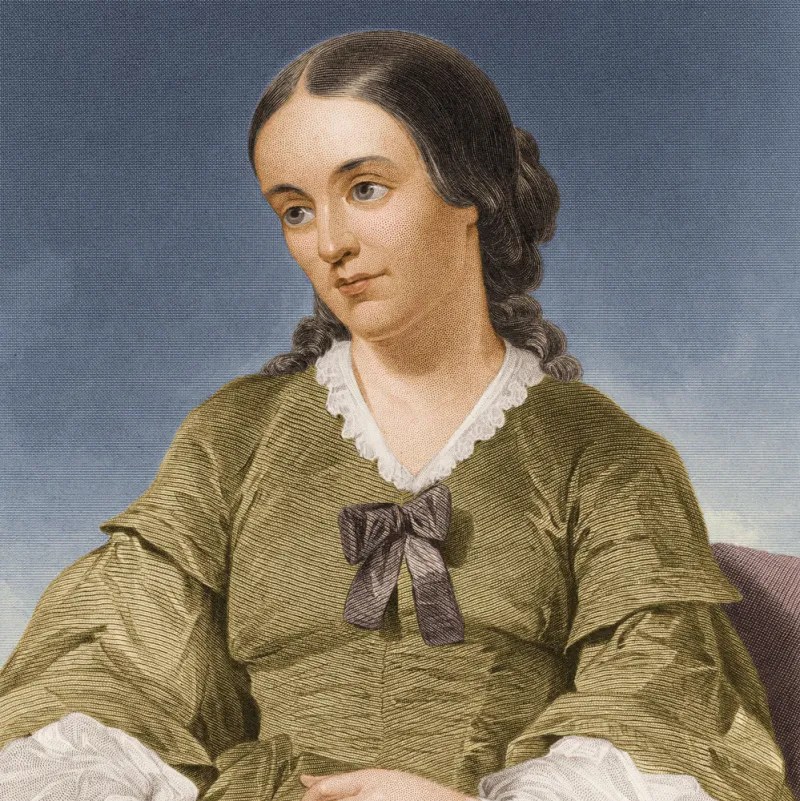
It is also a path and a process that never ends, because we never stay the same. We change over time guaranteed, at the very least, by our aging. Poet and Unitarian Universalist May Sarton speaks to this as she says,
Now I become myself.
It’s taken time, many years and many places.
I have been dissolved and shaken,
Worn other people’s faces…

May Sarton says this, and it does take time. Discerning one’s authentic self can indeed be a meandering way, with jarring moments of being “dissolved and shaken.” At times we can find ourselves wearing other people’s faces, because we want to please them, or because we just want to survive. But wearing another person’s face—trying to live someone else’s life—will inevitably fail. “True self, when violated” says Quaker educator and activist Parker Palmer, “will always resist us, sometimes at great cost, holding our lives in check until we honor its truth.”
We get lost again and again. The good news is no one has to stay lost. We can get found. We can find ourselves. The key to this is “letting your life speak”—listening to the deep aliveness within each of us that has a certain nature and we feel how its yearnings go in some directions and not others. It is about listening—beyond and beneath the Big Voice of one’s moralistic superego that insists you must do this or be like that in order to be a “Good Person.” You have to learn to listen beyond that, to the still small voice within where one’s integrity really resides.
This language about “letting your life speak” comes from a book with roughly the same title by Parker Palmer, and it is a great read. The one piece of advice he gives that I particularly want to focus on this morning is this: “When we lose track of true self, how can we pick up the trail? One way is to seek clues in stories from our younger years, years when we lived closer to our birthright gifts.”
I encourage you to do that, as you continue your personal journey of becoming authentically yourself. To seek clues from your younger years. And right now, that’s what I want to get back to doing. To go back again to when I used to be called Tony, to continue demonstrating Parker Palmer’s spiritual exercise….
Three years after seeing Escape to Witch Mountain—three years after that movie cut through all the trivia of my regular world and I heard in it the call to my true home and I just wanted to drop everything and go there—three years later, my fascination would settle on something else: on a paperback I carried with me pretty much everywhere, entitled Fifty Great Short Stories, edited by Milton Crane (a name I thought hilarious). The book included such gems as Shirley Jackson’s “The Lottery,” Edgar Allen Poe’s “The Masque of the Red Death,” Thomas Wolfe’s “Only the Dead Know Brooklyn,” Flannery O’Conner’s “A Good Man is Hard to Find,” and Ernest Hemingway’s “The Three-Day Blow.” I’m eleven years old, now. It didn’t really matter how much I did or did not read, how much I did or did not understand. It was about the words. I loved them. Word after word after word, creating scenes in your mind, creating new life. I carried that book of 50 Great Short Stories everywhere I went as a reminder of that power.
I hung out a lot at my Dad’s medical office, and on Saturdays, while he’d be in his office doing his charts, I’d be out front in the receptionist’s area, where the electric typewriter was. I’d turn that thing on, and the sound it growled out was gnnnnnnnnnnnnnn.

I could feel the power surging through it, barely restrained. I’d roll in a new sheet of paper and start typing. Each letter would bang down hard on the page, bang, bang, leave its mark. Letters building words, words building sentences. My book 50 Great Short Stories would be right beside me, and it comforted me, made me believe that perhaps the power of Jackson and Poe and Wolfe and O’Conner and Hemingway with all their words could be my power too. I already knew that I didn’t have the power of telekinesis that the character of Tony from the movie had; that had already been proven. But I still felt like an orphan, I still felt like there was a Witch Mountain out there for me to travel to, where I would find my true self. I still needed to get there, somehow.
Maybe writing was how.
Yet here’s what would happen as I’d sit there at the typewriter growling its electric growl. I’d go blank. I’d have no earthly idea what to say. The feelings that roiled within me: no way to translate them to words. It was always this way.
Isn’t it amazing how, so early in life, we can already see in cameo the central yearnings and challenges of our truth? We can also see how the Universe is dropping clues here and there about the way forward. For me it was so many things: a movie, a book, and it was also people like my Church of Christ pastor in high school, who took me under his wing. We’d go on home visitations together, and we’d be driving in his car, and he had a hairdo that was huge and lacquered up with Aqua Net, so much so that it was stereotypical televangelist hair, his hair had its own personality, its own gravity. We’d be driving down the road, him behind the wheel and me on the passenger side, and his right hand would be on the wheel, and every time someone passed by going the opposite direction he’d give them a small wave with that hand, and sunlight would glint off that hair.
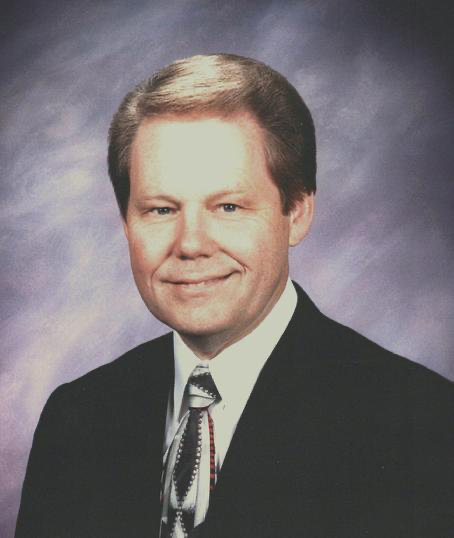
God, I wanted to be just like him. Not the hair part. The friendly and caring part.
These were clues from the margins. Whispers of Witch Mountain. Things coming into your life, and they make you want to drop whatever it is you happen to be doing, and do something else. Even if you don’t know what that something else is yet. You just feel restless. You just feel like you are meant for something more.
When I was 20 years old, I had two dreams. Here’s the first: “I am one of six black birds. We are in a circle, teaching people. And the people encircle us.” The other one goes like this: “My elephant is trapped in a tightly-fitting glass bottle. But I release him and discover that he is just like soap. I soap up with him, and it utterly transforms me. I am especially thrilled that it makes me capable of skating like I’d always dreamed, as well as any Olympian.” Those were the dreams. Just so powerful for me. I had them when I was still in college, almost on my way into graduate school. The dreams teased me with a sense that I was meant for something that would help others and be healing for myself, but what? What was I holding that I should drop, and what new thing should I take up?
I had no earthly clue.
Isn’t that the way of it? The way of our lives? Later, much later, we can look back and understand. But not up front, not in the moment. Marilynne Robinson, in her wonderful book entitled Gilead, has her main character, an old preacher, say it like this: “Now that I look back, it seems to me that in all that deep darkness a miracle was preparing. So I am right to remember it as a blessed time, and myself as waiting in confidence, even if I had no idea what I was waiting for.”
If you are feeling lost right now, how could things be different if you reframed your situation as a deep darkness in which a miracle was being prepared?

What difference could that make to you?
“In deep darkness, a miracle was preparing.” Have I ever told you about the first time I stepped into a Unitarian Universalist congregation? Deep darkness. Here’s what I mean. I completely and utterly hated it. Because the preaching was so very bad. My former wife and I, with our two-year-old daughter in tow, went to the small Unitarian fellowship in our town, and while the people were friendly, the worship was terrible, and the preacher took 30 minutes to share his laundry list about what he did over the summer. I’m not kidding. I was outraged! I wanted to stand up and shout FRAUD! It was like I was eight years old again and back in that darkened theater, watching Escape to Witch Mountain, except the evil Lucas Deranian had been replaced by a terrible dullard of a preacher.
I couldn’t stop squirming in my seat, which embarrassed my poor ex-wife horribly.
Good thing no popcorn was involved…..
Later, when I was in seminary studying how to be a preacher in my own right, I came across these words from Ralph Waldo Emerson’s “Divinity School Address” of 1838, delivered to that year’s graduating class of Unitarian ministers. “I once heard a preacher who sorely tempted me to say, I would go to church no more. […] A snow storm was falling around us. The snow storm was real; the preacher merely spectral; and the eye felt the sad contrast in looking at him, and then out of the window behind him, into the beautiful [snowfall]. He had lived in vain. He had no one word intimating that he had laughed or wept, was married or in love, had been commended, or cheated, or chagrined. If he had ever lived and acted, we were none the wiser for it. The capital secret of his profession, namely, to convert life into truth, he had not learned.” That’s Emerson. As cranky in his complaint from 1838 as I was in mine, in 1994. Listening to the preacher just waste time.
Sometimes the call to our true self happens not as an experience of delight but as an experience of disappointment. Isn’t that surprising? Can you relate? You heard your call to greater authenticity because you encountered something that deeply disappointed you, and somehow, you must have known about better possibilities which you somehow also knew you yourself could bring about?
“In deep darkness, a miracle was preparing.”
Indeed.
Now, think again about what it was like for me at eleven years of age: how I’d be sitting in front of the growling typewriter wanting to get started on my own short story but I’d have nothing to say. How I’d feel the power slip through my fingers, slip away. Well, after college and graduate school, and then eight years teaching college philosophy, there was no more problem. One of my first sermons in seminary was 6000 words long. Keep in mind that for me, a 20-minute sermon consists of roughly 2000 words. It was one whole hour of me, holding forth. I was talking about the spirituality of imperfection.
I had a lot to say, apparently, about imperfection.
But at least, finally, I could feel the power flowing through me. I couldn’t levitate myself like Tony in the movie, and it didn’t look like writing actual short stories was in the cards for me. But preaching was.
I had found my Witch Mountain. The home that my eight-year-old self yearned for was finally found.
And still—the road runs ever on. True self is like a horizon. It gives us a definite direction but it is also ever receding. You and I are like moving targets, as life happens, and things change.
I am on to my next Witch Mountain, and then the next.
It’s about spiritual beings having a human experience. What home is—what authenticity and integrity mean—is always in process, and never fully achieved.
True for me and true for you.
I can only hope that, in the midst of your hectic days in this new year of 2024, something will come to you that helps you glimpse the moving target of your true self. Perhaps it will be an inspiration, Perhaps it will be a disappointment, or a jealousy. Perhaps it will even be a story about your life that you remember—you, when you were six or eight or ten years old–and there the clues are about your nature, your unique inclinations, your yearnings, the desires of your soul, your particular version of Witch Mountain.
Whatever it is, reach for that clue. Reach for that glimpse of your true self and see where it takes you.
We get lost again and again. The good news is that no one has to stay lost.
May 2024 be a year full of sweet discoveries for you and for us all.
You and I, listening to our lives, on the continuing path towards authenticity, true self, Witch Mountain.
We’re getting found.
We’re going home.

 Spiritflow
Leave a comment