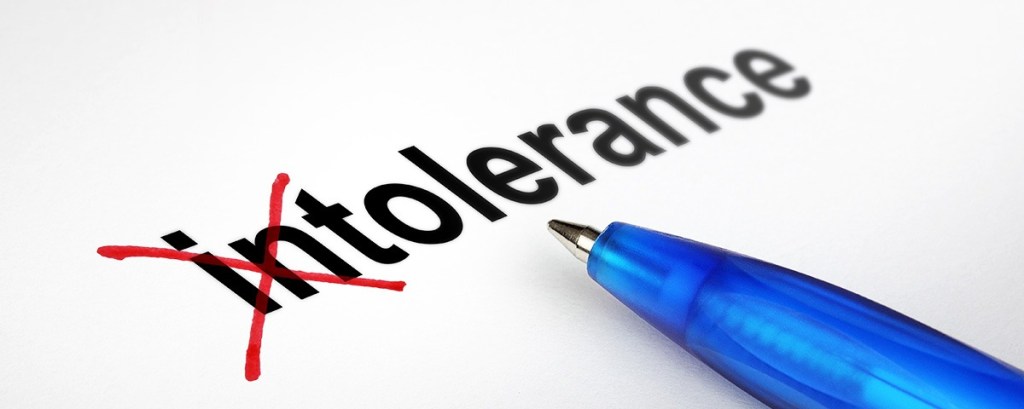
Tolerance. Today we are talking about tolerance, and it’s near and dear to the Unitarian Universalist heart.
In 1568, the first and only Unitarian King in history—King John Sigismund—issued the Edict of Torda which established tolerance within and among the churches of Transylvania (now the northern region of Romania).

King John essentially said that church ought to be a place where people allow each other freedom of conscience and freedom to publicly express their conscience. No one has the right to silence another’s sincere convictions, for, as King John said, “Faith is the gift of God.” This was unheard of, in his day. To many, it was outrageous. But tolerance became the law anyhow.
From King John’s lips to our ears today. For almost 500 years, religious tolerance has been our tradition. Tolerance is a key part of our identity as a liberal religious community.

Which also means that a key part of our experience as religious liberals is facing the challenges of tolerance in a way that folks in other traditions might not. Facing the paradox of it, when others might not care. But we care.
So, what is this paradox of which I speak?
It’s suggested by a situation that all of America is embroiled in right now. The Supreme Court is right now looking at Colorado’s decision to disqualify Donald Trump as a candidate in the 2024 presidential election, citing Section 3 of the 14th Amendment (which essentially states that people who rebel against democratic norms are not eligible to run for office in our democracy). Some people worry about this, wondering if this attempt to protect American democracy is itself a betrayal of democracy. But if we don’t protect democracy from people who show active contempt for democratic norms and the rule of law, how can we expect democracy to survive?
This but echoes the paradox of tolerance: If tolerant folks draw a boundary and say NO to some behavior, can they continue to claim–in any legitimate way–to be tolerant? But if tolerant folks are tolerant towards any and all behaviors–even ones that are tyrannical and oppressive–won’t that lead to the destruction of tolerance? Won’t the tyrannical and oppressive people take over and demand conformity to one particular viewpoint–theirs–and if someone doesn’t conform, it’s Siberia for them?
Tolerance is a discipline, and it’s not easy. It’s like a tightrope, and we have to walk a narrow line. We have to be balanced. When we draw a line and say NO to what we perceive to be truly destructive, are there ways in which our NO can be excessive and over-the-top? But what if we don’t allow ourselves to ever go there in the first place? No matter what we face, we never say NO because we believe that tolerance never allows for it. But what happens then?
Tolerance requires us to be balanced. Otherwise, we’ll fall off the tightrope, every time.
Let’s start with times when our NO can be excessive and over-the-top.
One instance of this is when we say NO to people whom we might not even know well, but we are so bothered by their practice of DARVO that we try to outduel them, outscream them, wrestle them into submission. I just said DARVO. Do you know what that means? It’s an acronym that puts a name to how bullies typically respond when they are being held accountable to their bullying. DARVO stands for “Deny, Attack, and Reverse Victim and Offender.” The bully denies that they are bullying; they attack the person or people holding them accountable; and they charge the one calling them out as the real bully!

The Jedi Master Yoda once said, “Once you start down the dark path, forever will it dominate your destiny, consume you it will.” The Jedi Master Yoda is just a fictional character. But once again, fiction tells the truth. Trumpian politics is all about the dark path of DARVO. Rush Limbaugh prepared the way; Donald Trump has perfected it. Their bullying bombardment of propaganda, lies, false facts, name-calling, finger-pointing that someone else is doing the evil thing that they themselves have just been caught red-handed doing! Worst of all, too many of our fellow Americans have fallen for the temptation of this dark path; too many Americans now feel emboldened to walk this path themselves.

So when you encounter a would-be Trump or Limbaugh, the question you must ask yourself is, “How much does this person mean to me?” You have to ask this question. To fight battles with bullies you don’t really know or don’t have a relationship with is going to exhaust you and, worse, make you cynical. You’re trying to flip a pancake that’s unflippable. It will only make it even harder for you to engage people whose ideas you don’t like but you do know them, you are in relationship with them, you do care for them. You need to preserve your energies for conversations like these!
So now, turn to this. Turn to people like your family, your chosen family which is your church, your friends, your co-workers, and so on. Think of a time when people like this said something racist, or sexist, or homophobic, or transphobic. This is different. These are not strangers. You love these people.
And they just said a thing or did a thing that feels intolerable.
In a situation like this, we fall off of the tolerance tightrope when we step forward in a way that completely lacks curiosity. We are so stuck in our own story (including our self-righteousness, our outrage, our anxieties) that we can’t do as Dr. David Campt in our video from earlier said, which is to find a place inside us that’s centered, which in turn enables us to manifest some curiosity and get that other person to start telling their story. Their human story.
Not everyone who voted for Trump has gone down the DARVO dark path. Not by a long shot!
The article entitled “How to Deal With Racist Relatives This Holiday Season” says this: “Practice compassion…. [Don’t] use your words as weapons, don’t use your understanding of anti-racism as a moral high ground. Meet [people you care for] where they are at. Remember you are not on the same part of the journey. Remember there was a time when you knew less than you do now, there was a time when you caused offense or tripped over words. What helped you get on board and change – being shamed or being compassionately informed?” That last part is a great question to ask yourself. “What helped you get on board and change – being shamed or being compassionately informed?”
“Don’t get me wrong” the author of the article, Nova Reid, continues. “This doesn’t mean giving people a free pass. We can hold people accountable firmly without shaming and demonizing them.” Thank you Nova Reid. Yes. We can do this. We can learn how.
But there’s yet a third way our NO can be imbalanced, different from the two we’ve just explored. It’s when we just disengage entirely from the person who says or does a racist thing, a sexist thing, a classist thing, and so on. The whole situation has become just too bothersome. We don’t have time for this. So we just step back.
Dr. David Campt in the video hit the nail on the head when he said that this is a symptom of privilege. “We can disagree and still love each other,” says writer James Baldwin, “unless your disagreement is rooted in my oppression and denial of my humanity and right to exist.” That’s James Baldwin, a Black man who could never escape racism and homophobia because he’s Black and gay. But White people can escape. Straight people can escape. Someone’s disagreement that’s rooted in the oppression of Black people or gay people doesn’t strike at straight White people so directly. So straight White folks can step back.
When we say NO to engaging someone who just said or did an oppressive thing, we must examine our conscience. It is an unspiritual thing to abandon others who are fighting for their lives. It is an unspiritual thing to not find a way to be their ally. For this too, is the dark side. Apathy is also a part of the dark path that Yoda spoke of.
Yes it is.
But now it’s time to pivot. So far, we have been exploring ways in which our NO can be over the top. Now, we want to take a look at the mindset that says that we should never say NO to begin with. We should never say NO because we believe that tolerance never allows for it–but what happens then?
A few years back, on a UU minister’s email chat, there was a thread on this topic, and one of the stories that came up had to do with a congregant who regularly laced the social hour beverage with LSD. The church’s leadership let it happen for almost an entire year.
Because “tolerance.”
Another story is the one I told, about an experience I had in my very first Unitarian Universalist church. My ex-wife had been serving as this church’s Director of Religious Education, or DRE. One of the parents, whose name was Bill, didn’t like something. One day, he berated my ex in public, viciously. Another day, he did it again. Then he started sending abusive emails. It was horrible. Fellow congregants–including the leadership and the minister–just sort of sighed and averted their eyes, said some version of “Well, that’s just who Bill is.”
Is this truly what tolerance requires of us? To give bullies of one sort or another a pass to keep on bullying? To allow ourselves to be repeatedly placed in the line of someone else’s fire?
I thought King John and his whole Edict of Torda thing was about freedom of conscience and the liberty to express sincerely-held beliefs. That seems to me to be a very different thing from allowing bad behavior to continue….
But, setting behavior aside: there can be confusion in liberal religious spaces even when it comes to expressing ideas and convictions. My colleague the Rev. Kathleen Korb says, “I once got in serious trouble with a fellow UU for what she considered my intolerance in religion. How dare I say that Unitarian Universalism is better in any way than other religions?” Our truth is just as partial as that of others — as indeed, of course, it is. All I could legitimately say, [said my fellow UU], is that Unitarian Universalism is better for me than other religions are.”
But then Rev. Korb put her finger on something interesting. She says, “It always seems strange to me that [when UUs stay modest like this], we get so upset when our children grow up and choose to become Roman Catholics or fundamentalist born-again Christians, or Scientologists….” Exactly. If there weren’t something truly special and better about Unitarian Universalism, why would parents get so upset when their children don’t stay UU?
What do you think?
Shall we cease from sincere debates about religion and human nature and politics because disagreement feels too judgy? Because the underlying assumption (that we are attempting to progress from ignorance towards greater truth) feels unfriendly?
Therefore, “intolerant?”
A very special case of this has been called out by progressive activist Maurice Mitchell in his amazing and excellent article entitled “Building Resilient Organizations” which I commend to all of you highly.

It’s when someone uses their collection of social identities as a sufficient justification for some position they are arguing, and others instantly fall in line. As in, someone says, “As a working-class, black woman, I say we have to do this,” and the response of every white person in the room is immediate agreement, no questions, no debate because they think that that is what allyship requires.
To respond otherwise would be seen as “intolerant.”
Maurice Mitchell, a person of color, calls this out as a kind of white paternalism. A way of infantilizing members of historically marginalized communities. Maurice Mitchell says, “People with marginal identities, as human beings, suffer all the frailties, inconsistencies, and failings of any other human. Genuflecting to individuals solely based on their socialized identities or personal stories deprives them of the conditions that sharpen arguments, develop skills, and win debates. We infantilize members of historically marginalized or oppressed groups by seeking to placate or pander instead of being in a right relationship, which requires struggle, debate, disagreement, and hard work. This type of false solidarity is a form of charity that weakens the individual and the collective. Finding authentic alignment and solidarity among diverse voices is serious labor. After all, ‘steel sharpens steel.’”
That’s Maurice Mitchell. True tolerance can never be what he calls “false solidarity,” or “seeking to placate and pander.”
The “serious labor” of “steel sharpening steel” is not intolerant. Our Unitarian Universalist tradition exists exactly because of struggle, debate, disagreement, and hard work. Struggle, debate, disagreement, and hard work gave birth to the very ideal of tolerance which we are now trying to disentangle from multiple confusions.
It’s a question, ultimately, about balance. Tolerance requires us to be balanced as we walk the tightrope. Sometimes how we draw a boundary and say NO can be a real problem; but other times, the problem happens when we don’t draw the line at all, when we don’t step up and say something.
When we don’t draw the line that should be drawn–when we don’t step up and say the thing that really ought to be said–what’s really happening is a betrayal of justice.
You know, if you want to ban books about Black people, that’s not just an opinion. That’s oppression. If you want men to control women’s bodies, that’s not just an opinion, that’s oppression. If you want to make same sex marriage illegal, that’s not just an opinion, that’s oppression. If you want to ban Muslims from entering the US, that’s not just an opinion, that’s oppression. If you think people from other countries are ‘coming for your jobs,’ that’s not just an opinion, that’s oppression.
The right to have an opinion ends when that opinion threatens the very existence of another.
“We can disagree and still love each other,” says James Baldwin, “unless your disagreement is rooted in my oppression and denial of my humanity and right to exist.”
To stand up to racism, sexism, homophobia, Islamophobia, xenophobia, and all the other -obias and isms is not intolerance. It is justice. We must understand that there is all the difference in the world between the two.
Our challenge is to learn how to hear the call of justice and hold people accountable firmly without shaming and demonizing them. There are indeed ways of going overboard with this, which we looked at a moment ago.
Yes, and, let me say it again: Saying no to the bully when necessary is not itself going overboard. It’s about justice.
Justice says no to LSD in the church social hour punch.
Justice says no to bullies like the guy named Bill from my first ever UU church.
Justice says no to all the jokes that make bystanders think oppression is OK.
Justice doesn’t feel ashamed of itself when its actions provoke backlash charges of PC or “wokism.”
Justice is the precondition of tolerance.
If there is no King John Sigismund, there is no Edict of Torda and there is no 500 years of a tradition of tolerance.
Sustain justice, and history will not have to record, as Dr. King has said, “that the greatest tragedy … was not the strident clamor of the bad people but the appalling silence of the good people.”
Be gentle/angry people!
Be gentle/angry people!

 Spiritflow
Leave a comment