
A sermon on Star Trek perhaps ought to begin with these fictional characters:

But not this sermon. This sermon begins with this real life person:

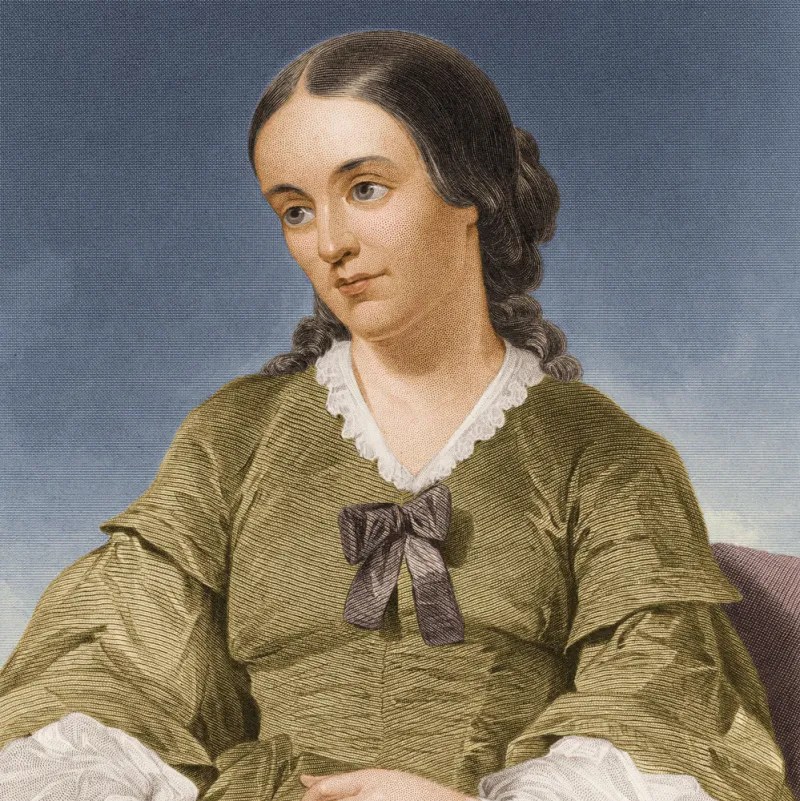
Thomas Wentworth Higginson: 19th century soldier, politician, abolitionist, author, mentor to poet Emily Dickinson, and Unitarian minister. Listen to something he once said about the human spirit: “Our true religious life begins when we discover that there is an Inner Light, not infallible but invaluable, which ‘lighteth every man that cometh into the world.’ Then we have something to steer by; and it is chiefly this, and not an anchor, that we need. The human soul, like any other noble vessel, was not built to be anchored, but to sail. An anchorage may, indeed, be at times a temporary need, in order to make some special repairs, or to take fresh cargo in; yet the natural destiny of both ship and soul is not the harbor, but the ocean.”
That’s what Thomas Wentworth Higginson said, our ancestor Unitarian minister of the 19th century. The human soul was meant for exploration. Sometimes the need is for rest and recuperation, yes. But the destiny of humanity is to move from lesser to greater, from harbor to ocean, on the way to becoming larger of mind and heart than you ever thought possible.
And it is possible, because there is within us an Inner Light. We are not hopeless sinners. We can think for ourselves. We can learn from our mistakes. Fall down and get up and keep on getting up. The Inner Light may not be infallible, but it is invaluable. We steer by it. It “lighteth every person that cometh into the world.”
This is our way of faith. This is our kind of spiritual intelligence.
Unitarian Universalist spiritual intelligence.
So it is no wonder that many of us might resonate with these words from Star Trek:
Space: the final frontier. These are the voyages of the starship Enterprise. Its five-year mission: to explore strange new worlds; to seek out new life and new civilizations; to boldly go where no one has gone before!
Of course it’s fiction. There is no literal starship Enterprise. But this fiction doesn’t come out of thin air. It is animated by the convictions of real people in real time. Thomas Wentworth Higginson communicated these convictions so very clearly, in his day. And then there was Gene Roddenberry in the 20th century, who picked up the humanist baton and ran with it.

He’s the creator of Star Trek. He gave birth to it and saw it through until his death in 1991. In that time, and beyond, the result has been no less than an inspiring back-and-forth between fiction and reality, reality and fiction, resulting in the growth of both.
Now it’s time to bring these guys in:
Kirk. Picard. Janeway. Spock. Pike. Burnham. Sisko. So many other names as well. Fictionally, you should know that their heroic exploits were made possible by Zefram Cochrane’s invention of the warp drive in the year 2063, which enabled his spaceship to travel “faster than light” and got the attention of an advanced, peaceful extraterrestrial race called the Vulcans. By the time Cochrane invented the warp drive, Earth was suffering from the aftermath of World War III. The Vulcans were instrumental in helping humanity heal from that disaster and learn from it.
It’s been a long road / Getting from there to here:
https://www.youtube.com/watch?v=-inVvjyE7Fg
Do you feel it? A spirit of optimism and hopefulness, but also of audacity, curiosity, resilience, and true grit. Making mistakes and learning from them. Never giving up. From this, the entire Star Trek franchise follows, which Scott did a great job tracing. Multiple TV series; hundreds and hundreds of individual TV episodes; and 12 feature films. But also this: more than 850 original novels, short story collections, episode and film novelizations; over 500 billions of dollars of merchandise sold; countless self-published “fanzines”; languages of Star Trek races which have been fully-fleshed out and you can study them in actual Star Trek institutes as well as the Duolingo website and smartphone app:

Don’t forget the countless fan clubs; countless on-line discussions; fans writing and producing their own Star Trek films and episodes; parodies like the movie Galaxy Quest; and let’s not forget the conventions where Trekkies can go meet some of their patron saints who are the actors/producers/writers/directors who make the whole thing go.

Star Trek inspires prodigious creativity along all sorts of lines. Prodigious, awesome creativity.
Because Star Trek resonates. As Thomas Wentworth Higginson said, “The human soul, like any other noble vessel, was not built to be anchored, but to sail.”
Star Trek’s creativity has happened even in the realm of what’s called “filk music.” There’s folk music, and then there’s filk music–which are songs with sci-fi themes presented at sci-fi conventions. Here’s a taste of just one of them–it’s playing with the massive real-time hit called “Gangnam Style” by Korean pop-star Psy:
https://www.youtube.com/watch?v=CayMeza487M
That’s a filk song. Fans crank them out by the dozen.
But this prodigious creativity which Star Trek inspires: it’s not just for fan zones and imaginary realms. Like I said earlier, there’s been a back-and-forth between fiction and reality, reality and fiction, resulting in the growth of both.
Consider:
Technologically, Star Trek inspired an inventor named Martin Cooper who, in 1973, created the first portable cell phone. It used to be that cell phones were available only in people’s cars. Star Trek led Martin Cooper to see a different possibility here, and it changed the world.
Star Trek’s other technologies–tricorders, food synthesizers, transporters, phasers, holodecks, and warp speed–remain fictional. But even so, real-time people will use these as ideas with which to communicate. For example: In 2020, the United States’ effort to develop a vaccine to protect against COVID-19 was named Operation Warp Speed. Operation Warp Speed was the brainchild of Dr. Peter Marks who happens to be a huge Star Trek fan.
In addition to Martin Cooper and Dr. Peter Marks, many other scientists and engineers will say that their professional and life choices were deeply influenced by Star Trek. This includes astronauts worldwide, who say they pursued their careers because they watched the show.

This is Samantha Cristoforetti, an Italian European Space Agency astronaut, former Italian Air Force pilot and engineer. She is the second of two women sent into space by the European Space Agency and the first from Italy.
Do you see her Vulcan “live long and prosper” hand gesture?
You all do that with me…..
And then you have people like Stacey Abrams–not an astronaut, not a scientist, but, instead, a politician, lawyer, voting rights activist, and author who served in the Georgia House of Representatives from 2007 to 2017, serving as minority leader from 2011 to 2017. Star Trek’s affirmation of the worth and dignity of every person, its celebration of diversity, and its commitment to critical thinking and collaborative effort has made her a big fan–enough so that she actually starred in an episode of Star Trek: Discovery, playing the role of Madam President of United Earth.

Madam President of Planet Earth: doesn’t that sound good to your Unitarian Universalist ears?
The original Star Trek series, which aired between 1966 and 1969, was famous (or for some infamous) because it featured a multi-ethnic crew in a time when TV producers believed that Whites should stick with their own kind. America was also in the midst of the Cold War with Russia, but guess what Star Trek had to say about that? By featuring a Russian crew member, Pavel Chekov, it promised that one day we would transcend our ethnocentric boundaries and become One World.

Women were given jobs of respect on Star Trek–yet another unique accomplishment of the original series. This was most notable in the casting of a Black woman, Nichelle Nichols, as Uhura, the ship’s communications officer. Black actresses at the time were always cast as servants. But Gene Roddenberry insisted that things could be otherwise. He once said, “Star Trek was an attempt to say that humanity will reach maturity and wisdom on the day that it begins not just to tolerate, but take a special delight in differences in ideas and differences in life forms. […] If we cannot learn to actually enjoy those small differences, to take a positive delight in those small differences between our own kind, here on this planet, then we do not deserve to go out into space and meet the diversity that is almost certainly out there.”
Can I hear a majQa’? (Klingon for Amen!)
Star Trek’s embrace of difference and diversity was profound for so many people. Nichelle Nichols tells the story of a time when she was at a fund-raiser at the NAACP and was told there was a big fan who wanted to meet her. “I thought it was a Trekkie,” she says, “and so I said, ‘Sure.’ I looked across the room, and there was Dr. Martin Luther King Jr. walking towards me with this big grin on his face. He reached out to me and said, ‘Yes, Ms. Nichols, I am your greatest fan.’ He said that Star Trek was the only show that he and his wife Coretta would allow their three little children to stay up and watch.” Nichelle Nichols goes on to say that she had been thinking of leaving the show and that she had told Dr. King so. She says, “I never got to tell him why, because he said, ‘You can’t. You’re part of history.’”
When she shared this story with Gene Roddenberry, he cried.
Years later, when Roddenberry accepted the award of Humanist of the Year from the American Humanist Association in 1991, he said “TV is supposed to be the worst of us, but we’ve tried to make it show the best of us.” “The human race is a remarkable creature, one with great potential, and I hope that Star Trek has helped to show us what we can be if we believe in ourselves and our abilities.”
Yes. Yes.
We can “live long and prosper,” if we believe.
Let it be a positive prophecy of our future.
There is an Inner Light within, not infallible but invaluable. We’re not helpless sinners. We’re not.
Yes, for thousands of years, it’s been an open question: is humanity getting better or worse?
For our Unitarian Universalist ancestors and for Star Trek, the answer is: it’s getting better.
In an interview he gave in 1991, Roddenberry shared his humanist faith. He said, “Humanity is in its childhood and is on track towards maturity.” Acknowledging the ugliness that human history has seen–the greed, the cruelty, the violence–he said, “We’re stumbling out of childhood. Have you ever watched children at play? They play for one moment, then the next they’re hitting each other and cursing each other in childish ways, and the next moment they’re kissing and hugging.” “We are a young species. I think if we allow ourselves a little development, understanding what we’ve done already, we’ll be surprised what a cherishable, lovely group that humans can evolve into.”
I find myself reminded of a story in which an old Cherokee is teaching his grandson about life. You may have already heard this, but it’s good enough to repeat. “A fight is going on inside me,” he said to the boy. “It is a terrible fight and it is between two wolves. One is all about greed, arrogance, self-pity, guilt, resentment, inferiority, lies, false pride, superiority, and ego. The other is quite different. It is all about joy, peace, love, hope, serenity, humility, kindness, benevolence, empathy, generosity, truth, compassion, and faith. The same fight is going on inside you – and inside every other person, too.” The grandson thought about it for a minute and then asked his grandfather, “Which wolf will win?” The old Cherokee simply replied, “The one you feed.”
Star Trek is not a denial of the messiness of existence and how ignorance creates misery. But it encourages us to feed the inner wolf which is all about hope and empathy and generosity and truth. So much of our lives is indeed a struggle. We know it. Children at play, one moment kind and the next trying to tear each other down. But, says Star Trek, we can acknowledge this fully and soberly without falling into despair. Without giving up.
So I want to ask you this morning: What if you gave yourself to Star Trek hopefulness?
What if that was the result for you, of the back-and-forth between Star Trek’s fictional world and the real world you live in?
When you witness the latest tragedy, or the latest inanity, can you comfort yourself with the big picture and the long view that humanity is in its childhood and is indeed on track towards maturity?
“How would you like to be remembered?” asks Gene Roddenberry’s interviewer from 1991–his very last before he died. And he replied, “That I had great patience with and great affection for the human race. I do not believe problems needed to be solved immediately in present-day terms, and, strangely, that I had a philosophy that did not know what ‘immediately’ was. Perhaps, ‘tomorrow’ is 500 years from now. What we humans are is really a remarkable thing. How can you doubt that we will survive and mature? There may be a lot of wisdom in the old statement about looking on the world lovingly. If we can, perhaps the world will have time to resolve itself.”
Maybe one of the things Roddenberry is suggesting here is that prophesies are self-fulfilling things.
When we prophesy doom, do we not tend to help create it?
How would you like to be remembered?
For myself, I pray for the hopeful wisdom of Thomas Wentworth Higginson–a Trekkie long before there were any Trekkies!–who spoke of the destiny of humanity to move from lesser to greater, from harbor to ocean, on the way to becoming larger of mind and heart than anyone ever thought possible.
For myself, I pray for the courage of Gene Roddenberry’s love of humanity even in its messy childhood.
Let us prophesy about ourselves positively.
Just as the Enterprise opening theme song says,
I’ve got faith of the heart
I’m going where my heart will take me
I’ve got faith to believe
I can do anything
I’ve got strength of the soul
No one’s gonna bend or break me
I can reach any star
I’ve got faith, I’ve got faith
Faith of the heart

 Spiritflow
Leave a comment