
One of the longest-running science fiction series in network television history is The X-Files.
It originally aired in the 1990s up till 2002 and saw revivals in 2016 and a further season in 2018. In the show, “X-Files” are unsolved cases involving mystical and paranormal phenomena collected by the FBI, but no one really takes them seriously except for this one special agent, nicknamed “Spooky,” who’s passionately curious about them and happily willing to risk his reputation to get to the truth, because “the truth is out there.”
His name is Fox Mulder.
First time we meet him, he’s in his office, in the basement of the FBI building, the very bowels, and you can’t get any lower than that in the bureaucratic food chain.
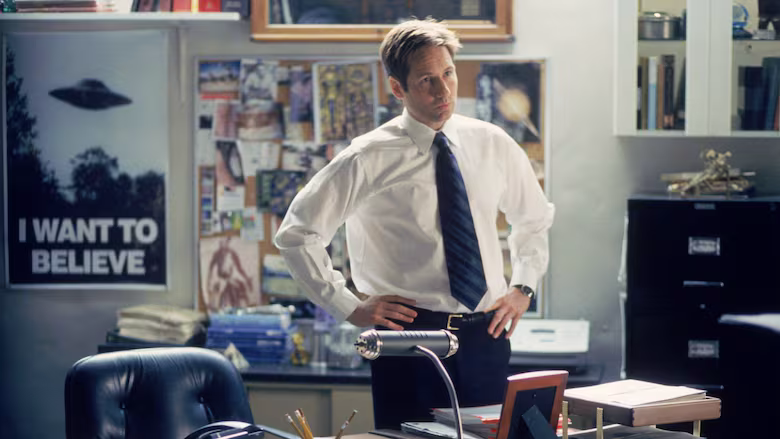
It’s a clear message from his FBI bosses about their general disdain towards the whole X-File business. That is, until Fox Mulder, eventually joined by the plucky Dana Scully, begins uncovering some serious strangeness and threatens to blow the lid off of normality.
That’s when “the authorities” start to push back, quite nastily.
That image of the “X-File”: it’s loaded with powerful themes: spooky happenings, passionate curiosity, how “the truth is out there”–but also the ordeal of facing denial, disdain, serious risk to one’s reputation and career, and more. An X-File means all of that together.
And I’m here today to tell you that X-Files aren’t just fiction.
Honest-to-God real-life X-Files exist.
Let’s consider one right now. I learned about it in a book by Elizabeth Lloyd Mayer, Ph. D., entitled Extraordinary Knowing: Science, Skepticism, and the Inexplicable Powers of the Human Mind. It’s Dr. Mayer’s personal X-File, and it changed her life.
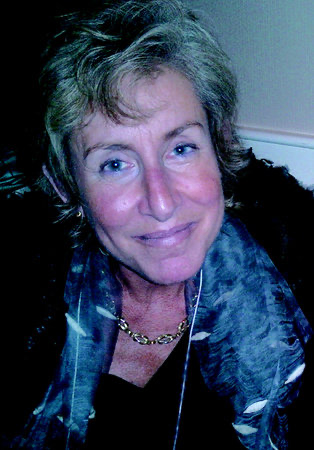
Here’s the full story from Dr. Mayer. I quote: “In 1991 I was teaching in the psychology department of the University of California at Berkeley and at the University Medical Center in San Francisco. I was doing research on female development and seeing patients in my psychoanalysis practice. I was a member of numerous professional associations, doing committee work, attending international meetings, functioning on editorial boards, and lecturing all over the country. I was a training and supervising analyst in the American Psychoanalytic Association. I was busy and fulfilled, and life was running along the way it does.
“My eleven-year-old daughter, Meg, who’d fallen in love with the harp at age six, had begun performing. She wasn’t playing a classical pedal harp but a smaller, extremely valuable instrument built and carved by a master harp maker. After a Christmas concert, her harp was stolen from the theater where she was playing. For two months we went through every conceivable channel trying to locate it: the police, instrument dealers across the country, the American Harp Society newsletters–even a CBS TV news story. Nothing worked.
“Finally, a wise and devoted friend told me, ‘If you really want that harp back, you should be willing to try anything. Try calling a dowser.’ The only thing I knew about dowsers was that they were that strange breed who locate underground water with forked sticks. But according to my friend, the ‘really good’ dowsers can locate not just water but lost objects as well.

“Finding lost objects with forked sticks? Well, nothing was happening on the police front, and my daughter, spoiled by several years of playing an extraordinary instrument, had found the series of commercial harps we’d rented simply unplayable. So, half-embarrassed but desperate, I decided to take my friend’s dare. I asked her if she could locate a really good dowser–the best, I said. She promptly called the American Society of Dowsers and came back with the phone number of the society’s current president: Harold McCoy, in Fayetteville, Arkansas.
“I called him that day. Harold picked up the phone–friendly, cheerful, heavy Arkansas accent. I told him I’d heard he could dowse for lost objects and that I’d had a valuable harp stolen in Oakland, California. Could he help locate it?
“’Give me a second,’ he said. ‘I’ll tell you if it’s still in Oakland.’ He paused, then: ‘Well, it’s still there. Send me a street map of Oakland and I’ll locate that harp for you.’ Skeptical–but what, after all, did I have to lose? I promptly overnighted him a map. Two days later, he called back. ‘Well, I got that harp located,’ he said. ‘It’s in the second house on the right on D- Street, just off L- Avenue.’
“I’d never heard of either street. But I did like the sound of the man’s voice–whoever he was. And I don’t like backing down on a dare. Why not drive to the house he’d identified? At least I’d get the address. I looked on an Oakland map and found the neighborhood. It was miles from anywhere I’d ever been. I got in my car, drove into Oakland, located the house, wrote down the number, called the police, and told them I’d gotten a tip that the harp might be at that house. Not good enough for a search warrant, they said. They were going to close the case–there was no way this unique, portable, and highly marketable item hadn’t already been sold; it was gone forever.
“But I found I couldn’t quite let it go. Was it the dare? Was it my admiration for the friend who’d instigated the whole thing? Was it my devastated daughter? Or was it just that I had genuinely liked the sound of that voice on the other end of the line?
“I decided to post flyers in a two-block area around the house, offering a reward for the harp’s return. It was a crazy idea, but why not? I put up flyers in those two blocks, and only those two blocks. I was embarrassed enough about what I was doing to tell just a couple of close friends about it.
“Three days later, my phone rang. A man’s voice told me he’d seen a flyer outside his house describing a stolen harp. He said it was exactly the harp his next-door neighbor had recently obtained and showed him. He wouldn’t give me his name or number, but offered to get the harp returned to me. And two weeks later, after a series of circuitous telephone calls, he told me to meet a teenage boy at 10:00 p.m., in the rear parking lot of an all-night Safeway. I arrived to find a young man loitering in the lot. He looked at me, and said, ‘The harp?’ I nodded. Within minutes, the harp was in the back of my station wagon and I drove off.
“Twenty-five minutes later, as I turned into my driveway, I had the thought, This changes everything.”
And that’s Dr. Mayer’s personal X-File: the recovery of her daughter’s stolen harp in Oakland, California through the mysterious efforts of one Harold McCoy, who used dowsing rods to locate it while he was multiple states away in Fayetteville, Arkansas. This is how she encountered evidence of a truly mystical faculty in human beings that transcends the limits of the physical, and all it needs is something to focus it and give it expression.
If it makes sense to speak of an “inner” Fox Mulder–the part of a person that is fired up for all things paranormal and spooky–then this whole episode fired up Dr. Mayer’s inner Fox Mulder for sure.
Do you have an inner Fox Mulder? Is he feeling all fired up right now?
But if there’s an inner Fox Mulder, there’s also inner FBI bosses, and the inner FBI bosses are not pleased. They are very clear in their denial about the whole thing. “Finding lost objects with forked sticks?”—just imagine how Dr. Mayer must have said this to herself. Or how the idea of posting the flyers struck her as crazy. If she had followed the lead of her inner FBI bosses, her story would have ended before it even began. But she pressed ahead, pressed back against the denial. She saw the story through.
When you saw what today’s sermon topic was, did your own inner FBI bosses mutter their displeasure? What is that strange Senior Minister man up to now?
Interestingly, when word of Dr. Mayer’s experience got out to her medical and psychoanalytic colleagues, the dam broke and all of a sudden they began to inundate her with accounts of their own mystical experiences. “The stories,” she says, “were all about knowing things in bizarrely inexplicable ways, like: ‘My patient walked in and I knew her mother had died—no clues—I just knew it instantly.’
“Or: ‘I woke up in the middle of the night like I had heard a shot, and the next day I found out it was exactly when my patient took a gun and tried to kill herself.’
“Or: ‘I suddenly felt that my partner’s son was in trouble. I called my partner, and it worried him enough that he tracked down his son. His son had been in a bad car accident and my partner got there just in time to make a decision about a surgery that probably saved his life.’”
Dr. Mayer goes on to say, “I was particularly fascinated by how eagerly my colleagues shared even the most weirdly personal stories with me. Their eagerness puzzled me, until I realized how badly people wanted to reintegrate corners of experience they’d walled off from their public lives for fear of being disbelieved.”
Have you ever had an experience like Dr. Mayer’s, or like those of her colleagues? Knowing things in bizarrely inexplicable ways?
But perhaps your inner FBI bosses have your inner Fox Mulder in a headlock, and your story has remained unvoiced and unintegrated in your life….
This was so for Barbara Ehrenreich, the labor activist, feminist, award-winning journalist, and fourth-generation atheist who, in her book, Living with a Wild God, essentially comes to terms with a real-life X-File of her own which she denied for many years.
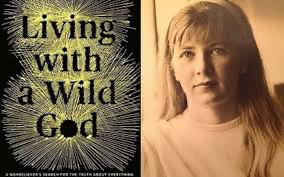
It happened when she was a teenager. She had been walking down a street early in the morning when, directly and viscerally, she experienced Oneness. She and the world were One; her separation from it was an illusion; time stood still. Barbara Ehrenreich says, “the world flamed into life. How else to describe it? There were no visions, no prophetic voices or visits by totemic animals, just this blazing everywhere. Something poured into me and I poured out into it. […] It was a furious encounter with a living substance that was coming at me through all things at once, and one reason for the terrible wordlessness of the experience is that you cannot observe fire really closely without becoming part of it. Whether you start as a twig or a gorgeous tapestry, you will be recruited into the flame and made indistinguishable from the rest of the blaze… I could not speak of it because I lacked the words, and I could not recapture the experience any more than a burned-out filament could be used to light a fresh bulb.”
Oneness happened for Barbara Ehrenreich. Her real-life X-File. But wherever there’s an X-File, again, the repressive FBI bosses are close behind, and Ehrenreich reports their chatter: “Here we leave the jurisdiction of language, where nothing is left but the vague gurgles of surrender expressed in words such as ‘ineffable’ and ‘transcendent.’”
For years, her inner FBI bosses held full sway and persuaded her to reject the validity of her experience outright. “For most of the intervening years, [she says,] my general thought has been: if there are no words for it, then don’t say anything about it. Otherwise you risk slopping into ‘spirituality’, which is, in addition to being a crime against reason, of no more interest to other people than your dreams.”
What do you think? Do you agree with her inner FBI boss assessment that coming to terms with her mystical experience was a “vague gurgle of surrender”? That she was “slopping into spirituality” and “committing a crime against reason”?
That if there’s no words for something, shut up already?
But not to have words for something is suspicious. There must be a backstory. Everything has a story, and so do our internal FBI bosses. Where are they coming from? What exactly makes paranormal experience so off limits, so impossible, for them?
Parapsychologist Hoyt Edge sees it as a consequence, ultimately, of 16th and 17th century European thinkers trying to escape the oppression of the Church. They did this, essentially, through a conceptual revolution kicked off by philosophers like Rene Descartes in which reality was divided into two categorically distinct realms. On the one hand was the realm of values, ideas, and choice: “mind.” On the other hand was the realm of material stuff, machine-like in function: “matter.” Accordingly, the Church could say whatever it liked about the realm of the mind. But, going forward, it needed to stay silent about the workings of the natural world. It needed to defer to what Science had to say.
Over time, this conceptual revolution would solidify into inflexible dogma about the way the world is. The dogma says that matter is completely inert, completely dead, just surface and no spiritual depth. Action occurs only through direct physical contact like atoms bumping against other atoms. Perception occurs only through direct line of physical sensation, if not through eye and ear, then mediated through scientific instruments like microscopes and telescopes.
That’s the inner FBI boss conviction. A dogma that remains solid for most people even after almost 100 years of weird, completely verifiable yet mind-blowing revelations coming from the field of quantum physics.
So when this dogma encounters something like dowsing—which dares to suggest that mind and matter are not categorically distinct after all but can mingle and merge in ways that confound current science—well. Instant rejection.
Impossible.
But it’s not impossible. It happened. Things like this can happen. Dr. Elizabeth Mayer found the harp, put it in the back of her stationwagon, returned home, turned into her driveway, and that was the moment when she realized that life had just addressed her with a huge question, and she would need to work hard to come up with some answers.
She’d have to unleash her inner Fox Mulder.
That’s what she’d have to do.
And this is why I’m a Unitarian Universalist. I’m a Unitarian Universalist because I believe that the world and God are just too big to be defined by any one metaphor and by any one way. “The reason ours is a creedless faith,” says the Rev. Bill Schultz, “is because we have a theory about Creation and our theory—unlike that of most religious traditions—is that Creation is too grand, too glorious, too complex, and too mysterious to be captured in any narrow creed or reflected in any single metaphor.”
This includes metaphors that come from reductionist materialist science and the heirs of Descartes.
Life is constantly addressing us with huge questions, challenging us to open up our minds and open up our hearts. And that’s what our faith calls us to.
Even when we’re talking about weird stuff like the mystical.
You know, in the X-Files TV show, a main theme is conspiracy. People wanting to silence Fox Mulder because if he does find out the truth, it’s going to be horrible.
In the show, the conspiracy tries to cover up the truly terrible fact that the government is engaged in awful biological experimentation on humans.
But in the real world, what’s being covered up is the exact opposite of terrible. If our inner Fox Mulders were given free reign, I believe that what would come to collective light is the realization that the interconnected web of all existence is true but in profounder ways than we might ever have thought.
How the interconnected web of all existence is such that a dowser in Arkansas can use his dowsing rod to discover something true about what’s going on in California.
How interconnectedness means that a therapist can suddenly feel something’s wrong with their partner’s son, that he’s in deep trouble, so he calls their partner, the partner tracks their son down, and he gets there just in time to save his life.
How interconnectedness means that a teenager back in the 1950s can experience the world flaming into life, a furious encounter with a living substance coming at her from all things at once, and she becomes One with All.
Mystically, mysteriously, all things are connected together, people and things and planet, in a far deeper and more fundamental way than physical collision. Appearances are deceiving; the boundaries of our skin seem to be the boundaries of ourselves but it doesn’t have to be. Relationship is more real than separation.
There are time-stands-still moments, when we come to know who we truly are.
If this is “slopping into spirituality,” then so be it!
“We stand on the edge of all that is great,” says the true life version of Fox Mulder who comes from our own spiritual tradition and devoted his entire life to blowing the lid off of the conspiracy in his day, which was 150 years ago. His name is Ralph Waldo Emerson.
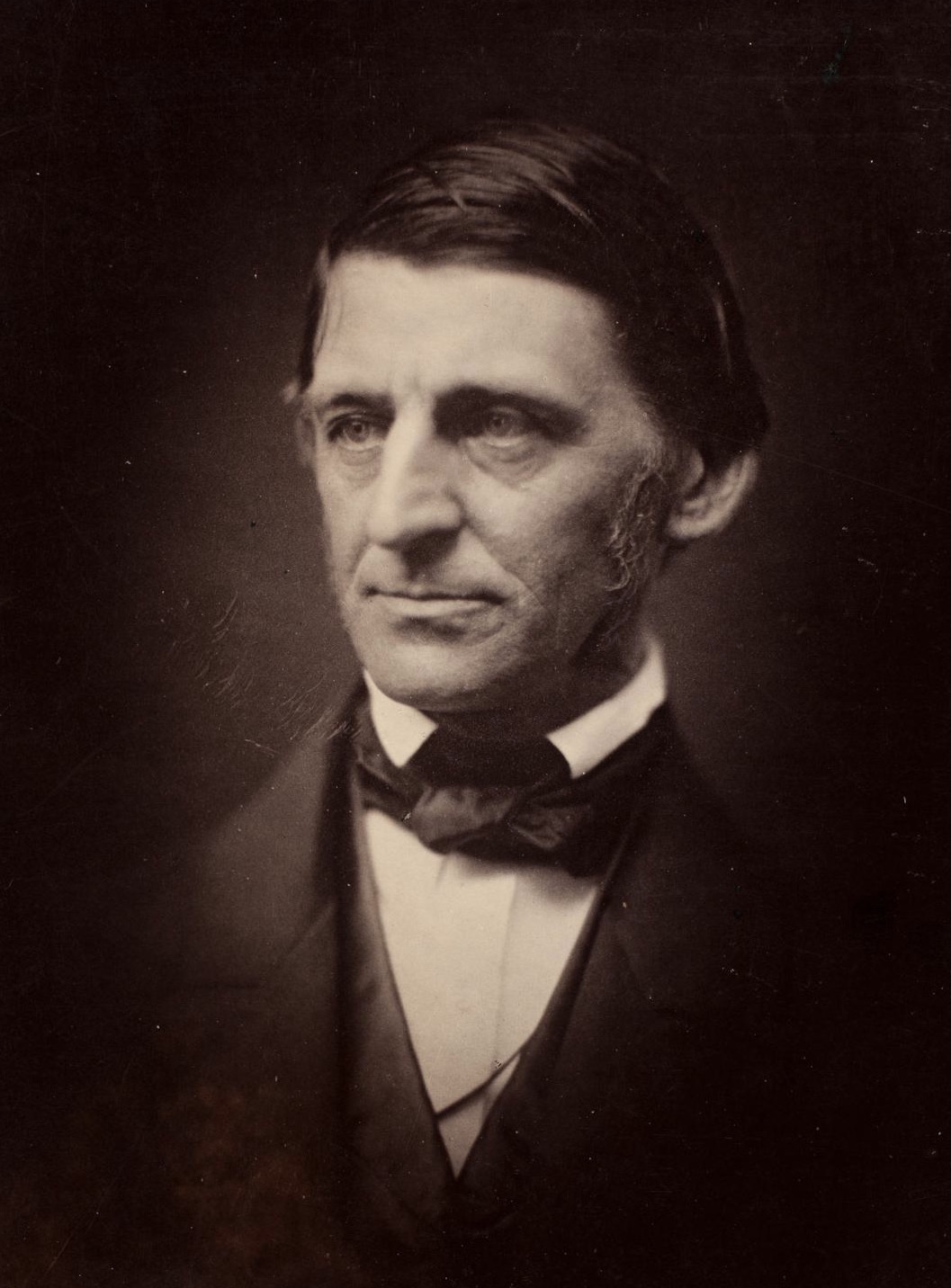
“We stand on the edge of all that is great, yet are restrained in inactivity and unacquaintance with our powers, like workers of the hive every one of which is capable of transformation into the Queen Bee. We are always on the brink of an ocean into which we do not yet swim… But suddenly in any place, in the street, in the room, will the heaven open, and the regions of wisdom be uncovered, as if to show how thin the veil…”
So says Ralph Waldo Emerson.
And with him I pray:
Let heaven be opened.
Let the regions of wisdom be uncovered.
Let us know how truly thin the veil is.
 Spiritflow
Leave a comment