A teacher once recommended a spiritual practice to a student. She said, “When you wake up, before doing anything else, write down on separate pieces of paper these sentences: (1) I am but dust and ashes, and (2) I am a Child of God. For these truths are both true, and together they spell out the paradox of being human. Both Earth and Heaven are in people. People are bridges between them. Never forget.”
“Next, tuck each sentence inside a pocket–right pocket, left pocket–then go and meet the new day. Use them to help keep you balanced. In the face of moments of overwhelm and exhaustion, reach for the piece of paper that says I am a Child of God. Know that the journey of your life has a value and a purpose that transcends the specific crises you face, personally and politically. Yet there will also be moments when you catch yourself feeling holier-than-thou, entitled, certain you are right and they are wrong. That’s when you should reach for the piece of paper that says I am but dust and ashes.
“I call this,” said the teacher to the student, “the spiritual practice of being a balanced human being.”
“It is the spiritual practice,” she said, “of humanness.”
The student received the lesson.
[Show slips of paper]
We are indeed Children of God; the instinct for seeking transcendence and mystical unity is inbuilt. Our minds can grasp infinity.
But we are also filled with fears, we are riddled with ignorance, we are frail and mistake-prone. We are mortal. We are dust and ashes.
Humane living is holding on to both and excluding neither. For when we do that–when we cling to one pole of our identity to the exclusion of the other–that’s when disasters happen.
Hold on to Heaven to the exclusion of humble Earth, or the reverse, and you will harm yourself and you will harm others.
We need balance. We need both notes in our pockets:
“I am a Child of God.”
“I am but dust and ashes.”
Today’s installment in our year-long exploration of Transcendentalism tells the story of the very first Transcendentalist, Mary Moody Emerson, and how she fought for just this sort of balanced understanding of herself. From this intensely personal spiritual work, she helped launch a movement that brought fireworks to 19th century America, produced some of our country’s first literary classics, and continues to be hugely influential to this day.
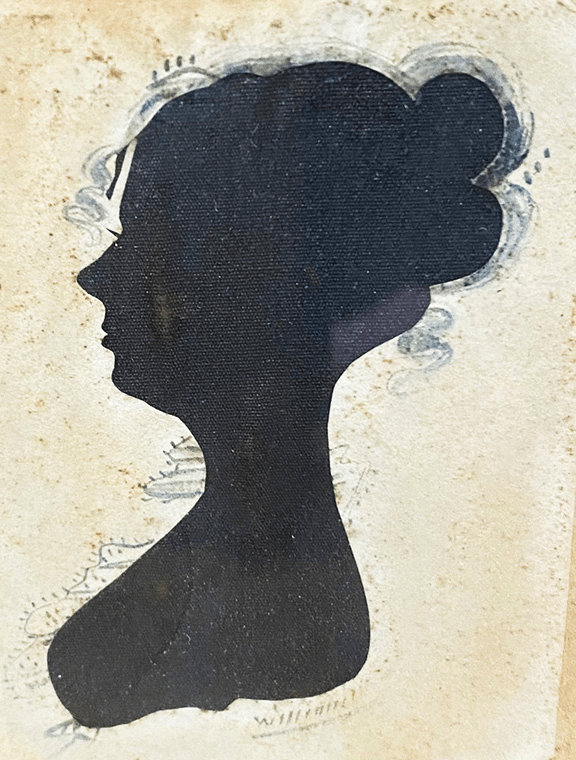
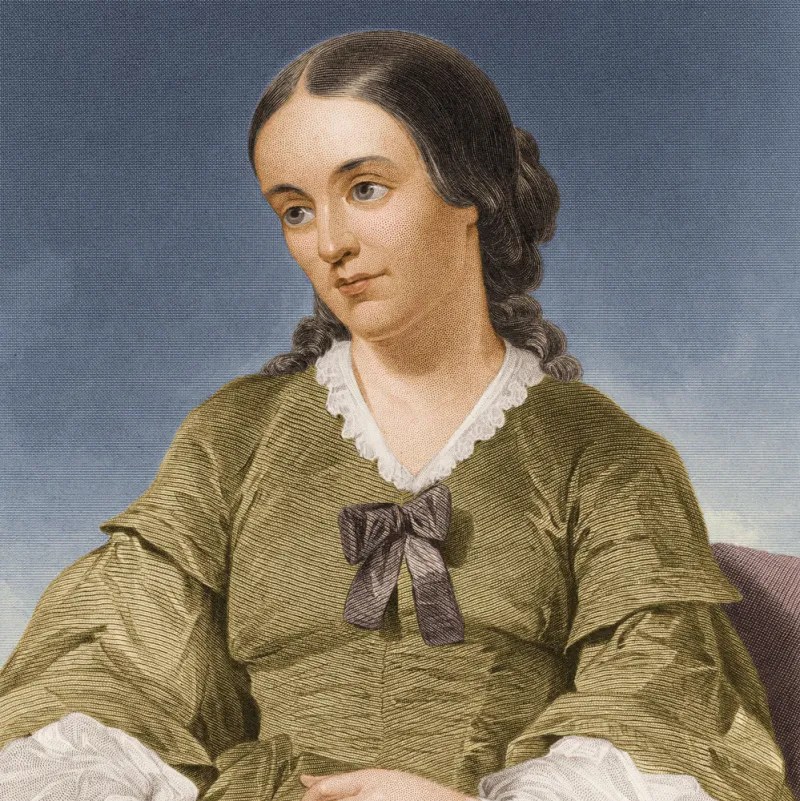
Without her, in particular, there would be no Ralph Waldo Emerson, whom most folks regard as the quintessential voice of Transcendentalism. He is famous for saying, “Nothing great was ever achieved without enthusiasm.” But he learned it from his aunt, Mary Moody Emerson, whom he regarded as his “earliest and best teacher.”

Emerson’s “Nothing great was ever achieved without enthusiasm” quote came out in 1841. But his aunt Mary Moody Emerson got there first. 14 years earlier, In 1827, she wrote, “Enthusiasm in all that is great is the best idea we have of Heaven.” Few people know that to read Ralph Waldo Emerson is to be in secret communion with his elderly aunt. He was of course his own man, but no one is self-made. No one comes from nowhere and emerges fully formed.
She was the root system, and he was the magnificent tree.
We’ll learn some of this history. But this sermon is no mere history lesson. From Mary Moody Emerson, we learn how to be spiritually balanced in our lives here and now, because it’s needed.
Now, when you hear the word “enthusiasm,” what comes instantly to mind? Is it a good thing?
Absolutely.
But you need to know that in Mary Moody Emerson’s time, in the late 1700s and early 1800s, there was nothing so awful and shameful. If you lived in her day and heard her say “Enthusiasm in all that is great is the best idea we have of Heaven,” your jaw most likely would have dropped. You’d have felt scandalized. Smelling salts would have been needed, to revive you from your faint…..
Listen to the voice of the minister widely considered to be the intellectual grandfather of Unitarianism in its original formulation, the Rev. Charles Chauncy. What you are about to hear him say became the establishment viewpoint at Harvard University, which is where six generations of male Emersons before Mary Moody Emerson went to seminary, graduated, and entered into the ministry, including her father, the Reverend William Emerson, who fought in the Revolutionary War. It reflects the theologically conservative culture Mary Moody Emerson grew up in, and struggled with.
In his sermon from 1742 entitled “Enthusiasm Described and Caution’d Against,” Rev. Chauncy said, “… the bible is the grand test, by which every thing in religion is to be tried; and you can, at no time … be under the guidance of the SPIRIT of GOD … if what you are led to, is inconsistent with the things there revealed….” According to Rev. Chauncy, the enthusiast “mistakes the workings of his own passions for divine communications, and fancies himself immediately inspired by the SPIRIT of GOD, when all the while, he is under no other influence than that of an over-heated imagination.”
Essentially, Chauncy is arguing that imagination, feeling, and intuition are nothing but dust and ashes. Nothing of Heaven can be found in the inner person. There is no such thing as an “inner light.” It was an argument he lobbed like a grenade against the Great Awakening which was surging at the time. The Great Awakening involved multiple New England church communities engulfed in revival-type experiences, emotional outpourings, and surrender to passion. Intensity of feeling, for the churches of the Great Awakening, was seen as the litmus test of truth. Unacceptable, said Charles Chauncy. For him, genuine religion should rest on bible-based reason rather than frenzy, moral living rather than ecstatic experience, and order and decorum rather than emotional chaos.
He did have a point. One Great Awakening preacher he disapproved of was the Rev. Jonathan Edwards, whose emotional pyrotechnics in the pulpit were meant to scare people into piety. His “Sinners in the Hands of an Angry God” sermon is a classic case of this, in which he declared that whenever God catches the scent of humanity, the human smell is so foul and putrid it causes God to “flair his nostrils in disgust.” Just listen to this excerpt: “The world of misery, the lake of burning brimstone, is extended abroad under you…The God that holds you over the pit of hell, much as one holds a spider or some loathsome insect over the fire, abhors you. You have offended him…O Sinner! You hang by a slender thread, with the flames of divine wrath flashing about it …” Edwards, in his pulpit, would tear his clothes in angst and self-disgust. This is the horror show God that Jonathan Edwards preached. People in his pews would faint, cry out, wail in fear—and fear was the reason why they came to believe, not reason.

Would you agree that fear, powerful motivator as it is, is seldom if ever a path to the truth?
Fast forward to the preachers of the Second Great Awakening, several decades later, and you encounter more relentless fearmongering. William Miller, a Baptist farmer from upstate New York, became convinced from private revelation that Christ would return around 1843–1844. His astonishing message sparked mass revivals and the birth of a whole subculture of apocalyptic expectation. Followers gathered by the tens of thousands, publishing newspapers and holding enormous camp meetings. When Christ did not appear on the predicted dates (most famously October 22, 1844), the event became known as “The Great Disappointment.” But this didn’t stop future preachers from declaring new end time dates. Just this year, in 2025, South African pastor Joshua Mhlakela posted on social media that Jesus came to him in a dream and told him that the rapture would take place September 23 or 24.
More disappointment.
But also a source of endless jokes:

Just because you feel something intensely and imagine it in detail doesn’t automatically make it true. It would have been good for Jonathan Edwards, William Miller, and Joshua Mhlakela to pull out the note in their pocket that says, “I am but dust and ashes.” A note meant to chasten their spiritual grandiosity and encourage greater humility and balance.
On the other hand, the Rev. Charles Chauncy was guilty of grandiosity himself. Another reason why he so hated enthusiasm is that he saw it driving social change. In “Enthusiasm Described and Caution’d Against,” for example, he condemned the idea of women speaking up and becoming leaders in the church. I quote, “And it deserves particular consideration, whether the … encouraging, of women, yea, GIRLS to speak in the assemblies for religious worship, is not a plain breach of that commandment of the LORD, wherein it is said, Let your WOMEN keep silence in the churches; for it is not permitted to them to speak—. […] After such an express constitution, designedly made to restrain women from speaking in the church, with what face can such a practice be pleaded for?”
Chauncy made the bible into an infallible thing, God’s own dictation to human scribes. But historical scholarship in the 19th and 20th centuries have exposed this as falsehood and revealed instead that it’s the work of many human writers over generations, that the parts don’t all agree, and these writers imported into scripture the prejudices and limitations of their time. There are, in fact, specific portions of scripture which reflect conservative backlash against the radical teachings of Jesus and the earliest Christian communities in which women were granted equal status to men. The bible passage Chauncy quotes, stating “Let your WOMEN keep silence in the churches; for it is not permitted to them to speak,” is one example of this conservative propaganda, intentionally inserted into the New Testament as a way to shut down the new freedom early Christianity had given women. The freedom and equality that had been given was, in later Christianity, brutally taken away.
In Chauncy’s day, enthusiasm did spur unorthodox talk of women speaking up and becoming leaders in the church. And why not? Imagination, emotion, and intuition are not categorically misleading. They can indeed be important sources of information and clues to what is right and true. There is some Heaven within them. To be a woman in Chauncy’s era and in the era of Mary Moody Emerson was to feel suffocated, strangled, and smothered. Women were supposed to subdue their ambitions, channel their egos into obedience to their husbands, and to be seen but not heard. The wrongness of this was a thing deeply intuited and felt.
And it was wrong. Feeling and intuition were right on target. When many women and some men imagined how life could be so very different from what the New England patriarchal status quo required, that imagination was not so much overheated as prophetic.
Rev. Chauncy, you need to pull the note that says “I am but dust and ashes” out of your pocket too. You need to step back from your holier-than-thou, “I am in possession of all truth,” stance.
Step back, Jack.
As a side note, remember how I said a moment ago that Chauncy is considered the intellectual grandfather of Unitarianism in its original formulation?
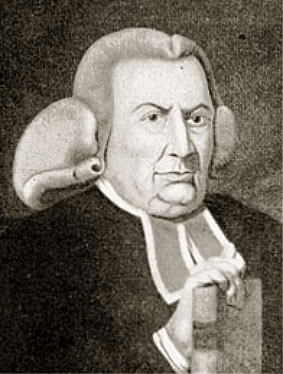
What do you think he’d say about the Unitarian Universalism you and I know today? How would our chancel screen and its implied affirmation of many bibles from many religions land with him?
Unitarianism went through Transcendentalism and emerged from the other side a transformed thing. More about this in future sermons.
For now, let’s get back to Mary Moody Emerson.
Her father, the Harvard-educated minister Reverend William Emerson, died when Mary was only three years old. Mary’s mother, Phebe, now a widow with five small children, sent Mary to live with her grandmother. It made Mary feel like she’d been exiled from all she knew. For the rest of her life, Mary felt unwanted, burdened by the sense that she was unloved–or worse, unloveable.
This was what the note “I am but dust and ashes” meant to her personally. Cosmic orphanhood.
The black hole gravity of this feeling threatened to suck all joy and meaning out of her world.
To find balance, she would need to reach for Heaven. She would need to reach for the other note saying “I am a Child of God.” Of course I am saying that figuratively. What she did literally was seek out first-hand experience of the Divine. Oneness. Direct connection with Divinity. And do this in defiance of the generations of preachers in her family (as well as wider society) who ridiculed this as delusional.
This, you need to know, is a pivot point in the history of religion in America. So much so that from this a new word is born. The old word, loaded with negative connotations, is “enthusiasm”. But the new word being born through the likes of Mary Moody Emerson and the rest of the Transcendentalists is “mysticism.”

What we know today as “mysticism” is the closest verbal equivalent to Mary Moody Emerson’s “enthusiasm.”
A sense of cosmic orphanhood drove Mary Moody Emerson into the medicine of mysticism.
Despite the disapproval she encountered from all her Harvard-educated, minister family members.
Despite the New England culture of the time that wanted her married with children, obedient to husband, and seen but not heard.
Her thirst to feel connected to God led her, first of all, to read. She read everything she could. Judith Sergeant Murray. Edward Young and William Cowper. Wordsworth, Byron, Spinoza, Hume. Her life was a never-ending quest to find time to read, in between household duties. One journal entry says, “Rose before light every morn; … read Butler’s Analogy; commented on the Scriptures; read [Cicero’s letters]; touched Shakespeare,–washed, carded, cleaned house, and baked.”
Besides reading, she sought to draw out her imagination and intuition through journaling. She called her journals her “Almanacks.” Over the years, the pages would grow into the thousands. Out of her depths, she experienced the spontaneous overflow of her thoughts and feelings, and she put them down in spidery, crabbed handwriting. One passage goes, “I am weak but God is eternal immutable and full of love. This morning the woods were enchanting, the crescent [moon] was brilliant–near it was the morning star, the east was reddened, the air was mild, I was rapt, I prostrated my truth, my charity and love should resemble those benign planets.” The language here is Romantic poetry, like Wordsworth’s and Keats’. And her nephew, Ralph Waldo Emerson, ate it up. Repeatedly, he’d ask to borrow her Almanacks, and he delighted in them. Into his own journals he’d transcribe her sentences. She was the master and he the apprentice. During the years he was preaching in a Unitarian pulpit, Emerson (with permission) built his sermons out of her written words. He preached her thoughts.
She was the root system, and he was the magnificent tree.
One story I must tell about their relationship has to do with Emerson’s first book, entitled Nature. It came out in 1836, years after he had resigned his Unitarian pulpit and devoted himself to writing and lecturing. It’s one of the classics of Transcendentalism. Soon after its publication, he sent Mary Moody Emerson a copy of this slim green volume. You can see this book today in a museum and the many notations that his prickly aunt made in its margins. One is related to this sentence of her nephew’s: “We learn that man has access to the entire mind of the Creator.” That’s when Mary Moody Emerson reached for the note that says “I am but dust and ashes.” She drew an X beside the sentence and wrote, “Have the seraphim?” She’s suggesting that even the seraphim–those highest-order angels the bible describes as serving around God’s throne–do not and cannot know God’s entire mind. She’s essentially chiding her nephew, reminding him to be better balanced in his view of humans.
Not just “I am a Child of God.”
But also, “I am dust and ashes.”
The mention of Ralph Waldo Emerson’s book Nature brings us to the place where his Aunt most felt connected with the Divine. One time, she wrote, “In communion with trees, with streams and stars and suns, man finds his own glory inscribed on every flower and sparkling in every beam.” In a letter to a friend she said, “The language of the heart is the language of nature.” “Never,” she would say elsewhere, “were emotions so animated & uninterrupted as those of my walk. Why oh my God, are thy virtuous creatures ever unhappy? It is because they comprehend nothing of the wonders which surround them in the vast volume of nature–in the divine book of providence which nature unfolds, and which revelation writes with sun beams!”

It’s ironic she would wonder about unhappiness, when from the first she felt like a cosmic orphan, in the wake of her father’s death and being sent away from her home to live elsewhere. Clearly, for Mary Moody Emerson, to be immersed in nature was her way of pulling out the note saying “I am a Child of God.”
What’s your way of doing that? Whatever your preferred language for that might be? (Child of the Goddess, Child of the Universe, Child of Love, Child of Stardust?)
Is your way reading?
Journaling?
Being in nature?
Something else?
In her later years, Ralph Waldo Emerson would say this about his aunt: “She must always occupy a saint’s place in my household, and I have had no hour of poetry or philosophy … in which she does not enter as a genius.”
Mary Moody Emerson.
So heroically brave in a time when women were taught to be silent.
Wounded and finding healing in the largeness of nature’s spirit.
Not married, no children of her own, but launching Waldo into the world, root system to his tree.
A person who was but dust and ashes.
A Child of God.
 Spiritflow
Leave a comment