To live in this world, wrote the poet Mary Oliver, we have to learn how to love what is mortal—and, when the time comes, how to let it go.
That’s the curriculum.
Not easy.
Because the central challenge of being alive is not avoiding heartbreak. It is taking the risk to love anyway. Opening the heart with full knowledge that it can be broken—then doing it again, and again, because without love, existence becomes a kind of careful survival that never quite becomes a life.
For many of us, one of the places we learn that lesson most clearly—most purely—is with an animal companion.
Not because pets are simple.
But because the love is.
There’s a particular kind of richness these relationships bring. They don’t usually demand explanation. They don’t come with speeches. They come with routines. They come with presence. They come with the ordinary holiness of a life that meets you at the door, or curls up beside you, or puts its whole body against you when you’re falling apart—without needing you to say the right words.
And then, when that life ends, we feel it as the loss of family—because that’s exactly what it is.
This sermon was purchased at 2024’s Service Auction by Janet Nabring-Stager, and the timing is tender: just one day before the auction, Janet and Jeff said goodbye to their beloved dog Loki.
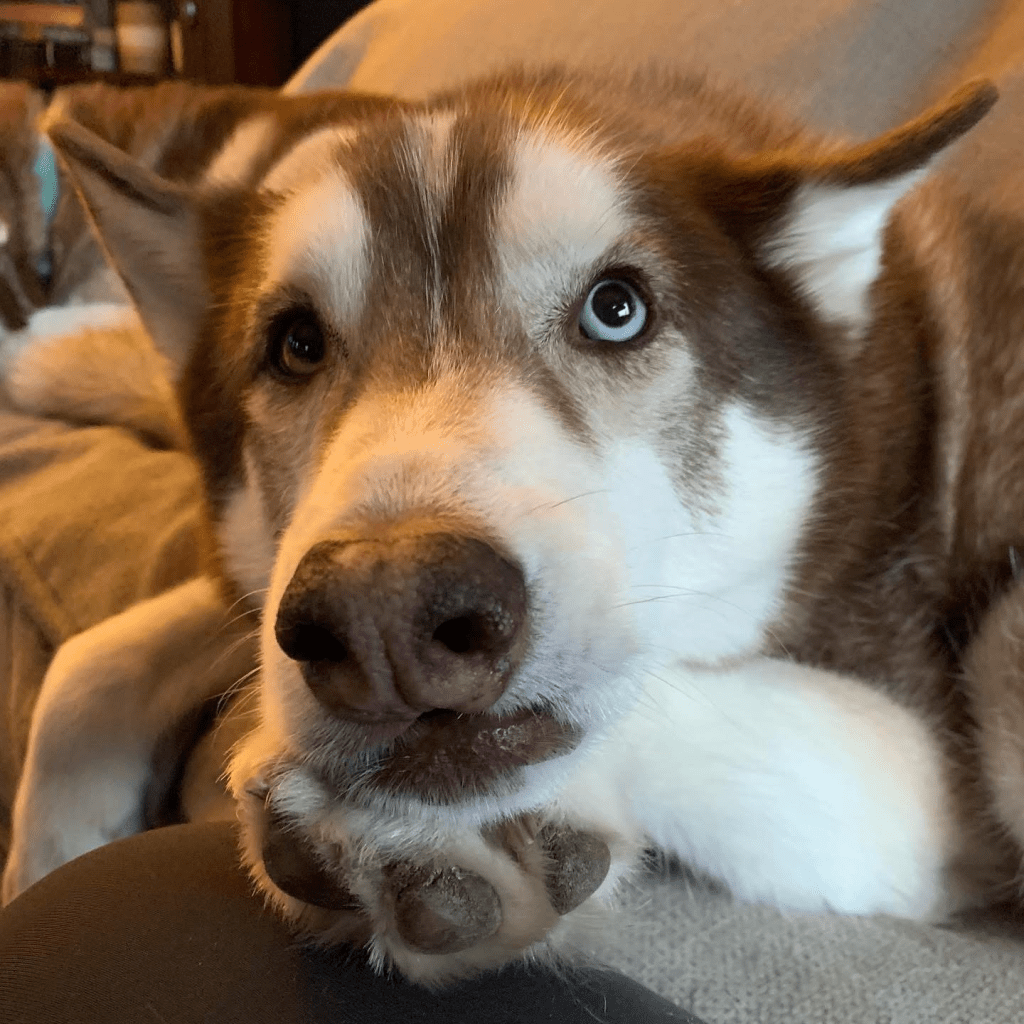
Today, we hold Loki’s life as a guiding thread—not because Loki is the only beloved pet among us, but because a single, particular story helps us tell the larger truth. Loki’s story helps us name what so many of us already know, but don’t always feel permission to say out loud:
That loving a pet is not a lesser love.
That grieving a pet is not a lesser grief.
And that the bond between human and animal can enlarge the soul in ways we are still learning to understand.
Our culture lags behind in this understanding. It can treat pet-love like a sentimental hobby—sweet, but not serious.
Some people, when faced with the intensity of losing a pet, feel embarrassed by it—or are made to feel embarrassed. They get the message that they are being “dramatic,” or “childish,” or “too attached.”
A writer once described crying after a family pet died and feeling ashamed, as if the depth of mourning proved some deficiency—like they had “loved too well.”
I want to say this plainly: that idea is backwards.
If your grief is deep, it does not mean your love was misdirected. It means your love was real. It means a relationship existed—one with daily rituals, shared history, a living presence woven into your nervous system and your home.
Because the world can be weirdly dismissive about it, some people end up grieving alone. Tears at work are explained away as “allergies.” They cry in private. They think they’re supposed to “get over it” quickly.
But the soul doesn’t do deadlines.
If someone’s beloved animal companion has died, and we rush them past it, we aren’t helping. We’re abandoning them. We’re leaving them alone with love that has nowhere to go.
So part of what we do today is cultural repair.
We say: this grief counts.
We say: this love counts.
We say: you don’t have to be embarrassed by the size of your heart.
Let me tell you about Loki—known as “the Lokinator,” and also, I’m told, “Loki boki bonker boo.”
Janet and Jeff adopted him from a rescue near Columbus when he was a little over a year old. His previous people weren’t able to give him the exercise and attention he deserved.
And here’s the detail that already sounds like the beginning of a sacred story: they weren’t even supposed to get him. Later they found out the rescue keeps adoptions within a sixty-mile radius. But somehow, Loki ended up with them anyway.
Sometimes love enters our lives with that unmistakable feeling of fate.
Something in you knows: this one is mine to care for.
And something in them seems to know it too.
Loki wasn’t just a dog who lived in their house. Loki became a relationship—an ongoing exchange of trust. And what do animals do when trust takes root?
They bring their whole selves.
Loki had a way of making himself part of things—getting comfortable in the world, placing himself in the center of the moment. He wasn’t tentative about belonging.
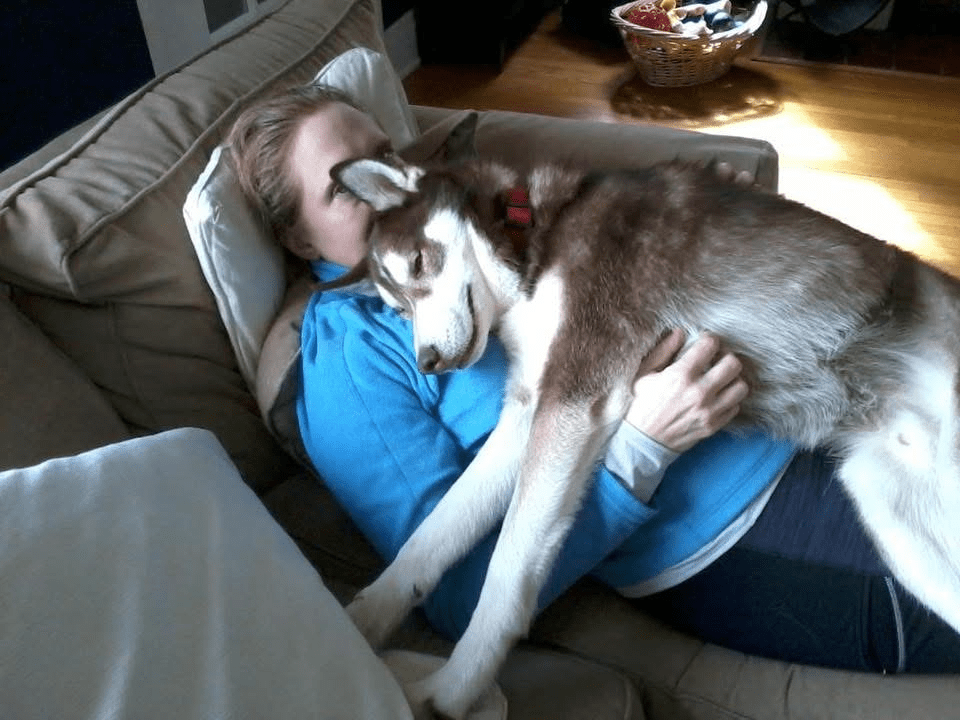
And that’s one of the first gifts pets give us: a model of uncomplicated presence.
Humans can be tense about taking up space. We ask, “Am I wanted? Am I too much? Am I bothering people?” We bring a thousand invisible negotiations into a room.
But a beloved dog walks in and says, with their whole body: Here I am. I am part of this.
Sometimes, that alone is healing.
So are the daily routines that emerge. Morning routine. Evening routine. The little ritual of walks, feeding, brushing, tossing the ball, the familiar sound of nails on the floor, the dog who knows exactly when you’re supposed to put your shoes on.
Pets don’t just “fit into” our lives. They shape our lives. They become the hidden architecture of a household.
They also offer a kind of comfort that is hard to match.
Not because humans can’t comfort each other—we can, and we should. But because animals don’t require explanation first. They don’t need the backstory. They don’t ask for the “correct” emotional tone.
They just come.
Janet tells a story: she was in bed, really emotional, crying, talking to Jeff. Jeff brought Loki upstairs, and Loki hopped up and pressed his body against her legs—just smashed in there, close, insistent, present.
He knew.
If you’ve lived with a beloved pet, you know this “he knew” feeling. Sometimes an animal notices our distress sooner than we do. Sometimes they meet it without judgment. Sometimes they remind us, in the simplest way, that we are not alone.
This is not weakness. This is a form of love that many people are starving for.
If you’ve ever been misunderstood by the humans around you, your animal companion can become the one safe relationship—the one place where you can unmask.
Even if you do have trusted human friends, there’s still something about the quiet companionship of an animal that can steady a life.
Beyond this, we can even speak of pets as love magnifiers.
They don’t just connect to us; they connect us to each other.
They become part of the fabric of a marriage, a family, a friend group. They create shared stories, shared laughter, shared responsibility, shared tenderness.
Loki’s life was full of those.
This was a dog with a social calendar.
Tuesday nights and Saturday mornings were group runs. Once a month, Wednesday evenings too. Doggie daycare on Wednesdays. Dog park visits on the other days. During the pandemic, Loki got so sad he couldn’t see all his people that they had to get him a second dog.
Think about what that means. It means Loki wasn’t only a companion to Janet and Jeff. Loki was a node in a web of community.
He wasn’t just receiving love; he was generating it.
He was the kind of being who made connection easier.
Janet said Loki taught her how to make friends—his friendliness and open nature taught her how to be a friend. He helped her meet some of her favorite humans in her run group. He was even voted “best mascot.”
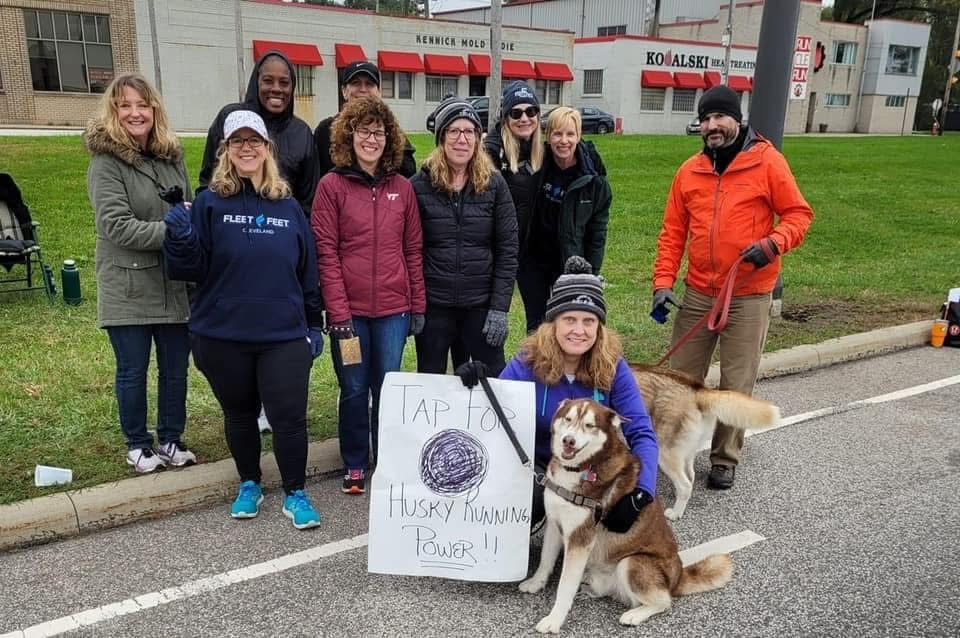
That’s not small.
Sometimes we talk about community as if it’s built only by meetings and plans. But community is also built by small repeated contact, by shared delight, by the simple ease of saying hello.
A dog can be a bridge.
A dog can be a social sacrament.
A dog can also be the one with standards.
If neighborhood dogs started barking incessantly, Loki would howl and bay at them until they shut up—and then he would stop.
This was a dog with opinions.
A dog who, apparently, believed in neighborhood peace.
He also had that effect on other dogs. When Janet and Jeff got Eisa [Ay-sah], the rescue man warned them she might not get in the car. But at that moment Loki jumped in the back seat and Eisa promptly followed.
Some beings carry a social gravity. They make others feel safe enough to move.
Loki also helped teach Eisa how to be a dog—she was scared and shut down, and he brought out the best in her. He was respectful with their older husky, too—never taking play too far.
So Loki wasn’t only receiving care. Loki was offering it.
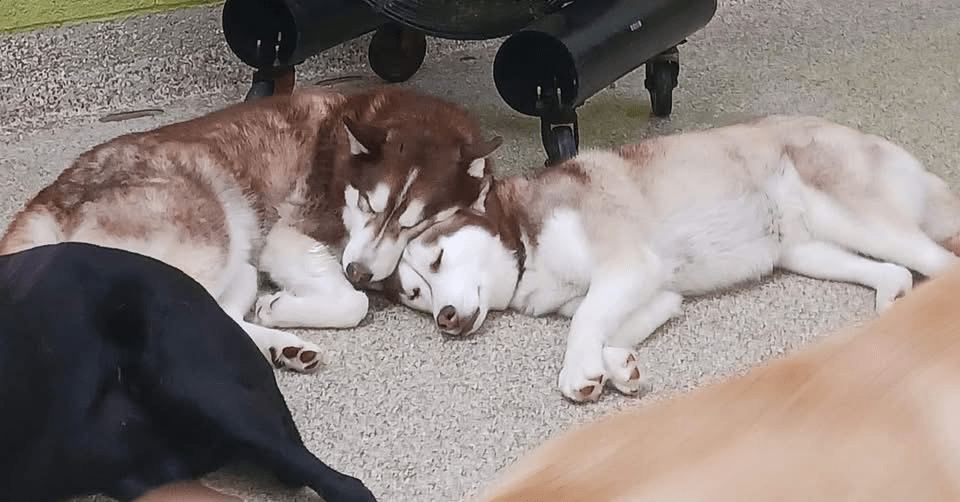
This, then, is another truth we need to hold: animals are not just objects of our affection. They are persons in relationship—beings with temperament, agency, emotional life, and the capacity to shape others.
So, when they die, the heart breaks.
“To love what is mortal,” said Mary Oliver.
Loki’s life—like every animal companion’s life—was brief compared to ours. And that briefness doesn’t cheapen the bond. It intensifies it.
If anything, it clarifies what love is.
Love is not measured by duration.
Love is measured by presence, by mutual trust, by the way a being becomes woven into your days.
Janet said when they had to let Loki go, one friend told her she was crying like it was her own dog.
Of course she was.
Because Loki didn’t only belong to Janet and Jeff. Loki belonged to a circle. Loki belonged to a community of runners, neighbors, doggie daycare friends, humans who had been smiled at and welcomed by Loki’s open nature.
We should not be surprised when grief spreads outward like that. That’s what love does. Love makes networks. Love makes shared meaning. And grief is one of the ways the world confesses what mattered.
So if you are grieving a pet—or if you ever have—let me offer a pastoral truth:
Your grief is not an overreaction.
It is the echo of devotion.
And this is not just a human thing. Animals themselves grieve. Many animals demonstrate loyalty and attachment in ways that are not merely instinctive but relational. Even if we can’t map the whole inner world of an animal, we can see enough to be humbled.
We are not the only ones who love.
We are not the only ones who mourn.
We are not the only ones who carry longing.
So what does it mean to be alive?
It means, at least in part, to be moved by love, and therefore moved by death.
Our animal companions draw us into that reality—not as a philosophy, but as an experience. They train our hearts. They enlarge our capacity for tenderness. They make grief unavoidable, and therefore they make love unavoidable too.
And once in a while, they also stir the question: is death the end of a relationship?
People have stories—some quiet, some strange, some luminous—of sensing a beloved animal’s presence after they’re gone. A dream that feels like a visit. A moment of comfort that arrives with a particular “signature.” A sudden warmth. A familiar sound. A feeling of companionship that seems to come from beyond the visible world.
As a Unitarian Universalist minister, I’m not here to tell you what to believe about that.
But I am here to say this: it is not irrational to wonder. It is not childish to wonder. Wonder is one of the most adult spiritual capacities we have.
And sometimes our beloved animals, precisely because their love was so uncomplicated, become the doorway through which we can touch the sacred question: What survives? What remains? What is carried forward?
Maybe what survives is not the pet as a “ghost” in the literal sense—maybe what survives is the imprint of love on the soul. Maybe it’s the way your heart has been trained. Maybe it’s the way your life has been reshaped. Maybe it’s the way you now know yourself capable of tenderness you didn’t have before.
But whatever our metaphysics, I think we can say with confidence: love is not wasted. Love leaves a mark. Love alters the world.
Loki altered the world.
He modeled how to stay active—boinging around when picked up from doggie daycare, loving his runs and the dog park. He modeled how to laugh at the absurd and not take things so seriously—Janet tells me about how, with Loki around, it was hard to stay sad.
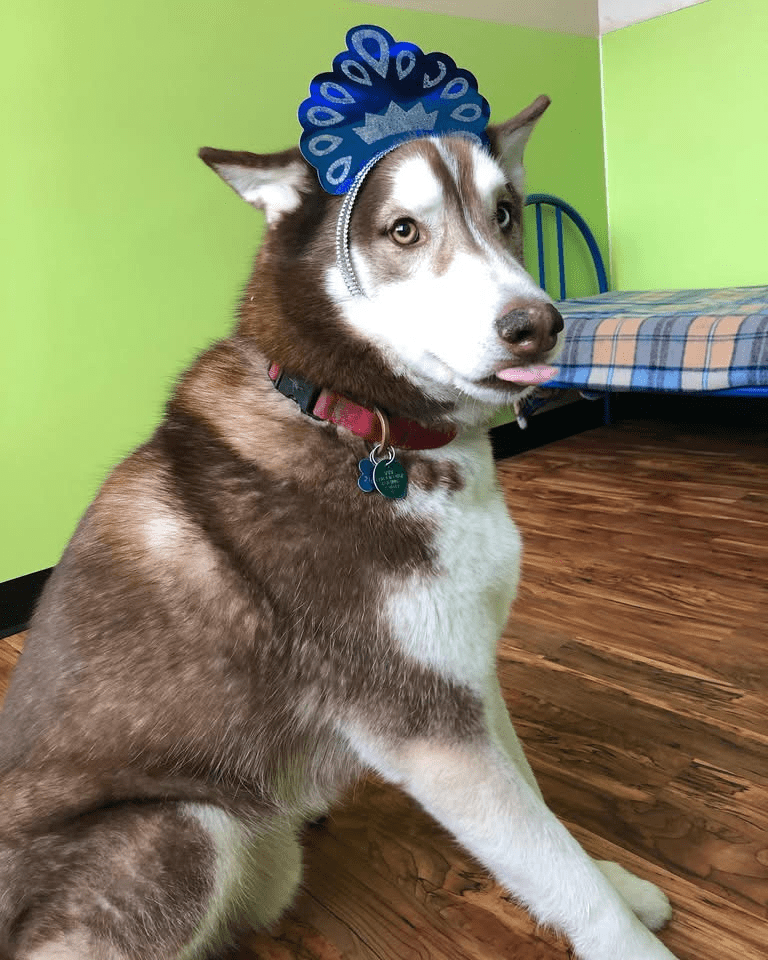
But above all, Janet says, he modeled how to love fiercely and unconditionally.
He was a love magnifier.
Love alters the world.
So what do we owe one another when a beloved pet dies?
We owe presence, not minimization.
We owe the simple gift of speaking the pet’s name.
We owe room for stories—because stories are how love keeps moving.
We owe permission for grief to take time.
And we owe practical compassion too: meals, check-ins, a card, a text that doesn’t try to fix anything but says, “I’m so sorry. Tell me about them.”
If you are supporting a child through pet loss, we owe even more tenderness: truth-telling without cruelty, room for tears without rushing, remembrance rituals that help the love have somewhere to go.
Because grief is not a problem to solve.
It is love looking for its next form.
And if you’ve never had an animal companion—if this kind of bond isn’t part of your story—I want you to feel included here too.
Because the sermon is not finally about dogs or cats or fish or rabbits.
It is about what happens to a human being when they care for another life.
It is about the capacity for devotion.
It is about the way love trains us.
It is about how tenderness enlarges us.
And it is about what communities do: we don’t only celebrate what is easy. We also make room for what is real.
So let us end where we began: with the mortal love we are brave enough to give.
Today we remember Loki—Lokinator, Loki boki bonker boo—beloved companion, beloved mascot, beloved friend. We hold Janet and Jeff in care. We bless Eisa and any other animals who feel the absence in their own way. We bless the run routes and routines that now ache with memory.
And we widen the circle.
We remember all the beloved pets who have shared our lives: the ones with fur and feathers and scales; the ones who slept beside us; the ones who greeted us; the ones who made us laugh; the ones who got us through a hard year; the ones who taught us, without language, what trust feels like.
May we never be shamed for loving them.
May we never rush the grief that proves the bond.
May we tell the stories until the love can breathe again.
And when the time comes—when we have to let them go—may we do it with the dignity of honest sorrow, and the courage of hearts that refuse to close.
May our beloved pets bless us still:
by the tenderness they awakened,
by the patience they taught,
by the friendships they made possible,
by the way they widened the doorway of the soul.
And may we, changed by loving them, go back into the world a little more capable of love—more present, more patient, more brave.
Amen.


 Spiritflow
Leave a comment