Some sermons are easier to preach than others.
It is relatively easy to speak about hope when circumstances are improving.
It is easier to talk about healing when there’s a clear path toward recovery.
It is easier to celebrate resilience when pain has an end date.
This is not one of those sermons.
Today I speak to those whose pain does not seem to be going away.
To those living with chronic conditions—arthritis, fibromyalgia, autoimmune illness, nerve pain, persistent injuries.
To those whose bodies have changed with age—or change has arrived too early through illness, accident, or sudden diagnosis—in ways that are not reversed by sheer effort.
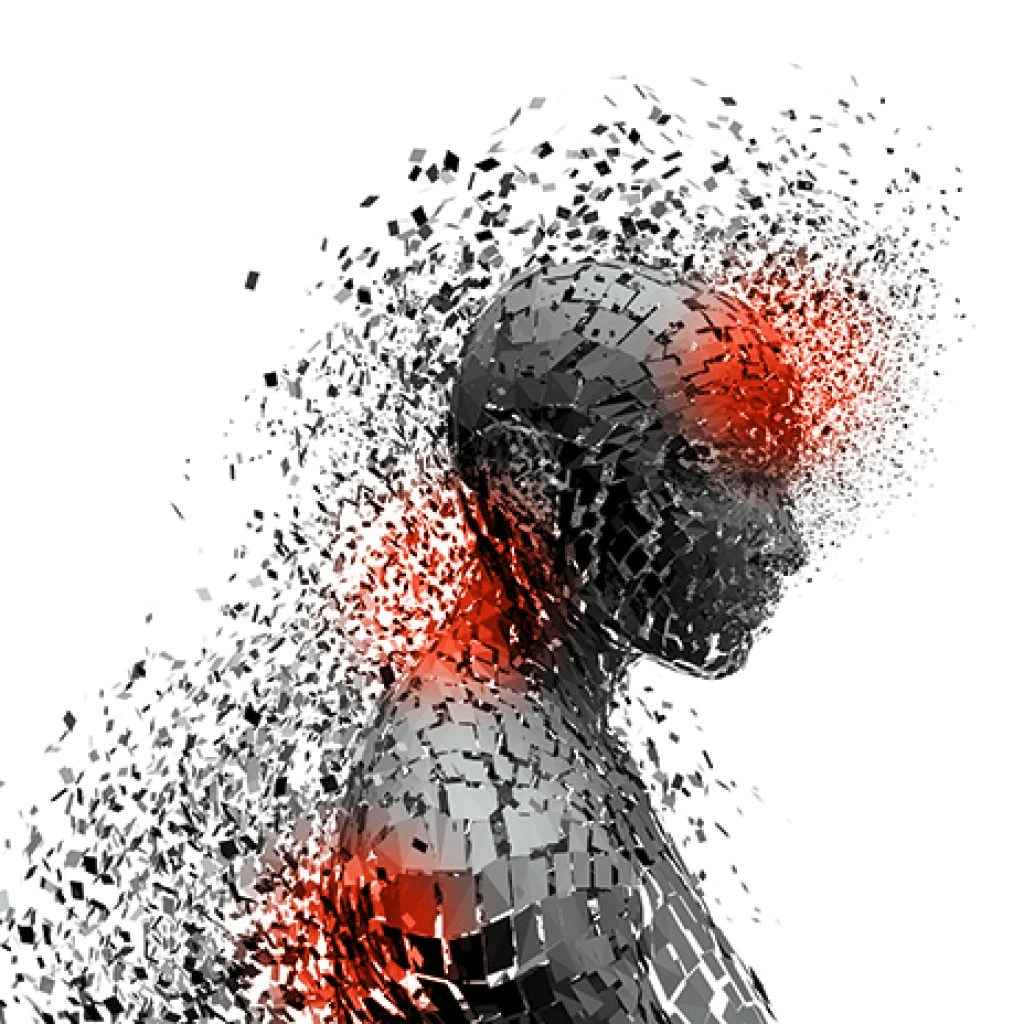
I also want to name something else, right up front: chronic pain is not only the pain. It’s also what gathers around it.
Disbelief.
Isolation.
Shame.
Being doubted, minimized, or treated as an inconvenience.
So no—this is not a sermon about rainbows. It is not about pretending pain isn’t real. It is not about spiritual bypassing—using spirituality to leap over suffering rather than meet it honestly.
Pain is not a failure of faith. And needing relief is not a moral weakness.
But I do want to raise a worldview-bending question:
Is it possible to live a spiritually whole and meaningful life even when physical pain persists?
Our culture has a strong answer to that question, and it’s usually: not really.
In contemporary American life, we live under two powerful assumptions. One is the worship of youthfulness—of bodies that are strong, flexible, energetic, efficient, and pain-free. The other is the belief that pain is a technical problem awaiting a technical solution.
One more scan.
One more pill.
One more procedure.
One more specialist.
Somewhere—so we’re told—there must be a final fix.
And if there isn’t, if the pain continues, then something has gone wrong. Someone hasn’t tried hard enough. Or advocated forcefully enough. Or found the right expert yet.
Now let me be clear: modern medicine is a blessing. Relief from pain matters. Treatment matters. Care matters. None of what I am saying is an argument against medical help.
But when the promise of total relief becomes a cultural expectation, it can quietly turn into a burden. People find themselves chasing cures that do not arrive. Spending money they do not have. Enduring procedures that bring diminishing returns. And all the while, carrying a sense of failure in their own bodies.
This is where a spiritual reframe becomes necessary.
I want to give you a single scene—one concrete moment—where the world shrank for me, and the need for that reframe began.
I’d been living with hip pain since 2016. For years, I tried managing it with everything I could: medication, vitamins, physical therapy exercises, yoga, positive thinking.
Nothing made it better.
The pain was always with me—sometimes loud, sometimes quieter, but never gone.
In late July of 2023, I wrote in my journal:
“The ache in my hips makes me feel so fragile. I’m like a huge boat I can’t steer… Can I trust my body anymore?”
A few days later:
“As I’m getting older and living into this new body that is like a settlement planted over a faultline and can shift anytime—all I can do is bring kindness…”
And then the feeling that anyone who lives with chronic pain will recognize—the way pain becomes a constant background noise, and also migrates:
“Again and again, like a broken record—my body. The pain. Its constantly changing geography of ‘noise.’… Now it’s my knees.”
By early August, I had an appointment with a sports medicine doctor. It had been a long time coming. X-rays from 2019 already showed advanced arthritis in my left hip, and my right hip was gaining ground. Still, I skated… because I could.
By 2023, though, I couldn’t—not in the way that mattered.
That’s one way chronic pain shrinks the world: it turns your life into negotiations. With stairs. With chairs. With time. With sleep. With plans. With how far you can walk before you pay for it later.
The day before the appointment, out of the blue, I got a call from the office. Not from the doctor. From someone random. And this person told me they had reviewed my X-rays and the situation was “bone-on-bone.” Too severe for mid-level interventions. A face-to-face meeting would be “wasting my time.”
Hearing this touched off a flash of anger that surprised me.
Not because I didn’t know something was wrong—believe me, my body had been telling the truth for years.
But because someone I had never met, on the phone, was pronouncing something enormous about my body with a casualness that felt like dismissal.
And I thought: No. I need to hear this said from the doctor’s own mouth.
So I went anyway.
Not because I was sure I could be fixed.
But because I needed to be seen.
Here’s yet another way chronic pain narrows a life—socially. If it’s not medical personnel treating you like a broken thing, it’s because you start to wonder whether people even believe you. Whether you’re going to be perceived as dramatic. Whether you’re going to be treated as difficult.
So you get quiet.
You minimize.
You push through.
All this shrinking—social, emotional—costs the heart so much.
Medical care does matter. But the heart still needs to find a new way to live.
This is where a spiritual reframe becomes a kind of medicine too.
Let me offer a refrain to hold onto today:
Healing is not always curing.
Say it again, because some of us need to hear it until it stops sounding like defeat:
Healing is not always curing.
The companion truth our culture struggles to speak is this:
Worth is not measured by wellness.
Worth is not measured by stamina.
Not measured by productivity.
Not measured by how much you can push through.
Those are cultural values—not spiritual ones.
Spiritual wholeness is measured by presence. By honesty. By relationship. By the capacity to remain connected to yourself and others even when circumstances are hard.
Now, at this point, I want to name a phrase with care: sometimes we say, “Our bodies are teachers.” I myself have said this.
It can be healing language.
But it can also land awkwardly.
Because for some listeners, “teacher” can sound like we’re making pain into a gift, or a lesson assigned by the universe.
I want to say this plainly:
Living with pain can teach us—but not because pain is a gift.
Not because suffering is a cosmic assignment.
But because we don’t get to opt out of what the body is saying.
The body speaks—sometimes gently, sometimes like a cranky baby that will not stop crying. Ignore it, and it cries louder. It must be soothed. It must be tended.
And often, what it is saying is not “Here is your inspirational life lesson.”
Often what it is saying is simpler, and harder:
Slow down.
Pay attention.
Ask for help.
Stop pretending you’re limitless.
Now I want to widen the lens. My story is one doorway, but it is far from the only doorway into this terrain.
There are many kinds of chronic illness and chronic pain. Some are visible; many are not. Some have clear diagnostic pathways; some take years to name. Some are believed quickly; others are questioned for a lifetime.
One example is Ehlers-Danlos syndrome, an often misunderstood connective-tissue condition that can involve chronic pain, fatigue, and repeated injury—and, for many people, the exhausting experience of hearing, “But you look fine.”
If you’ve ever tried to describe invisible pain, you know how quickly the world can respond with doubt. Or impatience. Or the subtle accusation: Are you sure it’s that bad?
The song the band played immediately preceding this sermon—its writer has Ehlers-Danlos syndrome. It’s about suffering and self-doubt only made worse by what’s around it. “They tried to tell me it was just in my mind.”
That is exactly why we needed to hear that song. Why testimony and community matter. Why we say: So what if it isn’t seen. You feel it. You carry it. And you are not imagining it.
Here is where we are driven to grasp the deep spiritual difference between resignation and acceptance.
Resignation says: “This is awful, and nothing can be done.”
Resignation collapses. It withdraws. It goes numb.
Acceptance, on the other hand, says: “This is real.”
And then acceptance does something next.
Acceptance takes an honest inventory.
Acceptance makes adaptive choices.
Acceptance asks for support.
Acceptance doesn’t mean liking pain. It doesn’t mean approving of it. It doesn’t mean giving up on care or relief.
It means ceasing the internal war—the constant self-judgment, comparison, bargaining, and self-blame that exhaust the spirit.
Acceptance is not defeat.
Acceptance is truth-telling.
Part of that truth is the way, as I’ve said, chronic pain shrinks the world.
Activities must be weighed.
Energy must be rationed.
The future feels uncertain.
But listen to the countercultural truth:
A smaller, more carefully lived life can still be a deep one.
Some of the most spiritually mature people I have known were not those with the strongest bodies, but those who learned how to listen to their limits without losing their dignity.
They learned how to pace instead of push.
How to receive help without shame.
How to rest without apology.
How to stay tender instead of bitter.
That is not weakness.
That is wisdom.
This is especially true as we age.
Aging is not a spiritual failure.
It is not a personal shortcoming.
It is not a deviation from the plan.
Aging is the plan.
But let me add this clearly: some of us are not primarily grieving age. Some are grieving what came too soon—an injury, an illness, a diagnosis that rearranged life overnight.
Whether it comes with age or arrives too early… the spiritual task is similar:
To make peace with reality as it is, while still loving yourself enough to seek support, relief, and care.
Today’s service includes a healing ritual.
And what this ritual does is not deny pain. It does not promise magic. It does not pretend everything can be fixed.
What it does is witness.
What it does is bless.
What it does is help us practice compassion without denial.
It makes the spiritual reframe visible and tangible.
Healing is not always curing.
Healing can mean becoming more whole. More integrated. More at peace with reality as it is—while still holding care for what could be eased, treated, or supported.
In this ritual, we are not declaring that pain will disappear.
We are affirming something equally powerful:
That our bodies—exactly as they are—deserve compassion, attention, and blessing.
That pain does not disqualify anyone from spiritual depth.
That limitation does not erase worth.
That brokenness and holiness are not opposites.
Acceptance, not resignation.
So if you are living with pain that is not going away, I want you to hear this:
You are not failing at life.
You are not doing spirituality wrong.
You are not behind.
You are doing something profoundly human—learning how to live honestly in a vulnerable body.
May we, as a community, become better at honoring that truth. May we resist a culture that equates wellness with worth. May we learn to meet one another’s bodies with tenderness, respect, and patience.
Healing is not always curing.
Worth is not measured by wellness.
Even when pain remains, love can deepen, meaning can grow, and spiritual wholeness can still be real.
Amen.
HEALING RITUAL
You are now invited to participate in a healing ritual.
You’ll come forward as you do in For All That Is Our Lives—up the center aisle.
Take with you the chalice sticker attached to your order of service—we have extras if needed.
The sticker is small on purpose: not a solution, not a diagnosis, not a public story—just a sign.
A sign that says: this body matters; this life matters; care belongs here.
When you reach the body image, place your chalice sticker in one of these ways:
If you live with chronic pain or a chronic condition
Place your sticker where the “daily negotiations” live—where pain often settles, where fatigue gathers, where your body asks for extra care.
(And if your pain is invisible, migrating, or hard to name—if it’s “no signs, no symptoms” but aching all the same—place it wherever feels truest.)
If you don’t live with chronic pain
You are still warmly invited to participate. You might place your sticker:
- on a place where you carry stress, tension, or fatigue—shoulders, jaw, chest, stomach, hands—or
- on a place that represents steadiness and strength—not as pride, but as a blessing: May this body remain kind to itself; may it be cared for; may comfort make us kinder.
Finally, if you’re not sure
If what you want is simply a blessing for your whole self, place it anywhere that feels right.
There is no right or wrong here.
Just what feels meaningful to you.
And a gentle reminder, in the spirit of today’s sermon: this is not meant to be a “here is your inspirational life lesson” moment. This is simply about telling the truth—and letting care meet what is real.
To preserve privacy, I will turn the body image around as we begin.
One at a time, come forward, place your sticker, and return to your seat so there is time for everyone.
On your way back, if you’d like a quiet word or a steadying hand or a brief hug, you’re welcome to receive that support. I’ve asked Rev. Shirley, Commissioned Lay Leader Judy Montgomery, and our Worship Associate Donna to be available—along with me.
As you feel comfortable, you are now invited to come forward.
[music begins… you lead the first person forward]
…
[Turn the body image around, with chalice stickers attached]
Here, revealed, is the body of this congregation.
Not a perfect body.
Not a pain-free body.
A real body—vulnerable, changing, living, aging…
and sometimes carrying what arrived too soon.
And here is our visible tenderness toward what is real.
May we find strength in our togetherness—
and in the larger communion of all who have lived through sickness and health, limitation and adaptation, injury and endurance, brokenness and repair… and finally death.
May our ancestors be with us in this moment:
ancestors we were born from,
ancestors we have chosen—
not because they were spared, but because they lived, and kept loving.
Spirit of Life—Holy One—
Bless these bodies.
Strengthen these hearts.
Steady these minds.
And when it is not our destiny to be restored and cured,
let there still be healing of the inner war, the fear, the grief.
Help us pace instead of push.
Help us ask for support.
Help us receive help without shame.
Help us rest without apology.
Help us live a deep life, even when it must be carefully lived.
Spirit of Life—Holy One—
this is our prayer this day.
And let us all say together: Amen.

 Spiritflow
Leave a comment