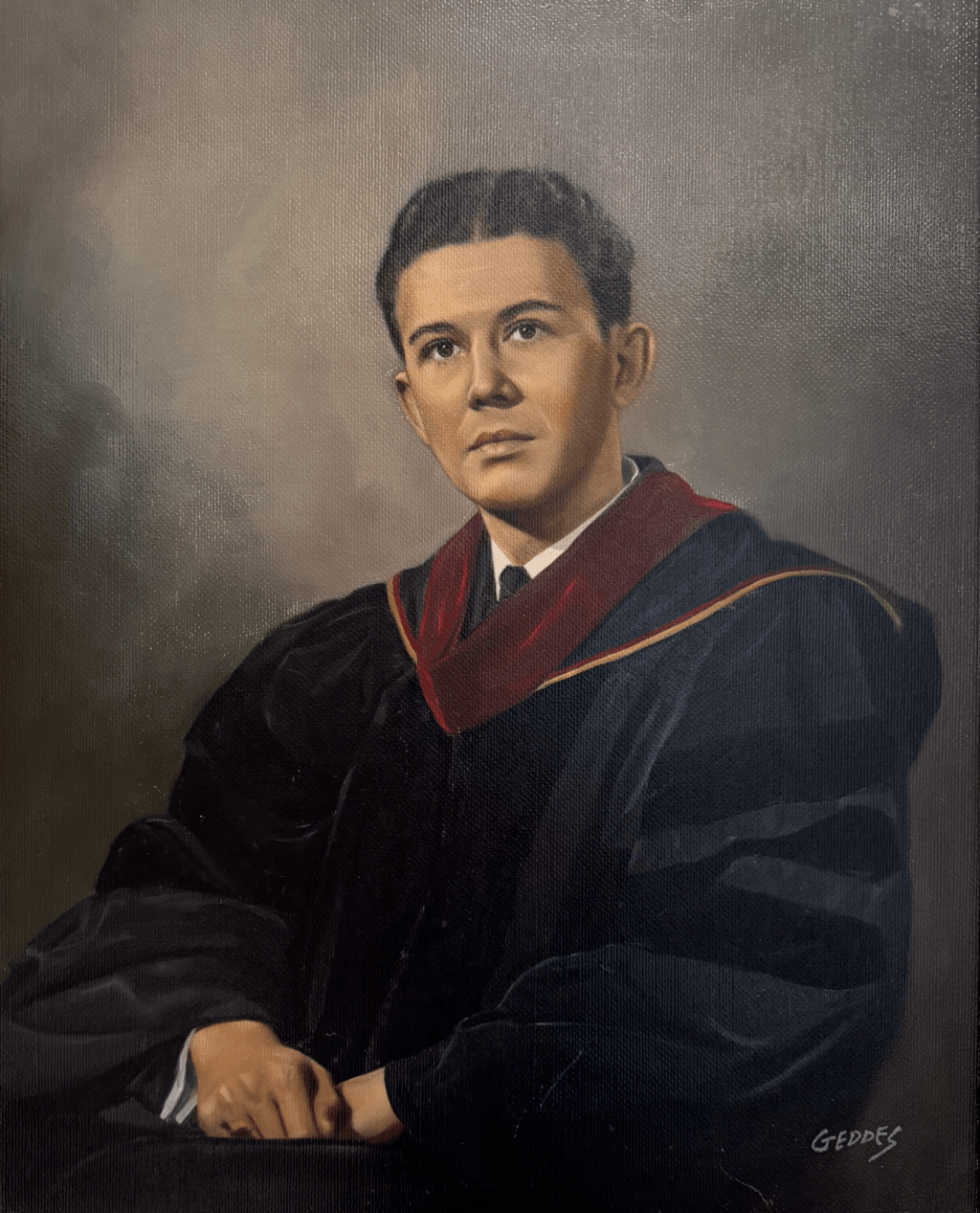
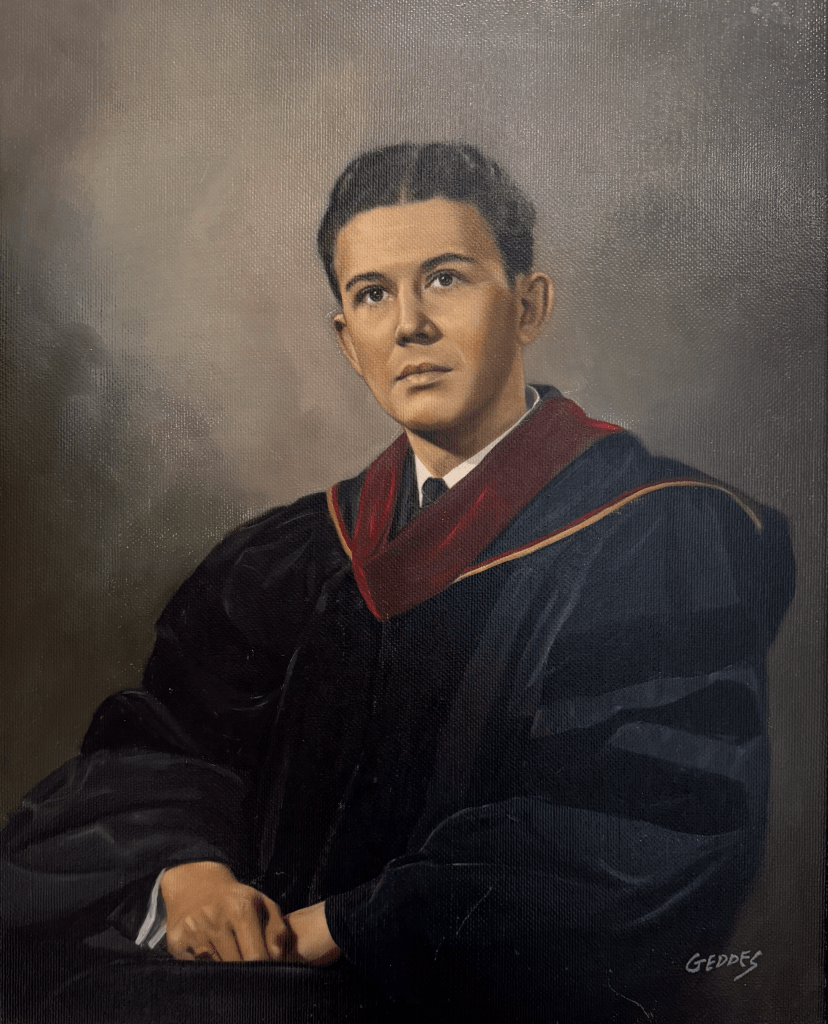
This sermon is offered in the imagined voice of Rev. Wayne Shuttee, first minister of West Shore, now preaching to the congregation at its 80th anniversary.
Friends of West Shore—
It is a curious thing, to speak across time.
When I first stood before this congregation eighty years ago—when we were not yet “West Shore” in any settled sense—only newly launched—America had just emerged from world war. The newspapers spoke daily of new dangers and shifting alliances. The world felt raw. The soul felt tired. People wanted peace, and yet did not know what peace would require of them.
And now I am told you gather eighty years on, in a nation again strained and divided, again tempted by fear and slogans, again uncertain how to live together with decency.
So let me begin with a confession: I am not surprised.
The scenery changes. The human condition does not.
In those first weeks when services were held at the Lakewood Masonic Temple, what stirred me most was not the polish of our arrangements. Oh no. There was none. The men of the Building and Grounds Committee had to come early to refresh the place, since after a Saturday night dance the air was thick with stale cigarette smoke and the floor dirty with butts and ashes. Windows had to be opened wide, the floor swept, carpet put down, folding chairs set neatly in rows, a piano rolled in, and a record player adjusted for proper church music.
This is how it would be each Sunday 42 times a year for almost six years, until our first Capital Campaign brought us to this place in Rocky River and gave us a permanent home.
But in those early weeks and months, what did stir my heart was the seriousness in your faces. People came even in the worst winter weather. Why? Because something in them was searching—searching for a religion honest enough for the modern mind, and deep enough for the modern ache.
That is how West Shore began: not as an ornament to comfortable living, but as an answer to the inward necessities of the human spirit.
So today I come to ask you: do not forget that. Do not let this church become merely a place you attend. Let it remain a work you continue building.
Do you know your origin story?
Dr. Everett Baker—scholar, civic leader, organizer of men and movements—dreamed of a liberal congregation on the West Side. Cleveland already had its Unitarian home on the East Side. But what about the West?
Dr. Baker conceived it; he commended it; he called people to it.
In that sense, West Shore was first his idea.
But an idea is not a church.
A church is made when an idea becomes committees, and committees become minutes, and minutes become budgets, and budgets become pledges, and pledges become the faithful weekly labor of human beings who show up early, sweep the floor, lay down carpet, set up chairs, roll in the piano, teach the children, and do it again next Sunday.
That is not romance. That is incarnation.
But did you know it was all sparked by a misunderstanding? Before there was any church to speak of—in the months prior when there were simply loose gatherings of people in Lakewood just exploring the very possibility of a new church—Dr. Frederick May Eliot, President of the American Unitarian Association, arrived on the scene to witness the gathering excitement. When it was his turn to speak, he congratulated those in attendance with having founded “the newest Unitarian church in the country.” Then he left quickly to catch a plane, and Dr. Baker took him to the airport.
But nothing at all had been “founded” yet!
I was left, as I later wrote, “to cope with the aftermath.”
Some of you may smile at that line. But do not miss its meaning: history is often decided by what we do with the aftermath. The moment passes. The speech is over. The distinguished guest is gone. The chairs remain. The faces remain. The question remains: Will we make it real?
That day a “groundswell” came upon us. I suggested we form three committees—on bylaws, on finances, on nominations. And a month later, the machinery of a congregation began to turn.
That is how West Shore began: a dream, an assumption, and then—work.
If you honor the story, honor it honestly. Dr. Baker dreamt. Dr. Eliot assumed. But West Shore was made real by the sustained labor of people whose names are not always carved on plaques.
That brings me to a tender truth, eighty years later.
You now have a Baker Hall—and for a time, you also had something called Shuttee Hall. That was your doing, not mine. Congregations have a way of naming what mattered to them in a given season—sometimes with more generosity than the minister quite knows what to do with.
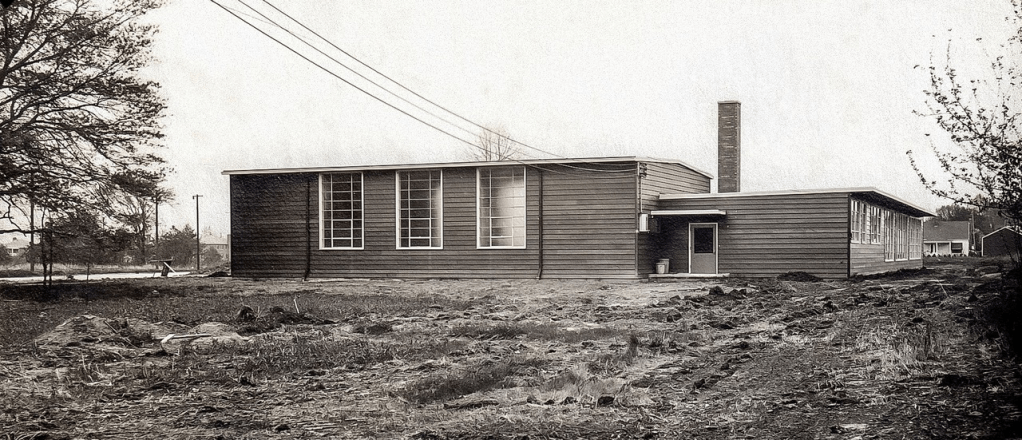
It was a wing beyond the big kitchen, stretching out toward where the playground is now: a few Sunday School classrooms, a meeting area—ordinary holy space where children learned, volunteers planned, and a church practiced being a church.
Then came a great renovation—good work, necessary work—and that wing was removed.
Now here is the humbling part: when spaces change, memory can change with them. A name that once lived on your lips can go quiet. A story that once felt obvious can become unfamiliar.
So let the building itself teach you this: time and change can cover up our memory of previous leadership. No matter how inspired. Not because of ingratitude, but because life moves on. Walls come down. Wings disappear. New generations arrive with no reason to know what the previous generations knew—unless someone tells the story.
Which is why you must keep the old stories alive. Not to flatter founders, but to keep gratitude honest. To give your ancestors their due. To remember that what you inherit was built—by hands you never shook, by hearts you never met, by people who showed up week after week to make an idea into a church.
Gratitude is power. If the past inspires it, it can become a forward motion nothing can block.
If West Shore is to have another eighty years, let gratitude guide the way.
On September 15, 1946, I preached our first sermon—called “Today’s Need and Our Answer.” The newspaper reported my words. I will not pretend they were perfect. But I will tell you this: they were earnest, and they were aimed at the root.
I spoke then of four great needs of every human soul—needs that must be filled if life is to take on “new meaning and creativeness” amid disillusionment.
Eighty years later, I would not retract them. I would underline them.
1) The need for security
I said that security comes by facing life as it is—understanding the world as science shows it to us—and learning to work with, rather than against, the deep laws of life.
Today your dangers wear different clothing. You live with technologies we could scarcely imagine. You carry news of catastrophe in your pocket. You are asked to have opinions on everything, immediately. And a great many public voices profit from keeping you afraid.
But security—real security—still does not come from hiding, or scapegoating, or pretending complexity is simple. It comes from reality-faced courage.
A church like this must be a training ground for reality. Not cynicism. Not naïveté. Reality.
You must help one another tell the truth about your lives: about grief, about addiction, about loneliness, about the stresses on families, about injustice, about the planet itself. Not to despair—but to live with eyes open and hearts steady.
A people who can face reality together becomes harder to manipulate. And that matters more than ever.
2) The need for significance
Each of us, I said, needs to know we are important to the fulfillment of the human venture—whose goal is a good society.
That phrase—the human venture—still seems right to me.
Because the temptation in troubled times is to shrink the soul. To become merely a private person. To pursue comfort as if it were the same as meaning. To say, “It’s all too much—let someone else handle it.”
But West Shore was never built for spectators.
You are significant, not because you are famous, but because your choices tilt the world. The way you raise children. The way you speak to neighbors. The way you vote. The way you treat the vulnerable. The way you use money. The way you tell the truth when it costs you something.
A liberal church should not flatter you; it should awaken you.
3) The need for sensitivity
I said we need “development of sensitivity to the needs, desires, and worth of others,” for only by such development can there be peace and plenty for all.
Let me speak plainly: this is the point at which religion is most easily counterfeited.
For there are many who talk about “values,” many who speak loudly of “faith,” many who wrap themselves in religious language—and yet they grow less sensitive, not more. They become crueler. Narrower. More eager to punish than to understand. More eager to dominate than to serve.
In my day, McCarthyism rose—a fever of accusation, a hunger for enemies, an insistence that dissent itself was disloyalty. It trained people to fear one another. It made cooperation feel suspicious. It tempted decent people into silence.
You are now living through your own rhyming verse of that old poem.
You name it MAGA. Christian Nationalism. The pattern is familiar: a politics that survives by outrage, a religion bent into a tribal badge, a story of the nation in which only some are “real” Americans—and the rest must be shamed, erased, or frightened into obedience.
If you are wise, you will not fight that spirit by becoming its mirror image.
Do not let the opponents of cruelty make you cruel. Do not let the opponents of propaganda become propagandists. Do not let the opponents of domination become dominators.
Fight it by becoming what it cannot manufacture: a community of mature souls, practicing sensitivity—the discipline of seeing the full humanity of others while refusing to surrender the moral law.
Sensitivity is not softness. It is strength trained in compassion.
4) The need for another dimension—vision
I spoke of “the need to add another dimension to life”—“the possibility of things that may be, that must be, if life is to reach its highest fulfillment.”
This is where churches either become museums of past lives or gateways to lives not yet imagined.
I wrote in an early church newsletter: “Religion to be real must always be a high adventure… daring exploration into uncharted but fertile fields of the mind and spirit; grave risks gladly taken… thrilling discovery of new truths by which man might live creatively.”
I meant it.
A liberal church that loses the appetite for spiritual adventure becomes merely a social club with opinions. And a church that becomes merely a social club will not outlive hard times.
Vision is what keeps you building when you are tired. Vision is what keeps you generous when recognition is scarce. Vision is what keeps you faithful when institutions everywhere are distrusted.
Do you still have that dimension? Or have you been living in flatland—only practical, only anxious?
You must recover depth. You must recover the holy hunger: the longing for Goodness, Truth, and Beauty—not as decorations, but as demands.
Let me say a word about conflict, then and now.
At our first annual meeting, I said the church must be measured by standards that are not merely numerical.
Are you growing in character? Are your consciences more sensitive? Are you developing a sense of the divine in human life? Are you learning new ways to serve that divine element? What difference would it make in your lives if the church discontinued its service?
Then I spoke of fellowship: whether the church is deepening community in a world split into hostile groups.
And then I spoke of service: religion expressed in the world’s gigantic need.
I must also remind you—because you like to remember founders as saints—that conflict was present even then. In a time of ideological heat, a speaker “reputed to have Communist leanings” was invited to participate in a dedication. I affirmed the invitation. Conflict followed. A president resigned. People were unhappy. Yet, somehow, you worked it out “without breaking our bonds of friendship and understanding.”
Do you hear what that means?
This church was not born into easy unity. It was born into the hard work of staying together without surrendering conscience.
You will not have the next eighty years by avoiding conflict. You will have them by learning how to hold conflict without letting it rot your fellowship.
That is not a small spiritual skill. It is one of the great ones.
Now, if you ask what would make me proud of what you have become, beyond the nine years I served your congregation—if I were to walk your halls and read your history through decades of building campaigns, renovations, reorganizations, and renewals—what would lift my spirit?
I would be proud that you chose dignity and welcome when such choices were not universally applauded.
I would be proud that you made sanctuary more than a word—hosting refugee families and building partnerships beyond your borders.
I would be proud that you joined justice to stewardship—raising a Black Lives Matter banner and taking Green Sanctuary commitments seriously, including solar investment.
I would be proud that you practiced resilience and beauty—adapting in a pandemic so community would not break, and tending music and sanctuary so the soul could remember it was made for more than survival.
There are so many more things about you I would be proud of, but naming them all would overwhelm the sermon.
Above all, though, I would ask—quietly, insistently—whether you remember what all these achievements were for.
Buildings are for the spirit. Governance is for mission. Programs are for the making of character. Justice is for the widening of love.
Do not drift into institutional maintenance as if maintenance were the whole calling. Maintenance is the quiet scaffolding that supports. But the cathedral is the human soul.
In one early church newsletter, these words appeared which I still endorse with all my heart:
“This is my church… We make it what it is… It will be friendly, if I am… It will do a great work, if I work… Therefore, with the help of God, I shall dedicate myself…”
That is not sentimental. That is the sober truth of congregational life.
If you want West Shore to be brave, you must be brave.
If you want West Shore to be generous, you must be generous.
If you want West Shore to welcome the stranger, you must practice hospitality beyond comfort.
If you want West Shore to endure a season of national fever, you must be a people trained in moral steadiness.
This is how you resist the spirit of McCarthyism—then or now:
Not merely by denouncing it, but by building a community it cannot overcome.
A community where people can disagree without exile.
A community where truth is loved more than winning.
A community where the vulnerable are protected.
A community where children are taught to think and to feel.
A community where faith means courage, not certainty.
My hopes for your next eighty years are many. I offer them—not predictions, but hopes worthy of a congregation.
I hope you will remain a church where intelligence is not punished, but sanctified—where you continue to insist that one may be religious though intelligent, and moral though uncertain.
I hope you will remain a church where religion is an adventure—where you keep “daring exploration” alive, where you do not trade wonder for mere opinions, where you practice prayer in whatever honest forms you can, where you cultivate reverence for life.
I hope you will become still more skilled at building fellowship across difference—not by erasing difference, but by deepening the arts of listening, truth-telling, apology, repair, and shared purpose.
I hope you will keep putting your religion into service—because the world’s need will not diminish. If anything, the stakes will rise: the health of democracy, the integrity of education, the dignity of bodies, the welcome of the immigrant, the livability of the planet.
I hope you will raise leaders who do not require credit—tree-planters who plant anyway.
And I hope—perhaps most of all—that you will keep faith with those four needs of the soul:
- security grounded in reality,
- significance grounded in purpose,
- sensitivity grounded in compassion,
- and vision grounded in the “another dimension” without which life goes flat.
If you do these things, you will not merely survive another eighty years. You will deserve them.
And now—though the years have changed the world beyond what my young mind in 1946 could have guessed—I offer you this blessing which was a signature of mine, one I gave every Sunday of every year I served as your minister:
And now with peace in our hearts,
And understanding in our minds,
May courage strengthen our wills,
And the love of Truth forever guide us.

 Spiritflow
Leave a comment