There are seasons when the question is not, What do I want?
The question is: What do I do with the life I have been given—this life, with its limits?
What do I do when I feel called toward larger love and purpose—but I also feel hemmed in?
Hemmed in by family history.
Hemmed in by money.
Hemmed in by illness.
Hemmed in by timing.
Hemmed in by old wounds.
Hemmed in by the body.
Hemmed in by fear.
What do I do?
Imagine a 29-year-old with a college degree, a decent job, and a careful budget spreadsheet. She is not irresponsible. She is not lazy. She is doing what she was told would lead to stability. And yet she is back at her parents’ house for now, in her old bedroom with posters from high school. She’s trying to pay down loans, watching rent rise faster than her paycheck, wondering whether “adulthood” has become a moving target.
A lot of younger adults know some version of that feeling. It is not a failure of aspiration. It is not a failure of effort. It is the feeling of being asked to build a life in a world where ordinary stability has become harder to reach.
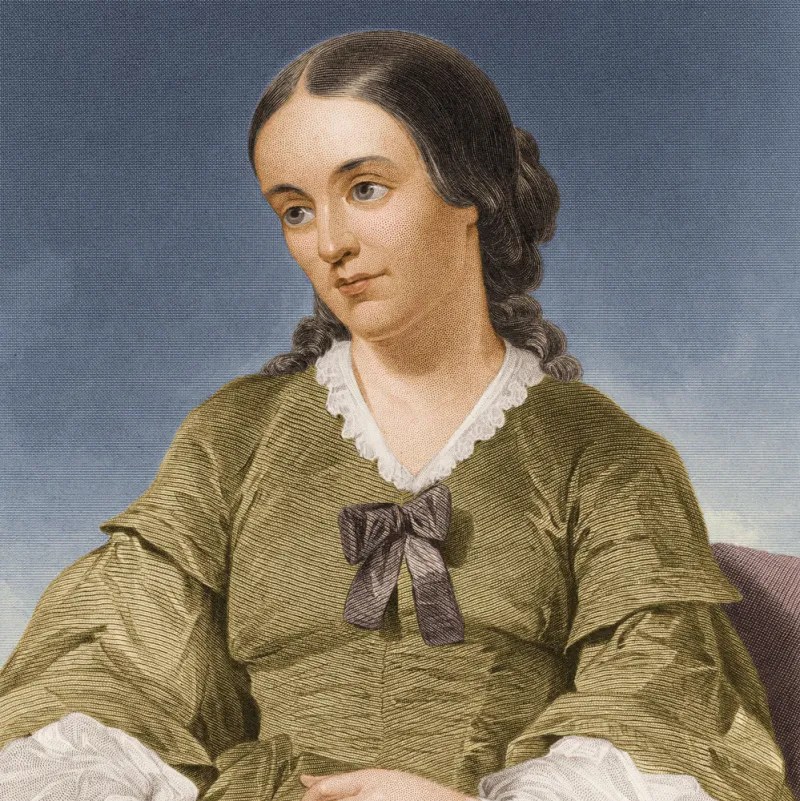
Margaret Fuller knew that question in her own way and in her own century: How do you live a larger life inside real constraint?

That is one reason she belongs in a sermon series on Transcendentalism. Yes, she was one of its great minds. Yes, she was a pioneering feminist, editor, critic, and journalist. But she belongs here for another reason.
She belongs because her life asks a question that is still meaningful to us.
Margaret Fuller offers us a form of spiritual inheritance we badly need.
Not the fantasy that lofty thoughts will keep life from being life.
She offers something sturdier.
She offers the witness of a person who kept enlarging her mind, heart, and soul—even when life would not be easy.
Thomas Carlyle once tried to describe what he saw in her. He spoke of her “insatiable hunger for experience,” a determination, he said, to “eat this big universe as her oyster or her egg.”
What a line.
Fuller was not built for narrowness. She was a teacher, editor, public intellectual, reformer, feminist pioneer, and eventually the first female war correspondent. Her famous Conversations were not just genteel gatherings. They challenged women to think, grow, and become.
Hunger to become was at the center of it. But though she knew the feeling, the word for it—the concept—was not available in New England and had to be imported from Germany. The word was bildung—the idea of developing mind and character toward fuller maturity, or self-culture.

Many of us know this hunger to become, too, even if we have never used that word. We know what it is to feel there is more in us than has yet found form. More life than the life we are currently living. More soul than our present shape can contain.
And Fuller did not apologize for that hunger.
She respected it.
During one of the Conversations, when someone implied that feeling alone was enough to validate judgment, Fuller pushed back. Yes, feeling does matter—but if you are not yet all that a human being can become, then feeling alone can distort judgment.
She believed authenticity matters. But so does maturation. Character is not only to be expressed. It is to be developed.
But if we stop there, we turn Margaret Fuller into a stained glass icon.
Bigger than life.
Made of different stuff.
It only falsifies her.
Alongside the brilliance and force, there was real fragility and struggle.
Her father, Timothy Fuller, deliberately trained her intellect and, by her later reckoning, starved her heart. His approval was conditional. Affection was tied to performance.
That leaves a mark, and some of us know it well.
You become capable.
Articulate.
Accomplished.
Useful.
And somewhere underneath all that competence, a child is still asking:
Am I loved—or am I merely being graded?
Fuller carried that wound.
She also carried a deep sense of homelessness. She wrote of having no real hold on life, no permanent connection. She tried to make her mind a home when she could not find one in the world.
How many people do that?
How many become brilliant in the very place where they are lonely?
And then there was her divided self: the desire to be a genius and the desire to be cherished. Public vocation and private tenderness. The need to become and the need to belong.
If we preach Fuller honestly, she becomes less icon and more companion.
Because her story is the story of anyone who has thought:
I have a calling.
I have gifts.
But there are also obligations.
And so many wounds and needs.
And all of it is pulling at once.
So no, Margaret Fuller is not a saint of smooth progress.
She is a witness to intense becoming under pressure.
There is a moment in her life that I think belongs in every UU sermon on Margaret Fuller. It is Thanksgiving Day, 1830. She goes to church, in part to please her father, and leaves more desolate than before. She feels that she has power and generosity and tenderness within her—but no way for them to be used in life.
So she leaves. She walks for hours, agitated, through fields and woods, until she comes to a stream and a dark pool.
And there she has a breakthrough.
Notice how it comes.
Not because everything was finally going well.
But because of distress and pain.
She sees, first, the harsh truth of limitation: how long the soul must learn to act “under these limitations of time and space, and human nature.” And yet also this insistence: that the soul must do it. The soul must “make all this false true,” and “sow new and immortal plants in the garden of God.”
Right there is the keynote:
The soul must learn to act under limitations.
Not after limitations are removed.
Not once the diagnosis is gone.
Not once the money appears.
Not once the grief ends.
Under limitations.
And still sow immortal plants.

That may be one of the most important spiritual truths any of us can hear.
Because some of us are waiting to begin living until life becomes less difficult.
And some of us know, by now, that day is not coming.
In that same experience, Fuller also saw that she had suffered by treating the isolated self as ultimate, and that she could live in “the idea of the ALL.” For one hour, she says, she was “taken up into God.”
That is not denial. It is a widening.
Her life did not suddenly become simple.
Her suffering was placed in a larger frame.
Sometimes what saves us is not the removal of pain.
Sometimes what saves us is a larger horizon in which pain is no longer the whole sky.
And here is where Fuller speaks so profoundly.
Over time, she moved beyond the more optimistic Transcendentalist language of inevitable progress and embraced something harder, truer, and in many ways more useful. At one point she wrote, “We are, we shall be in this life mutilated beings.”
That is a hard sentence.
But many people know exactly what she means.
There are losses we do not outgrow.
There are wounds that do not become “opportunities” just because someone says they should.
There are capacities we never get to develop.
There are years we do not get back.
To be human is, in part, to be unfinished and limited.
Fuller saw that clearly.
But she did not collapse into cynicism. She did not say, “Then why bother?” She kept writing. Kept learning. Kept loving. Kept becoming.
Margaret Fuller outgrew optimism without surrendering vitality.
That is a gift.
Because many people today feel they have only two choices: naïve hope or bitter realism.
Fuller offers a third way: tragic realism with spiritual courage.
Her life was full of so many disappointments—including romance and love. But then something remarkable happens. In Italy, Margaret Fuller meets Giovanni Angelo Ossoli. He was not her intellectual equal. But he was tender, affectionate, warm. In him she discovered something she had long needed: a man she did not need to impress, a man who returned her affection simply and without conditions.
For a person formed by conditional love, what grace that must have been.
She wrote that his character made “a domestic place in this world.”
That phrase matters.
She found home.
Not in theory.
Not in mind alone.
Home in love.
Their child, Nino, is born, and she writes of how a child fills the gaps of life, how loneliness itself is changed.
And I want to say this plainly: we sometimes tell the stories of brilliant women in a way that treats love and domestic tenderness as lesser than public achievement.
Fuller does not let us do that.
Her work mattered.
Her public witness mattered.
But the fact that she found a place where she did not have to perform for love—that mattered too.
Now comes the part of her story we cannot tidy.
As Fuller prepared to return to America, she was filled with foreboding. She wrote of dreading the voyage, of dark feelings, of some coming crisis. Still, she persisted.
The ship struck a sandbar near Fire Island—near New York City. The wooden hull began to break apart. The storm worsened. Rescue did not come in time. Fuller, Ossoli, and their child all drowned. Witnesses reported her final words: “I see nothing but death before me—I shall never reach the shore.”
There are moments when all the preacher can do is speak—then be still.
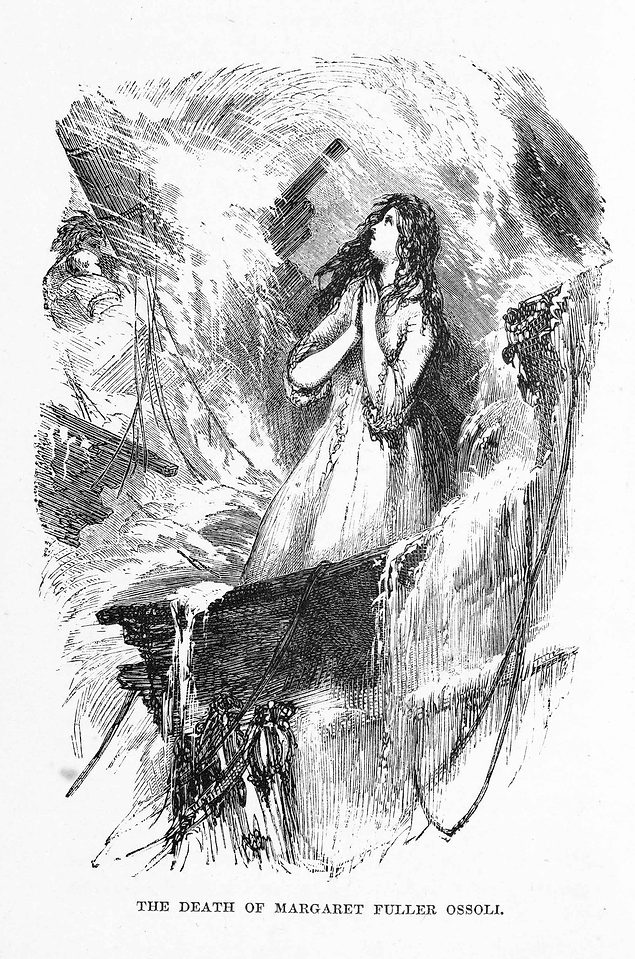
Her death was not a moral allegory.
It was not proof that she failed to transcend enough.
It was tragedy.
And if this sermon is going to help anyone who feels hemmed in, this needs saying.
People here know what it is for life to deal a blow that does not feel instructive.
It just feels devastating.
And yet—even here—Fuller teaches.
Not because her death is inspirational. It is not.
But because her life remains a witness that a human being can live large even when life is uncertain, even when the future is fragile.
A larger life is not the same thing as a longer life.
And it is certainly not the same thing as a protected life.
So what does this Transcendentalist ancestor say to us today?
I think she says:
Do not wait for a life without limitation before you begin to live deeply.
Do not let suffering shrink your imagination of who you may yet become.
Do not mistake woundlessness for worthiness.
Do not confuse self-culture with self-perfection.
Do not let your longing embarrass you.
Longing may be one of the holiest things about you.
Margaret Fuller held together two truths: the call to become more and the reality of tragic limits.
She held both.
And perhaps that is why she can still guide us.
She can guide the ambitious among us.
She can guide the lonely among us.
She can guide the overeducated and underloved among us.
She can guide those trying to become, who are also trying simply to endure.
You may be hemmed in.
But you do not have to live shrunken.
You may be carrying losses that will not disappear.
And still, you can sow new and immortal plants in the garden of God.
That, dear ones, may be one of the most urgent forms of faith in our time.
Not the faith that life will spare us.
Not the faith that progress is guaranteed.
But the faith that, within and against the limits of time and space and human nature, a soul can still grow.
A soul can still love, and awaken, and become.
May we have Margaret Fuller’s courage for that work.

 Spiritflow
Leave a comment