Saturday night it began. This morning, Cleveland is under a quiet blanket and there is more to go—seven to ten inches of it, in all.
It is beautiful in the way weather can be beautiful: slow, luminous, almost holy. The air softens. The world hushes.
But that beauty is also an existential challenge.
Snow does that. It arrives like a poem and turns into a problem. It transforms the ordinary into the precarious. Roads become guesses. Driveways become labors. A short walk becomes a risk calculation.
Last Sunday gave us a preview. The parking lot was slick. People slipped. People fell. Our capital campaign consultant slipped and fell, of all people—an accidental parable if there ever was one. Just a reminder, delivered by gravity, that the world has its own agenda.
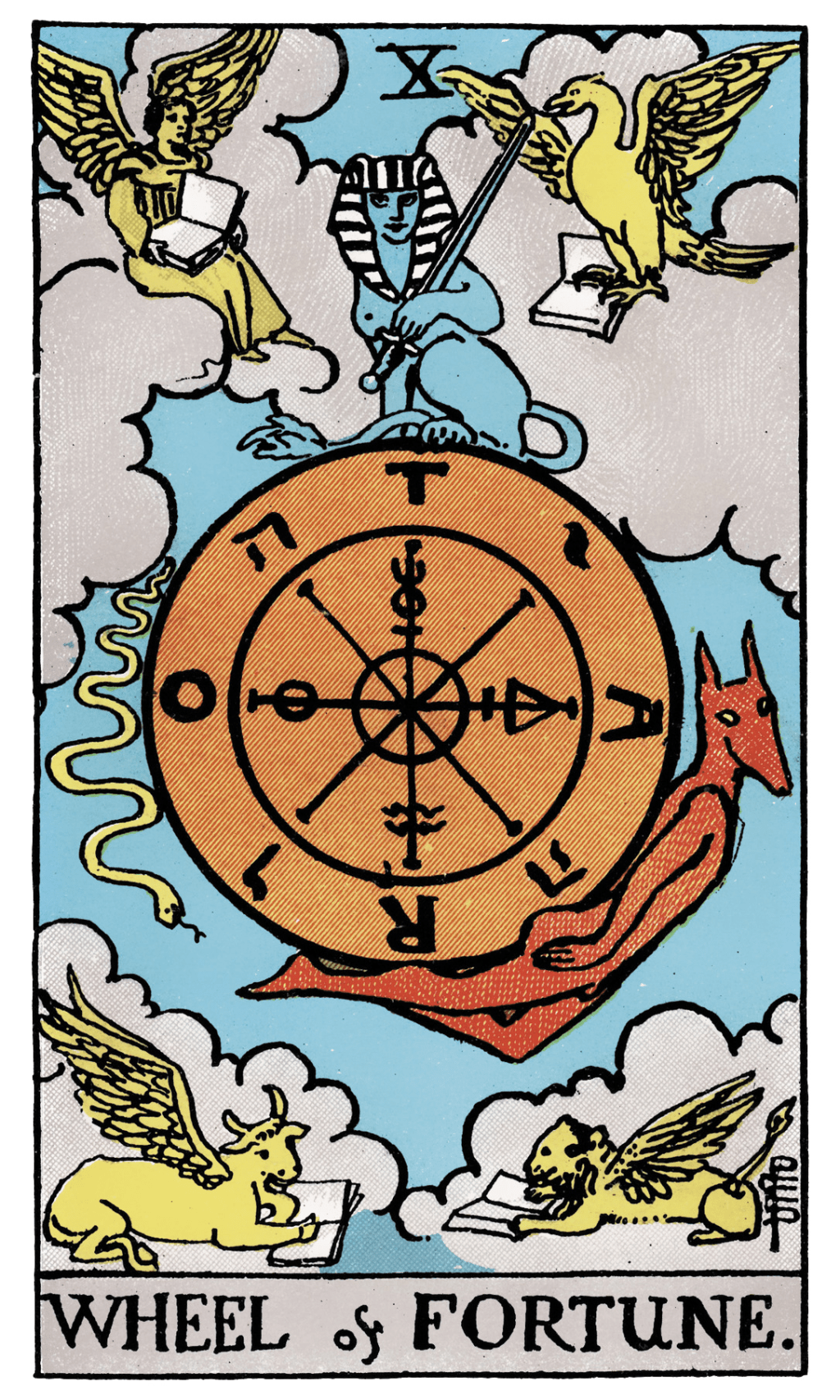
So now the Wheel of Fortune turns again, and we are canceling church this Sunday.
And yes—I’m disappointed.
I wanted to preach my Letter to Jesus. I had been carrying it, shaping it, waiting for that particular morning when it would finally be spoken aloud in the room. There are sermons that feel like assignments, and sermons that feel like offerings you’ve been holding with both hands. This one is the second kind.
But the weather has arrived like a messenger saying, “Not this weekend.”
It stings.
And it stings even more because we are not in a season of leisure.
We are in a discernment phase for a possible capital campaign. We are hosting focus groups—many of them—trying to listen for the truth of the congregation: readiness, hesitation, hopes, limits, trust. The plan was to do them all in January, with the last one on February 1. There is urgency in that. Not frantic urgency, but real urgency: We need to know where we stand. We need to know what people can imagine. We need to know what people fear. We need to know what people are willing to carry together.
We’re on this journey because care for our shared home strengthens all of us. We need to be strong, and courageous, as we lean into the storms of our social world. Yesterday, January 24, American citizen Alex Pretti was shot and killed in Minneapolis during a federal immigration enforcement action. The accounts of what happened differ sharply, but the loss is real—and many are grieving. I know I am. I’ll miss being with you today, to share in the loss.
But here comes the weather, as it so often does in Cleveland, as if the sky itself has opinions about schedules.
This is where Tarot’s Wheel of Fortune stops being abstract symbolism and becomes painfully literal. Because the Wheel is not only about dramatic reversals—riches to ruin, rise to fall. Often it is smaller than that and sharper: a Sunday canceled; a plan delayed; a timeline disrupted; a room that cannot safely be filled; an important conversation postponed; momentum interrupted.
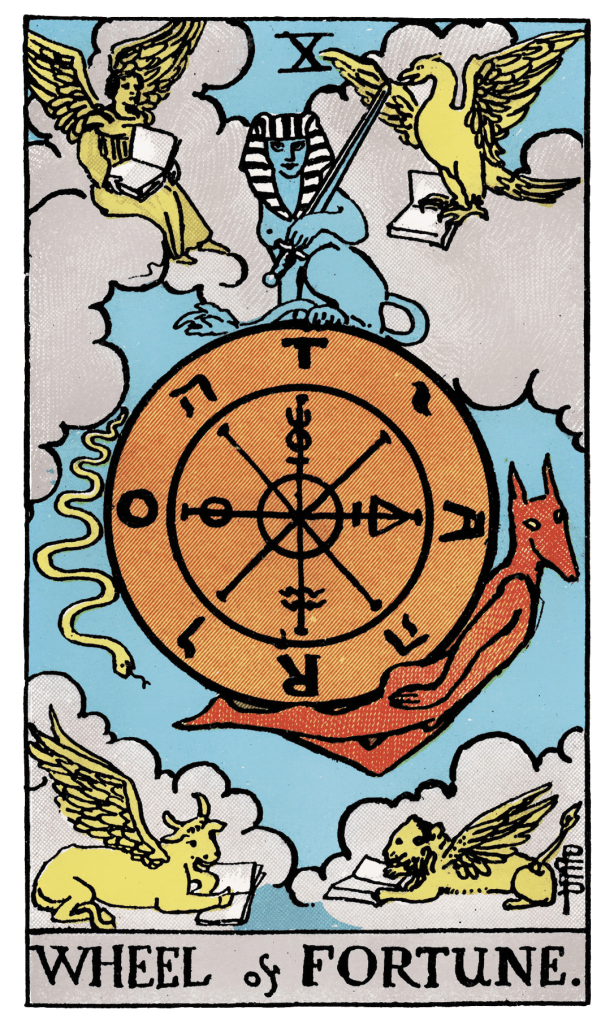
The Wheel teaches that life turns in ways you do not control. It spins with consequences. One moment, you’re ascending—energy, clarity, confidence, movement. The next, you’re descending—closures, rescheduling, disappointments, limits, fatigue. And even when the change itself is “innocent,” like snow, it can still carry force: it can still rearrange your week, your body, your community, your morale.
So the card raises its riddle.
See the Sphinx sitting on top of the wheel? A sphinx doesn’t show up to decorate the sky. It shows up to test you.
The riddle isn’t only why things change. It’s whether change is only chaos—or whether there is an axis.
Because here is what the storm tempts us to do: to interpret the turn as a verdict.
- This proves we can’t get anything done.
- This proves the timing is cursed.
- This proves the whole project is fragile.
Or the opposite:
- This is fine. It’s nothing. We’ll power through.
- We’ll ignore it. We’ll force the plan to stay the plan.
Both reactions—despair and force—are ways of losing the axis.
The Wheel of Fortune tests whether you can live inside change without turning every turn into a verdict about reality or yourself. The temptation is to absolutize the moment—this proves life is good or this proves life is cruel—and then either grasp or despair. The mature response is timing, humility, and trust: act where you can, release what you can’t, and refuse to make your worth—or your congregation’s worth—dependent on the spin.
That doesn’t mean the storm isn’t inconvenient. It is.
That doesn’t mean it isn’t dangerous. It can be.
That doesn’t mean disappointment isn’t real. It is.
It means something else: that there is a difference between being interrupted and being defeated.
And this is where the image of the Wheel quietly helps, if we let it.
At the circumference, there is motion. There is unpredictability. There is weather. There are slick lots and canceled services and bruised hips and revised schedules and plans that don’t cooperate.
But at the center, there is a still point.
Call it God, call it the deep lawfulness of reality, call it the axis of meaning people must work to sustain—whatever your language, the teaching is the same: the world turns, but it does not spin without any center at all.
If you keep the Job story in your mind (from the Hebrew Bible), it can sit here without taking over. Job doesn’t get an explanation; he gets an encounter. And sometimes that is what the storm gives us too—not answers, not control, not convenience—but a confrontation with limits that asks a spiritual question:
Can you trust without being able to manage? Can you love your plans without worshiping them? Can you keep faith with your purpose even when the weather refuses to cooperate?
Because our task this weekend is not to “win” against the snow. Our task is to respond in a way that protects life and preserves community.
That may look like a cancellation.
That may look like a disappointed preacher.
That may look like a virtual focus group, rather than in-person.
That may look like a staff team improvising.
That may look like an email that says, plainly and lovingly, “We’re not meeting in person. Your safety matters. We will try again.”
And then—after the storm—the Wheel will turn again.
The roads will clear. The parking lot will melt and refreeze and melt again. The calendar will be rewritten. The Letter to Jesus will still be there, waiting. The focus groups will still matter. The discernment will continue. The congregation will still be a living body—subject to weather, yes, but also capable of patience, adaptation, and return.
So, return with me to the Sphinx, perched above the turning world. Here is the riddle it asks:
Round and round the wheel goes—chaos at the circumference and order at the center. What am I?
On the surface, it’s fortune: weather, timing, disruption, the unschedulable nature of reality.
In the depths, it’s something like providence: the axis that keeps life from being meaningless, the center that holds even when plans are canceled, the quiet truth that a delayed Sunday does not cancel the sacred.
Hold the center, and we’ll meet each other again on the other side of the storm.
Love, Courage, and Cheer,
Rev. Anthony



 Spiritflow
Leave a reply to Hayley Jannielli Cancel reply