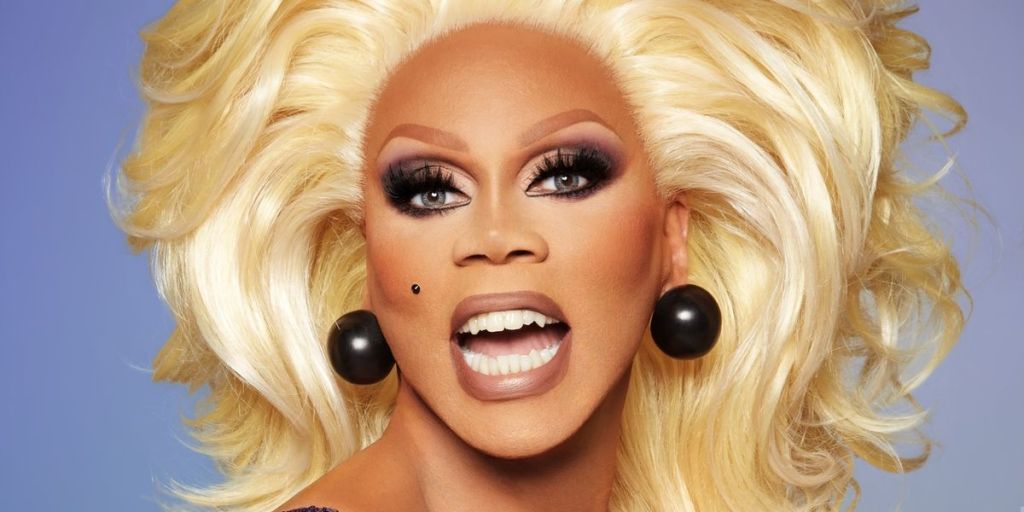
If you think drag is just about a man wearing false eyelashes and a pussycat wig, or just about a woman wearing glued-on sideburns and an Elvis jumpsuit, then you have not heard the Gospel of RuPaul.
And if you are a smart and sensitive soul, and your eyes are wide open to the mediocrity and hypocrisy of this world, and you can feel your necessary anger hardening into bitterness, then you may also need to hear the Gospel of RuPaul.
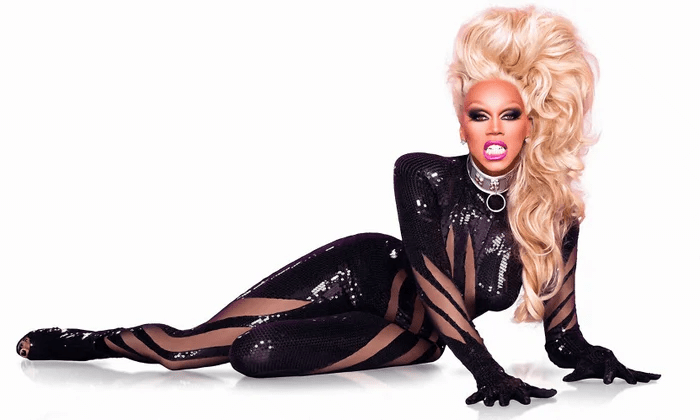
I am using the word Gospel this morning in its oldest sense: good news. News that can save a life. News that can set someone free.
And the timing matters.
We gather for Pride at a moment when our own Ohio legislature has been considering bills that would treat drag and gender nonconformity not as art, not as play, not as self-expression, not as joy, but as danger. House Bill 249, the so-called Indecent Exposure Modernization Act, has already passed the Ohio House and is now before the Ohio Senate. Its supporters say it is about protecting children. Its critics warn that it could criminalize drag performance and place transgender people, gender-nonconforming people, and LGBTQ+ communities under new suspicion.
So this morning, when we speak of drag, we are not speaking only of sequins and wigs.
We are speaking about visibility. We are speaking about shame.
We are speaking about the right to become visible without being mocked, silenced, punished, or criminalized.
And let me say this clearly: drag and trans identity are not the same thing. Drag is performance. Being transgender is a person’s lived truth. But both become targets when a culture grows frightened of gender freedom. Both become targets when people begin to believe that the old narrow boxes matter more than actual human beings.
RuPaul’s Gospel takes the ordinary sense of what drag is and transforms it into a spiritual philosophy. It is a philosophy for keeping anger from hardening into bitterness. It is a philosophy for exposing shame and becoming free.
RuPaul says that when you become the image of your own imagination, it is one of the most powerful things you can do.
Now, even if you happen to be a Jesus or a Buddha, you do not invent your Gospel out of nothing. Others are always helping. Others are always contributing to the Good News vision that will be born through you.
One of those people for RuPaul was his tenth-grade drama teacher, Mr. Pannell, a kind of father figure. RuPaul was in trouble at school. His grades had caught up with him. He was facing expulsion from the only school he had ever really enjoyed. He was shaken.
And Mr. Pannell pulled him aside and said, calmly, “The most important thing to remember, RuPaul, is to not take life too seriously.”
Which, at the time, sounded absurd.
RuPaul was thinking: Excuse me? I am about to get kicked out of the only school I ever loved, and your advice is, “Don’t take life too seriously”?
But he never forgot it. Over time, that strange little sentence became a creed.
Do not take life too seriously.
Now that does not mean life is not serious. Of course life is serious. Love is serious. Grief is serious. Justice is serious. Human dignity is serious. Safety is serious. Freedom is serious.
“There are seasons,” he says, “where you are driving through a snowstorm, just trying to keep your eye on the road ahead to stay alive.”
But there is a difference between taking life seriously and taking the false self seriously. There is a difference between honoring the pain of the world and letting the pain of the world shrink your soul into a fist.
Someone once told me about a running joke he has with a friend. From time to time, one of them will look at the other and declare, thunderously, “Do you have any idea how important I think I am?”
And whatever real struggle they may be dealing with gets just a little smaller in proportion to how much they laugh.
That is not denial. That is spiritual proportion.
Our lives always get tangled up. But when we take everything heavily and personally, the tangle becomes a hard knot. Stressing out is the worst problem-solving strategy there is.
And yet we do take our lives too seriously. In part, because we are shamed. Shame locks a person down.
Many of us learned shame early. We had natural human needs, but the people around us did not always know how to honor them. The people who were supposed to care for you, for whatever reason, could not care for you well. They made you feel like a nuisance.
Or maybe, like RuPaul, you were a boy who liked to run around the yard in a pink dress. But culture wanted strict conformity. Culture wanted you to live inside the narrowness of what was assigned to you. Culture said, “Pink dresses are for girls.” And so you were punished. Again and again punished. Until the shame became internalized.
And then you no longer needed anyone outside you doing the punishing. You learned how to do it to yourself.
That is how shame works.
We will do almost anything to evade the pain of shame. We will accept the brainwashing. We will come to believe that the limits of our social identities define the limits of our total possibility. We drink up the idea that this is who we are and there is nothing more.
Growing up, RuPaul heard that message like the rest of us.
But again and again, other lessons came along to contradict it.
One day, when RuPaul was five, his sister Renata put some chocolate chip cookies in a paper bag, grabbed a blanket, led him into the backyard, spread the blanket on the ground, opened the bag, gave him a cookie, and said, “Ru, Ru, this is a picnic!”
That moment taught him something. You can turn something completely mundane into something magical.
Take the situation too literally, and all you have is a blanket and a bag of cookies. But imagination, unleashed, reveals that there is always more to life than meets the eye.
Aliveness is about refusing to allow the limits of the world you encounter to become the limits of your soul.
That is one of the first spiritual lessons of drag. There is always more than what is merely given. There is always more than what is merely assigned. There is always more than what shame can see.
So when RuPaul saw the Black comedian Flip Wilson on television in drag as Geraldine, he saw something funny, liberating, fabulous.
He wanted to sing and dance and be just like that.
“Extravaganza eleganza” is how he put it.
On television he also saw Diana Ross on The Ed Sullivan Show, singing “Baby Love,” scrunching her shoulders, widening her eyes, smiling that magnificent smile. And little RuPaul practiced it. He imitated her. He studied her. He learned that the self could be rehearsed into freedom.
Extravaganza eleganza!
All of this was happening in San Diego in the 1970s, in a world that was very white and very conservative, a world that pressured him to color inside the lines.
He was not buying it.
His big hero was David Bowie. RuPaul says that everything he felt on the inside, Bowie was doing on the outside. That is what a liberating image can do. It lets you see yourself before you know how to become yourself.
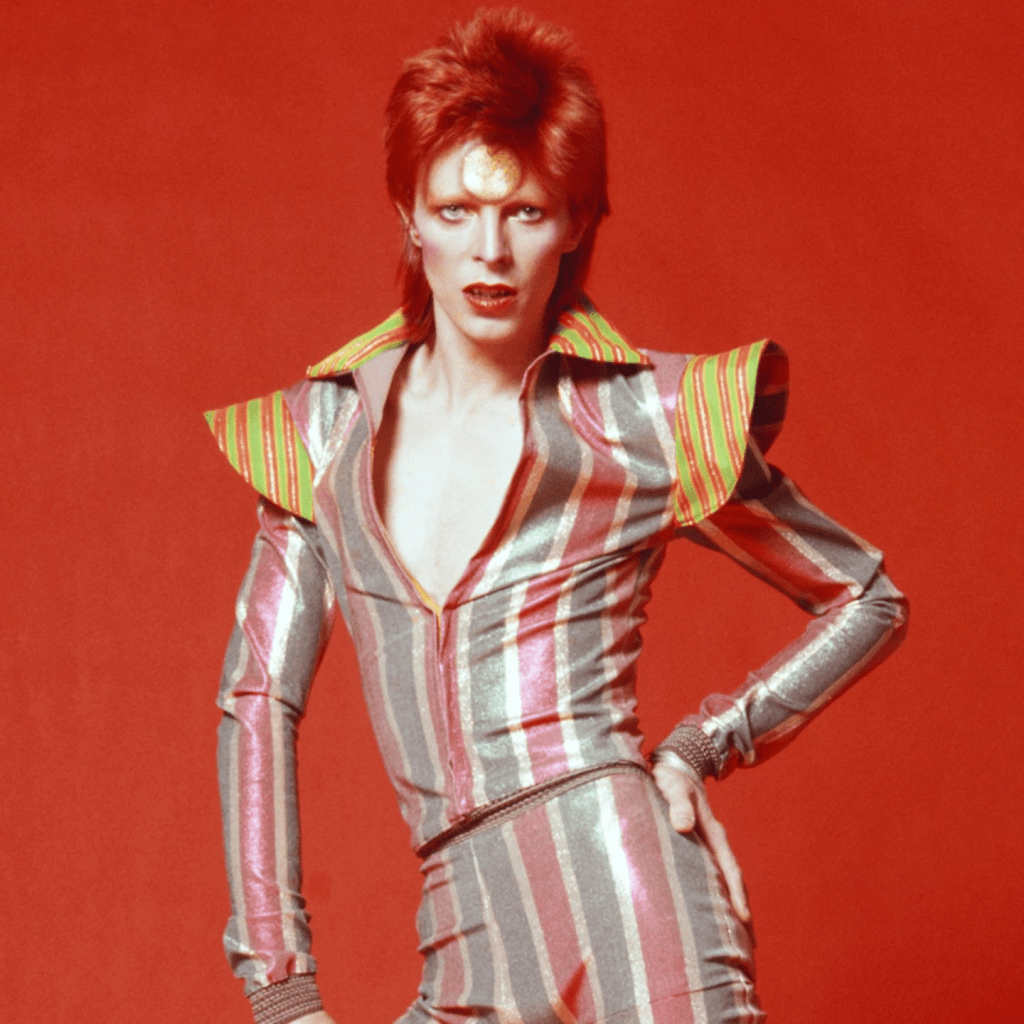
Bowie’s genderfluidity became a symbol of aliveness larger than stereotypical labels. Larger than narrow social roles. Larger than the costumes culture hands us and then tells us are not costumes.
Which brings us to the Gospel of RuPaul: Drag is not only false eyelashes and wigs. Drag is everything. Whatever you put on after you get out of the shower is your drag.
A Chanel suit.
A McDonald’s uniform.
A doctor’s uniform.
Look at Unitarian Universalist minister me, in full-on robe and stole: This is my drag.
I am a drag queen. Yes, I just said that.
Now look at yourself. Look at your drag.
And now ask: What more could there be? What more wants to be, through you?
Perhaps all you think you have been given in life is a bag of cookies and a blanket in the backyard. But are you taking your life too literally? Could there be more? Could there be something different?
Does shame hold you hostage and keep you from showing your deeper, truer self?
RuPaul once said that the biggest obstacle he ever faced was his own limited perception of himself.
He is not alone in that.
Most of us have been injured by a limited perception of ourselves. Some of that limited perception came from outside us. Some of it came from family systems. Some of it came from religion. Some of it came from racism, sexism, homophobia, transphobia, ableism, class shame, body shame, age shame. Some of it came from the thousand little comments that taught us to fold ourselves smaller.
And some of it we kept repeating long after the original voices were gone.
This is why drag is bigger than dress.
RuPaul likes to say, “We’re all born naked and the rest is drag.”
It sounds funny. It sounds flip. It sounds like a bumper sticker from a fabulous alternate universe.
But listen more closely. It is deep. As deep as existentialist philosophy. As deep as religious mysticism. As deep as the spiritual traditions that say the soul is not identical with the roles it plays.
RuPaul is saying that human nature, at the core, is free, creative, and playful.
Which leads to the big question: What will we do with our freedom?
If, in some grand sense, we are all drag queens, what are we going to do with our drag?
One thing drag does is mock culture. And mockery can be holy. Not cruelty. Not contempt for the vulnerable. Not cheap laughter at another person’s pain.
But holy mockery. The kind that sees through arrogance. The kind that punctures false seriousness. The kind that says to the emperor, “Sweetheart, those clothes are not giving what you think they are giving.”
Culture wants people to play dumb. Culture wants people to pretend the rules are natural when they are only inherited. Culture wants people to confuse custom with truth.
Drag refuses. Drag laughs at the narrowness. Drag says: You told us gender had to be one way, so we made it seven inches taller, covered it in rhinestones, and gave it a better name:
Jinkx Monsoon.
Trixie Mattel.
Pearl Liaison.
Acid Betty.
Other names I cannot mention in this rated-G context.
The names themselves disturb the peace of a culture whose narrowness can kill. And narrowness is not harmless. It does not remain a private opinion. It becomes policy. It becomes an atmosphere in which some people begin to believe that another person’s visibility is a threat.
Narrowness killed Matthew Shepard.
Narrowness tells queer children they should be ashamed before they even know what there is to be proud of.
Narrowness tells trans children they are a problem to be solved rather than a life to be cherished.
Narrowness tells lawmakers that they are protecting children when they are really teaching children whom to fear.
Of course children deserve care.
Of course public spaces require wisdom.
Of course communities have to think carefully about what is appropriate in different settings.
But care for children must not become a mask for teaching them contempt.
Care for children must not become a mask for teaching them that some people’s bodies are shameful, some people’s clothes are dangerous, some people’s joy is obscene, and some people’s existence must be hidden.
That is not care.
That is shame with a legislative agenda.
And shame is a liar. Drag knows this. Drag has always known this.
The shamans, the holy fools, the tricksters, the comedians, the rock stars, the drag queens—they have always had sacred work to do. They remind us that we are not only one thing. We are body and spirit. Male and female. Neither and both. Human and divine. Serious and ridiculous. Broken and magnificent.
Not one or the other. Both. Always both.
Besides mocking culture, drag also offers another spiritual practice: looking back at the child you once were with fierce tenderness.
On RuPaul’s Drag Race, beneath the wigs and jokes and runway critiques, there are moments when something sacred interrupts the show. RuPaul will sometimes ask a queen to look at a childhood photograph and speak to the child they once were.
In one exchange, RuPaul turns to Pearl Liaison. Pearl, out of drag, is Matthew. RuPaul shows Pearl a photo of Matthew as a little boy and asks: If you could time travel, what would Pearl say to little Matthew?
And Pearl begins with a warning. The years ahead are going to be hard. People are going to hurt you. People are going to take advantage of you. People are going to look at you from across the room, and you will not understand why.
And Pearl cries.
And RuPaul asks, “Do you understand why now?”
Pearl nods. Yes. Yes. Yes.
And RuPaul says, “You’re a star, baby.”
That is not just television. That is pastoral care. That is spiritual direction in bling. That is the gospel according to drag.
It is the work of looking back at the child who was shamed, the child who was misunderstood, the child who was punished for being too much or not enough or the wrong kind of something, and saying: You were never the problem. You were a star, baby. You were always a star.
Now, we must be careful here. This does not mean the harm was imaginary. It does not mean people should simply “get over it.” It does not mean that if you are still feeling wounded, you have failed spiritually.
No. The pain was real. The harm was real. The rejection was real. The violence was real. The fear was real.
But the harm does not get to be the final author of your life. The shame does not get the final word. The wound is part of the story, but it is not the whole story.
The work is to remember the pain without letting the pain become your entire identity. To honor the wound without building a prison around it. To say: yes, this happened to me, but this is not all I am. Something in me is still becoming. Something in me is still free.
Today, on this Pride Sunday, I want each of you to look at yourself from that fierce, tender, powerful drag queen perspective.
Because you are a star, baby.
But according to the Gospel of RuPaul, you are even more than that. There is one more level to this gospel.
RuPaul says that you are an extension of the power that created the whole universe. He says that you are a spiritual being having a human experience.
And this is where the Gospel gets really outrageous.
Because if everything we put on is drag, then our drag does not end with clothing. It includes the roles we play. It includes the names we answer to. It includes the identities we carry. It includes the body itself. It includes this temporary human form through which the eternal shines for a little while.
A Vedanta Hindu might say: Atman is Brahman.
RuPaul says it this way:
“You are God in drag.”
*Head exploding*
*Head exploding again*
And maybe that is too much for one Sunday morning. But maybe it is exactly enough.
Because there are people in this world who will try to convince you that you are a problem. There are people who will try to convince you that your freedom is dangerous. There are people who will try to convince you that your visibility is obscene. There are people who will try to convince you that your joy must be regulated, your body must be controlled, your love must be hidden, your imagination must be punished, your gender must be policed, your soul must be made smaller.
Do not believe them.
Do not believe the voice of shame.
You were not born with shame. Shame was handed to you. Sometimes deliberately. Sometimes by people who had never learned what to do with their own. It was used to control you. To shrink you. To keep you manageable.
No more!
Do not let a law teach you to be ashamed. Do not let fear dressed up as morality define the limits of your soul. Do not let anyone tell you that the sacred only appears in respectable clothing.
Because the truth of who you are is not defined by your clothes. The truth of who you are is not defined by the role culture assigned you. The truth of who you are is not defined by the shame someone else could not heal in themselves and decided to hand to you.
The truth of who you are is abundance.
Abundance is the truth of who you are.
No less than God in drag.
Perhaps you came this morning thinking drag is just false eyelashes and wigs, sideburns and jumpsuits, camp and comedy and costume.
But now you have heard the Gospel.
Perhaps you came this morning with your eyes wide open to the mediocrity and hypocrisy of the world, and you are tired, angry, bitter, afraid.
But now you have heard the Gospel.
There is more to you than shame can see. There is more to you than culture can assign. There is more to you than fear can legislate. There is more to you than the world has yet made room for.
So make room. Take the blanket. Take the bag of cookies. Call it a picnic.
Put on the heels. Put on the stole. Put on the courage. Put on the name that tells the truth.
Become, as far as you are able, the image of your own imagination.
Extravaganza eleganza is you.
Do not let anyone steal that.
Take that power back.


Leave a Reply